
 Afirik
 Aazi
Aazi Orop
Orop Amerik Sud
 Ostarali e Oseyani
 Antarktik
 Geeci Pasifik
 Geeci Atlantik
 Geeci Enndo
 Geeci Arktik
 Geeci Mediteraane
 Geeci Boɗeewi
 Geeci Karayib
 Geeci Korayl
 Geeci Siin Sud
 Geeci Filipiin
 Geeci Andaman
 Geeci Nord
 Geeci Timor e Arafura
 Gulf Bengal
 Gulf Kaliforni
Taylor's cantil
 Ŋatgol
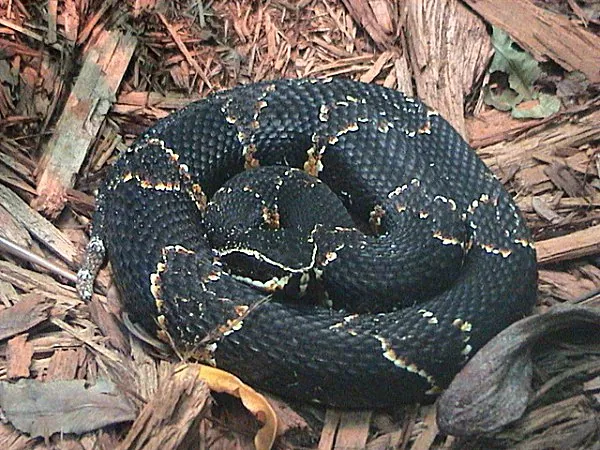
Taylor's cantil is a stout, venomous pitviper that lives only in northeastern Mexico. It is rare in the wild, and it is known to be very defensive when approached or restrained. Its name honours Edward Harrison Taylor, a herpetologist who studied the reptiles and amphibians of Mexico.1
 Hono anndirtee ngal
- Two bold white or yellowish stripes run along each side of the face.1
- The body has a pattern of black and grey-brown bands, accented with white, yellow and orange.1
- Males are noticeably darker than females, and some older males become nearly black.1
- The tail ends in a small, downturned, spine-like scale.1
- Adults are stout and medium-sized, usually 64 to 90 cm long.1
No jiibondiree e: Other members of the genus Agkistrodon differ in several ways. The cottonmouth and Conant's cantil lack the loreal scale that Taylor's cantil has, and the copperhead and broad-banded cantil lack its face stripes. Taylor's cantil also has fewer subcaudal scales than the other cantils, 45 to 56 in males and 40 to 47 in females.1
Doole tooke ŋatgol
Tooke no yaltira ñiiƴe mum tuma ngal ŋatata.
Ko honɗun tooke mum waɗata (ŋatgol walla jukkugol)?
Its venom is believed to be similar to that of its close relative, the cantil Agkistrodon bilineatus. The venom is considered potentially fatal.1
Hono musiiba mum heewiri e yimɓe?
Musiiba e yimɓe: Musiiba sanneNo waawi warugol neɗɗo mo safraaka.No case reports of human envenomations have been published. Because the snake is rare and its venom is thought to be potentially fatal, it is treated with caution.1
Ko honɗun ngal waɗata si ngal hulii?
It is not overtly aggressive, but it is very defensive, with a volatile temper, and may be quick to strike when approached, threatened or restrained.1
 Si no ŋata
- Haɗu neɗɗo on dillagol, deeƴnu mo, jogo koyngal walla jungo ŋataaɗo on e toownde ɓernde, ittu baagiiji e ko tiiɗi fow, yahra mo lopitaan law.
Adii fow noddu nimero ballal (112, 000, 911). Ɗum ko anndinal ballal adiingal, wanaa saaraangal doktoro. Ko adii nder ballal adiingal
 Reen hoore maa
- Wota a meem, wota a nanngu, wota a jalnu kullal ladde haa abada, hay si ko tokooso, hay si no yi'ee no ɗaanii walla maayii.
- Accu ngal nokku. Si a fotti e ngal, deeƴu, ruttu ɓaawo seeɗa seeɗa, accu ngal yaha laawol mum.
- Si gooto e majji ŋatii ma: deeƴu, wota a dillu, noddu nimero ballal (112, 000, 911) walla yahu lopitaan law. Jogo e hakkille no ngal nanndi, natal no walla.
Ngal faalaaka gaañugol ma. Ngal no huutora tooke mum ngam nanngugol ñaamdu walla reenugol hoore mum, ngal ɓuri yiɗugol suuɗaade. Ko ɓeydi fii reenugol hoore maa
Hoto nder aduna?
Hono mawniri?
Hono juutiri?
 juuti no ulluuɗi suudu 2, hinere haa lawol
 juuti no banaanaaji 5 jokkondirɗi
 no waawi taccugol meeteruuji 100 nder segonde 100 (neɗɗo ɓurɗo yaawugol sokli 9,6)
Hono Taylor's cantil mawniri, si fooɗondiraama e AN?
Ko limoore tun nder navigateur maa. Alaa ko danndetee walla ko neldetee ka nokku woo.
Hono yaawiri?


Humpito
Only a handful of specimens were known for decades. A 1948 to 1953 field study in Tamaulipas yielded just three specimens over 14 months of fieldwork.1
It is the only species in its genus with an obvious difference in colour between males and females.1
It was first collected in 1938 crawling on a highway, and it was not formally described as a subspecies until 1951.1
Its tail is proportionately shorter than in other cantils, making up 16 to 19% of total length in males and 13 to 18% in females.1
Ngam ganduɓe tooke
Ɗo humpitooji ɗin iwri
- Agkistrodon taylori (Wikipedia (CC BY-SA 4.0))
- Agkistrodon taylori (iNaturalist): inɗe e ŋoordingol (classification).
- Venom Wiki: tolno musiiba, mawnugol aadaajo e miijo yaawugol ko amen. Ndaar no min ƴeewtirta ɗum: Hono min tolnirta musiiba.
Kala humpito nder ngoo hello no jogii limoore hollirnde iwdi mum. Si min juumii, yaafo, min ko yiɗɓe kulle, wanaa jaaynde ganndal. Haalan min e [email protected], min feewnitan.
 Yaare nden no weelaa! Venom Wiki ko golle neɗɗo gooto: ko yoɓetaake, alaa piiblisite, alaa reweteeɓe. Kopporde tokooso no walla heddingol ɗum e enternet.Ñaamnu yaare nden
 Terciopelo
 Eyelash viper
 Cottonmouth
 Eastern copperhead
 Cantil
 Central American bushmaster
 Eastern coral snake
 Eastern diamondback rattlesnake
 Timber rattlesnake
 Western diamondback rattlesnake
 Arizona bark scorpion
 Brown recluse