
 Afirik
 Aazi
Aazi Orop
Orop Amerik Sud
 Ostarali e Oseyani
 Antarktik
 Geeci Pasifik
 Geeci Atlantik
 Geeci Enndo
 Geeci Arktik
 Geeci Mediteraane
 Geeci Boɗeewi
 Geeci Karayib
 Geeci Korayl
 Geeci Siin Sud
 Geeci Filipiin
 Geeci Andaman
 Geeci Nord
 Geeci Timor e Arafura
 Gulf Bengal
 Gulf Kaliforni
Woodlouse spider
 Ŋatgol
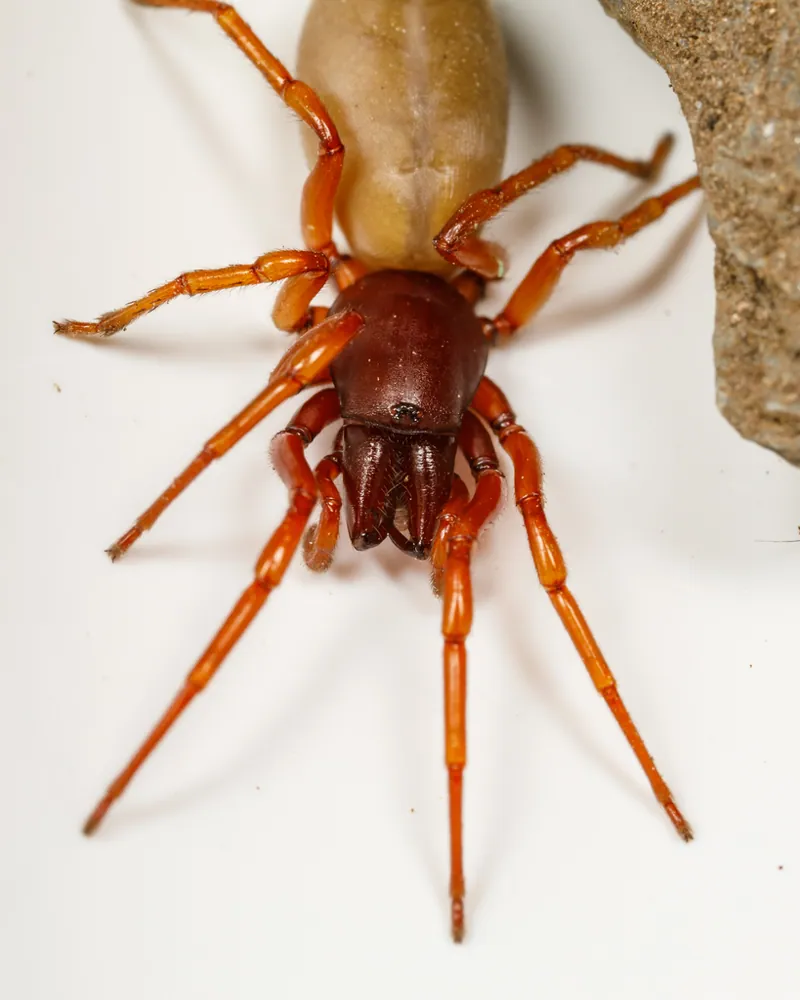
The woodlouse spider is a small spider that hunts woodlice, the small grey creatures that curl up when touched. It lives in warm places under logs, stones and plant pots, and it is now found on almost every continent except Antarctica. It is a skilled hunter with large fangs, but it is not known to be a health risk to people.1



 Hono anndirtee ngal
- Six eyes.1
- A tawny orange to dark red head and chest section (cephalothorax) and legs.1
- A shiny, pale beige to yellow-brown abdomen, which can be dark grey and sometimes very shiny.1
- Very large fangs (chelicerae) for a spider of its size.1
- Adult females are 11 to 15 mm long, and males are 9 to 10 mm long.1
No jiibondiree e: The woodlouse spider can be hard to tell apart from Dysdera erythrina, which is much less common. D. erythrina is not usually found near human homes, so location can help.1
Doole tooke ŋatgol
Tooke no yaltira ñiiƴe mum tuma ngal ŋatata.
Ko honɗun tooke mum waɗata (ŋatgol walla jukkugol)?
It injects venom through its fangs to subdue its prey. In people, bites have been known to cause localised itching at the bite site.1
Hono musiiba mum heewiri e yimɓe?
Musiiba e yimɓe: SeeɗaNo jukkugol ñaaki walla ko ɓuri famɗugol. Ko ɓadii alaa musiiba e yimɓe.It is a dangerous predator for woodlice but is not known to be a health hazard to humans or smaller animals. It has been known to bite people if handled. Verified bites have caused no major medical problems.1
 Si no ŋata
- Loot nokku ŋataaɗo on, waɗ galaasi e dow mum ngam muusu. Heɓu ballal doktoro si muusu ngu no tiiɗi, no saakoo, walla neɗɗo on no yi'a o selliraali.
Adii fow noddu nimero ballal (112, 000, 911). Ɗum ko anndinal ballal adiingal, wanaa saaraangal doktoro. Ko adii nder ballal adiingal
 Reen hoore maa
- Wota a meem, wota a nanngu, wota a jalnu kullal ladde haa abada, hay si ko tokooso, hay si no yi'ee no ɗaanii walla maayii.
- Accu ngal nokku. Si a fotti e ngal, deeƴu, ruttu ɓaawo seeɗa seeɗa, accu ngal yaha laawol mum.
- Si gooto e majji ŋatii ma: deeƴu, wota a dillu, noddu nimero ballal (112, 000, 911) walla yahu lopitaan law. Jogo e hakkille no ngal nanndi, natal no walla.
Ngal faalaaka gaañugol ma. Ngal no huutora tooke mum ngam nanngugol ñaamdu walla reenugol hoore mum, ngal ɓuri yiɗugol suuɗaade. Ko ɓeydi fii reenugol hoore maa
Hoto nder aduna?
Hono mawniri?
Hono juutiri?
 ɓuri hoɓɓere maa tokoosere rabbiɗugol
Hono Woodlouse spider mawniri, si fooɗondiraama e AN?
Ko limoore tun nder navigateur maa. Alaa ko danndetee walla ko neldetee ka nokku woo.
Hono yaawiri?


Humpito
It is an unusually dominant predator for its size because of its large fangs and wide gape.1
It often dominates and sometimes kills other spiders and centipedes.1
Courtship is typically aggressive, and mates can be injured by each other's large fangs.1
It hunts at night and does not spin a web. Instead, it searches warm places for prey.1
Although it began in the Mediterranean, it is now found on several continents, including Australia and New Zealand.1
Bonnoowo fenaandeeji
Fenaande: Woodlouse spiders are dangerous to people.
Goonga: They are not known to be a health hazard to humans. They can bite if handled, but verified bites have not caused major medical problems.1
Ɗo humpitooji ɗin iwri
- Woodlouse spider (Wikipedia (CC BY-SA 4.0))
- Dysdera crocata (iNaturalist): inɗe e ŋoordingol (classification).
- Venom Wiki: tolno musiiba, mawnugol aadaajo e miijo yaawugol ko amen. Ndaar no min ƴeewtirta ɗum: Hono min tolnirta musiiba.
Kala humpito nder ngoo hello no jogii limoore hollirnde iwdi mum. Si min juumii, yaafo, min ko yiɗɓe kulle, wanaa jaaynde ganndal. Haalan min e [email protected], min feewnitan.
 Yaare nden no weelaa! Venom Wiki ko golle neɗɗo gooto: ko yoɓetaake, alaa piiblisite, alaa reweteeɓe. Kopporde tokooso no walla heddingol ɗum e enternet.Ñaamnu yaare nden
Ko ɓeydi e fedde wootere: Araañeeji
 Mediterranean black widow
 Diving bell spider
 European yellow sac spider
 Noble false widow
 Tarantula wolf spider
 Daddy long-legs spider
No hoɗi kadi nder: Orop
 Common European adderWipeeri e adderNo sokli doktoro
 Spanish flyKulle goɗɗe tookeeje ɓannduNo sokli doktoroWota a meem
 Common waspÑaaki, ɗuggi e ɗuggi mawɗiNo muusi tun
 European hornetÑaaki, ɗuggi e ɗuggi mawɗiNo muusi tun
 Fire salamanderPaaɓe tooke, krapooji e tritonuujiNo muusi tunWota a meem
 Western honey beeÑaaki, ɗuggi e ɗuggi mawɗiNo muusi tun