
 Afirik
 Asiya
Asiya Turai
Turai Amerik Worgo
 Australiya e Oseaniya
 Antarktika
 Baharu Pasifik
 Baharu Atlantik
 Baharu Indiya
 Baharu Arktik
 Baharu Mediterane
 Baharu Boɗeeru
 Baharu Karibiya
 Baharu Koral
 Baharu Ciina Worgo
 Baharu Filipin
 Baharu Andaman
 Baharu Rewo
 Baharu Timor e Arafura
 Baharu Bengal
 Baharu Kaliforniya
Blotched palm pitviper
 Ina ŋata
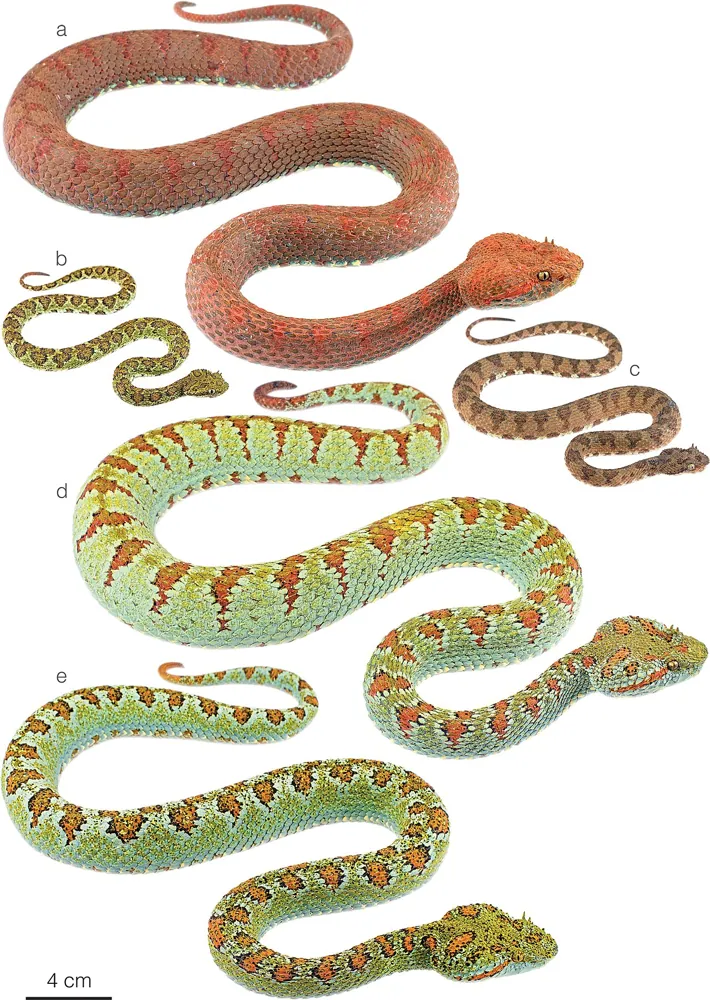
The blotched eyelash-pitviper is a venomous snake that lives in the mountain forests of southern Costa Rica and western Panama. It spends much of its time in trees and is active mainly at dusk or at night. Its bite can cause serious bleeding and muscle damage, so it is important to recognise it and keep well away.1


 No anndirto nde
- Usually bright green or moss-green, though it can also be bluish-green, reddish-brown or reddish-maroon.1
- Irregular dark blotches run along the back, and these sometimes join to form crossbands.1
- The belly is light in colour.1
- The head has dark stripes and prominent scales above the eyes, which give it the name eyelash-pitviper.1
- Usually 50–60 cm long including the tail, and can reach 80 cm.1
Doole tooke
Tooke ina yalta e ñiiƴe mum si nde ŋatii.
Hol ko tooke mum (ŋatol walla fiɗol) waɗata?
Its venom has a potent haemorrhagic action, which damages blood vessels and causes bleeding. It also has moderate myotoxicity, which destroys muscle tissue, and a very weak procoagulant effect, which can slightly speed up clotting.1
Hol no nde woni bone e yimɓe?
Bone e yimɓe: Bone mawɗoŊatol ina haani doktaa. Maayde ina woodi seeɗa sanne. Kabaru moƴƴo: doktaaɓe ina njogii lekki (antivenom) walla safaara ngam ɗum.1
 Si nde ŋatii
- Deeƴin neɗɗo oo, taa o dilla, waɗu koyngal walla junngo ŋataangal e toowal ɓernde, ittu zoobe e geɗe ɗigginiiɗe, yahra mo asibiti law.
Sahaa fof, noddu lamba ballal yaawngal (112, 000, 911) ko adii. Ɗum ko ballal arano kuuɓal, wonaa wasiyya doktaa. Aslu ballal arano
 Reen hoore maa
- Taa memu, taa nanngu, taa aaɓnu dabbaare ladde abada, hay pamaro, hay si ina wayi no ɗaanii walla maayii.
- Accu nde nokku. Si a fottii e gooto, deeƴu, ruttu caggal seeɗa seeɗa, accu nde yaha laawol mum.
- Si gooto e majji ŋatii ma: deeƴu, taa dillu, noddu lamba ballal yaawngal (112, 000, 911) walla yah asibiti law. Siftor no nde wayri, foto ina walla.
Nde ɗaɓɓaaki ma. Nde huutora tooke mum ngam nanngude ñaamdu walla reende hoore mum, nde ɓuri yiɗde suuɗaade. Ɓeydu anndude no reentorto
Hol to e aduna?
Hol no nde mawni?
Hol no nde juuti?
 juuti no ullundi galle 1,5, hinere haa laaci
 juuti no ayaba 4 jokkondiraaɗi
 ina waawi dogde meeter 100 nder sakan 110 (neɗɗo ɓurɗo yaawde ina haani 9,6)
Hol no Blotched palm pitviper mawni, fottindaade e AAN?
Hiisa tan nder browser maa. Alaa ko mooftetee walla ko neletee.
Hol no nde yaawi?


Anndal
Unlike most other Bothriechis species, it spends more time on the ground, and it may rest on the ground or at the base of trees and shrubs during the day.1
Its venom has an estimated LD50 of 6.04 mg/kg. LD50 is the dose that is expected to kill half of a test group, so a lower number means a more toxic venom.1
An antivenom made in horses, using venoms from Bothrops asper, Crotalus simus and another snake species, has been reported to neutralise its venom in tests.1
Females are longer and thicker than males, and this is the only difference between the sexes that has been noted.1
Ɗo anndal iwi
- Bothriechis supraciliaris (Wikipedia (CC BY-SA 4.0))
- Bothriechis supraciliaris (iNaturalist): inɗe e tolnugol.
- Venom Wiki: darja bone, mawnude woowaaɗo e miijo yaawre ko amen. Ndaar no min hiisirta ɗum: No min betiri bone.
Kala anndal e ngoo hello ina jogii limre hollirnde iwdi mum. Si min juumii, accu min, min yiɗɓe dabbaaji, wonaa jaridaa ganndal. Wiy min e [email protected] min feewnitay.
 Yaare nden ina heege! Venom Wiki ko golle neɗɗo gooto: meere, tawa tallaaji alaa, trackers alaa. Ballal pamarngal ina walla heddinde ɗum e internet.Ñaamnu yaare nden
 Terciopelo
 Eyelash viper
 Cottonmouth
 Eastern copperhead
 Cantil
 Central American bushmaster
 Eastern coral snake
 Eastern diamondback rattlesnake
 Timber rattlesnake
 Western diamondback rattlesnake
 Arizona bark scorpion
 Brown recluse