
 Afirik
 Asiya
Asiya Turai
Turai Amerik Worgo
 Australiya e Oseaniya
 Antarktika
 Baharu Pasifik
 Baharu Atlantik
 Baharu Indiya
 Baharu Arktik
 Baharu Mediterane
 Baharu Boɗeeru
 Baharu Karibiya
 Baharu Koral
 Baharu Ciina Worgo
 Baharu Filipin
 Baharu Andaman
 Baharu Rewo
 Baharu Timor e Arafura
 Baharu Bengal
 Baharu Kaliforniya
Brown tree snake
 Ina ŋata
The brown tree snake is a slender, night-active snake that climbs well and hunts in trees and on the ground. It lives in coastal northern and eastern Australia, eastern Indonesia, Papua New Guinea and nearby islands. It is famous for harming wildlife on the island of Guam, where it was introduced by accident.1



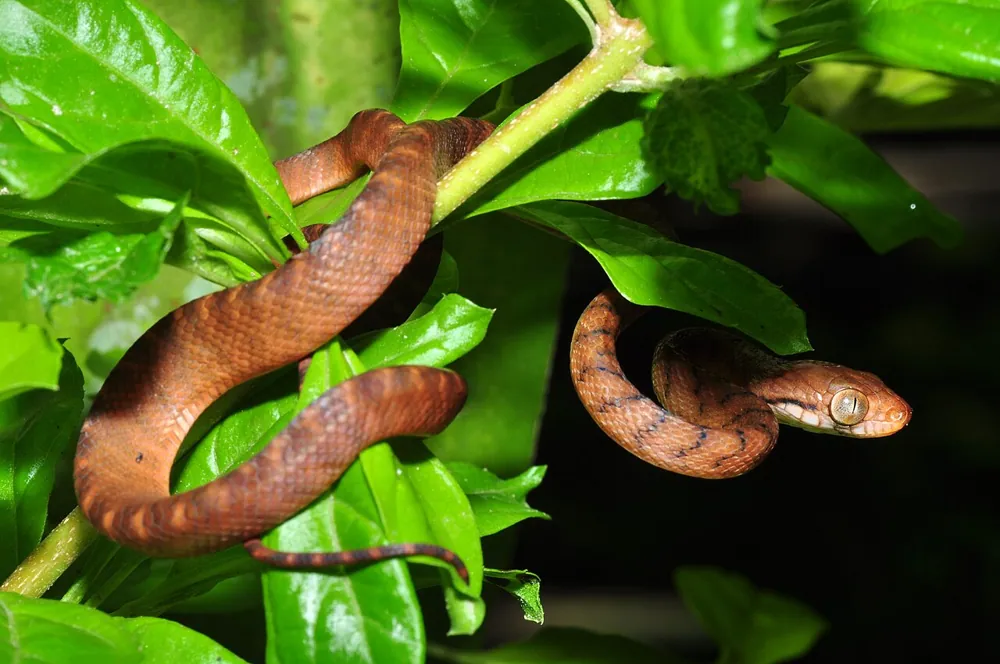
 No anndirto nde
Doole tooke
Tooke ina yalta e ñiiƴe mum si nde ŋatii.
Hol ko tooke mum (ŋatol walla fiɗol) waɗata?
It has two small, grooved fangs at the back of the mouth, so venom flows into the bite slowly rather than being injected in one go. The venom is weakly neurotoxic, meaning it affects the nerves, and may also damage cells locally. Its effects are trivial for adults, and it is mainly used to subdue lizards.1
Hol no nde woni bone e yimɓe?
Bone e yimɓe: Ina muusaIna waawi muusude sanne, kono ɓadii abada wonaa bone mawɗo.The snake is considered aggressive when threatened but not dangerous to adult humans. Serious medical consequences have been limited to children, who are more affected because of their low body mass. On Guam, it has caused widespread power outages, pet losses and emotional distress to residents.1
Hol ko nde waɗata si nde hulii?
When threatened it is highly aggressive, lunging and striking at the attacker repeatedly.1
 Si nde ŋatii
- Lootu ŋatol ngol, deeƴin neɗɗo oo, heɓu ballal doktaa. Ɓoɗɗi goɗɗi (ko wayi no boomslang) ina mbaawi warde caggal awaaji.
Sahaa fof, noddu lamba ballal yaawngal (112, 000, 911) ko adii. Ɗum ko ballal arano kuuɓal, wonaa wasiyya doktaa. Aslu ballal arano
 Reen hoore maa
- Taa memu, taa nanngu, taa aaɓnu dabbaare ladde abada, hay pamaro, hay si ina wayi no ɗaanii walla maayii.
- Accu nde nokku. Si a fottii e gooto, deeƴu, ruttu caggal seeɗa seeɗa, accu nde yaha laawol mum.
- Si gooto e majji ŋatii ma: deeƴu, taa dillu, noddu lamba ballal yaawngal (112, 000, 911) walla yah asibiti law. Siftor no nde wayri, foto ina walla.
Nde ɗaɓɓaaki ma. Nde huutora tooke mum ngam nanngude ñaamdu walla reende hoore mum, nde ɓuri yiɗde suuɗaade. Ɓeydu anndude no reentorto
Hol to e aduna?
Hol no nde mawni?
Hol no nde juuti?
 juuti no ullundi galle 4, hinere haa laaci
 juuti no ayaba 11 jokkondiraaɗi
 ina waawi dogde meeter 100 nder sakan 60 (neɗɗo ɓurɗo yaawde ina haani 9,6)
Hol no Brown tree snake mawni, fottindaade e AAN?
Hiisa tan nder browser maa. Alaa ko mooftetee walla ko neletee.
Hol no nde yaawi?


Anndal
Snakes on Guam have been seen moving up large smooth cylinders using a method called 'lasso locomotion', which had not been recorded in snakes before. It is tiring, so they move slowly and stop often.1
On Guam, where prey is plentiful and there are few predators, the snakes have grown to 3 m, much longer than their typical 1 to 2 m in their native range.1
Shortly after World War II, the snake reached Guam by accident, probably as a stowaway in ship cargo or in aircraft landing gear. Its numbers then grew to unprecedented levels.1
Trained dogs are used on Guam to find and remove snakes before cargo and transport vessels leave the island.1
Female brown tree snakes have been seen performing courtship behaviours normally used by males, such as tongue-flicking and head-jerking.1
Brown tree snakes can survive for long periods without food.1
Feññinoowo goonga
Fenaande: The brown tree snake is a deadly snake that is dangerous to adults.
Goonga: It is not considered dangerous to adult humans. Its venom is weak and serious effects have mainly been seen in young children.1
Ngam ganduɓe tooke
Ɗo anndal iwi
- Brown tree snake (Wikipedia (CC BY-SA 4.0))
- Boiga irregularis (iNaturalist): inɗe e tolnugol.
- Venom Wiki: darja bone, mawnude woowaaɗo e miijo yaawre ko amen. Ndaar no min hiisirta ɗum: No min betiri bone.
Kala anndal e ngoo hello ina jogii limre hollirnde iwdi mum. Si min juumii, accu min, min yiɗɓe dabbaaji, wonaa jaridaa ganndal. Wiy min e [email protected] min feewnitay.
 Yaare nden ina heege! Venom Wiki ko golle neɗɗo gooto: meere, tawa tallaaji alaa, trackers alaa. Ballal pamarngal ina walla heddinde ɗum e internet.Ñaamnu yaare nden
 Tiger keelback
 Red-necked keelback
 Green cat snake
 Mangrove snake
 Asian vine snake
 Golden tree snake
 Deathstalker
 Indian cobra
 Indian saw-scaled viper
 King cobra
 Puff adder
 Mboddi Russell
_(8387580552).jpg)