
 Afirik
 Asiya
Asiya Turai
Turai Amerik Worgo
 Australiya e Oseaniya
 Antarktika
 Baharu Pasifik
 Baharu Atlantik
 Baharu Indiya
 Baharu Arktik
 Baharu Mediterane
 Baharu Boɗeeru
 Baharu Karibiya
 Baharu Koral
 Baharu Ciina Worgo
 Baharu Filipin
 Baharu Andaman
 Baharu Rewo
 Baharu Timor e Arafura
 Baharu Bengal
 Baharu Kaliforniya
Deathstalker
 Ina fiɗa
The deathstalker is a yellow scorpion that lives in deserts and scrubland from North Africa across the Middle East to Central Asia. It is one of the most dangerous scorpions in the world, and its venom is being studied as a possible way to help treat brain tumours.1
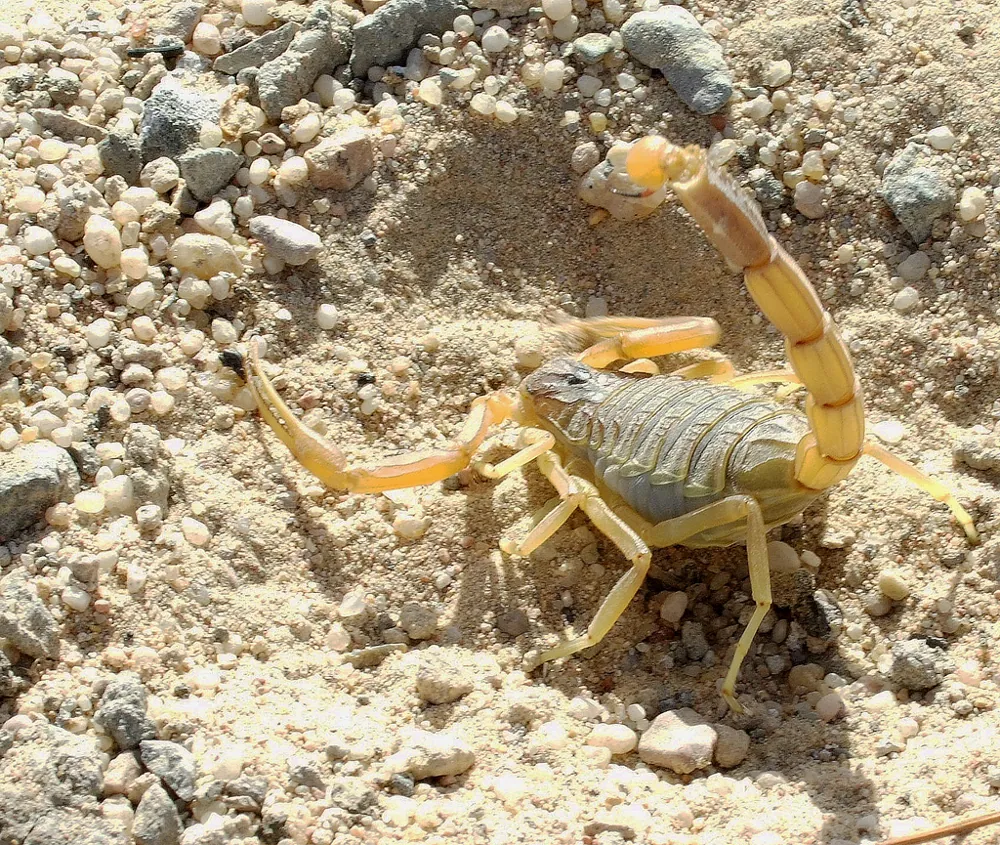
 No anndirto nde
Doole tooke
Tooke ina yalta e fiɗirgal.
Hol ko tooke mum (ŋatol walla fiɗol) waɗata?
The venom is a powerful mixture of neurotoxins, which attack the nerves. Its named components include chlorotoxin, charybdotoxin, scyllatoxin and agitoxins. A sting is extraordinarily painful. There is also a high rate of pancreatitis (inflammation of the pancreas) after envenomation, and any sting carries a risk of anaphylaxis, a severe allergic reaction.1
Hol no nde woni bone e yimɓe?
Bone e yimɓe: WarooɗoGooto e dabbaaji ɓurɗi bone e aduna.The deathstalker is one of the most dangerous scorpion species. Its venom has a low lethal dose, but a sting normally would not kill a healthy adult. Young children, elderly people and those who are infirm, such as people with heart conditions or allergies, are at much greater risk. If a sting proves deadly, the usual cause of death is pulmonary edema, which is fluid build-up in the lungs.1
 Kabaru moƴƴo: doktaaɓe ina njogii lekki (antivenom) walla safaara ngam ɗum.1
 Si nde fiɗii
- Envenomation is considered a medical emergency, even with treatment. Antivenom exists, but the venom is unusually resistant to treatment and typically needs large doses. Medical help should be sought urgently.1
- Ɓuuɓnu fiɗol ngol e kankara, deeƴin neɗɗo oo taa o dilla. Heɓu ballal doktaa law, haa teeŋti e sukaaɓe: yaaje goɗɗe ina mbaroo sukaaɓe.
Sahaa fof, noddu lamba ballal yaawngal (112, 000, 911) ko adii. Ɗum ko ballal arano kuuɓal, wonaa wasiyya doktaa. Aslu ballal arano
 Reen hoore maa
- Taa memu, taa nanngu, taa aaɓnu dabbaare ladde abada, hay pamaro, hay si ina wayi no ɗaanii walla maayii.
- Accu nde nokku. Si a fottii e gooto, deeƴu, ruttu caggal seeɗa seeɗa, accu nde yaha laawol mum.
- Si gooto e majji fiɗii ma: deeƴu, taa dillu, noddu lamba ballal yaawngal (112, 000, 911) walla yah asibiti law. Siftor no nde wayri, foto ina walla.
Nde ɗaɓɓaaki ma. Nde huutora tooke mum ngam nanngude ñaamdu walla reende hoore mum, nde ɓuri yiɗde suuɗaade. Ɓeydu anndude no reentorto
Hol to e aduna?
Hol no nde mawni?
Hol no nde juuti?
 juuti no bulok fijo 2,5 jokkondiraaɗi
 ina waawi dogde meeter 100 nder sakan 210 (neɗɗo ɓurɗo yaawde ina haani 9,6)
Hol no Deathstalker mawni, fottindaade e AAN?
Hiisa tan nder browser maa. Alaa ko mooftetee walla ko neletee.
Hol no nde yaawi?


Anndal
Its venom contains chlorotoxin, a peptide that has shown potential for treating human brain tumours.1
In preclinical animal trials, the paint could highlight clusters of as few as 200 cancer cells, while the lower limit for standard MRI was above 500,000.1
In 2015, clinical trials began on chlorotoxin with a fluorescent molecule attached, used as a brain tumour "paint" to mark cancer cells during surgery.1
There is some evidence that other venom components may help regulate insulin and could be used to treat diabetes.1
Feññinoowo goonga
Fenaande: A deathstalker sting always kills.
Goonga: A sting normally would not kill a healthy adult, but young children, the elderly and people with certain health conditions are at much greater risk.1
Ɗo anndal iwi
- Deathstalker (Wikipedia (CC BY-SA 4.0))
- Leiurus quinquestriatus (iNaturalist): inɗe e tolnugol.
- Venom Wiki: darja bone, mawnude woowaaɗo e miijo yaawre ko amen. Ndaar no min hiisirta ɗum: No min betiri bone.
Kala anndal e ngoo hello ina jogii limre hollirnde iwdi mum. Si min juumii, accu min, min yiɗɓe dabbaaji, wonaa jaridaa ganndal. Wiy min e [email protected] min feewnitay.
 Yaare nden ina heege! Venom Wiki ko golle neɗɗo gooto: meere, tawa tallaaji alaa, trackers alaa. Ballal pamarngal ina walla heddinde ɗum e internet.Ñaamnu yaare nden
 Fat-tailed scorpion
 Emperor scorpion
 Indian red scorpion
 Arabian fat-tailed scorpion
 Transvaal thick-tailed scorpion
 Chinese scorpion
 Black mamba
 Egyptian cobra
 Puff adder
 Boomslang
 Gaboon viper
 Western honey bee