
 Afirik
 Asiya
Asiya Turai
Turai Amerik Worgo
 Australiya e Oseaniya
 Antarktika
 Baharu Pasifik
 Baharu Atlantik
 Baharu Indiya
 Baharu Arktik
 Baharu Mediterane
 Baharu Boɗeeru
 Baharu Karibiya
 Baharu Koral
 Baharu Ciina Worgo
 Baharu Filipin
 Baharu Andaman
 Baharu Rewo
 Baharu Timor e Arafura
 Baharu Bengal
 Baharu Kaliforniya
Green cat snake
 Ina ŋata
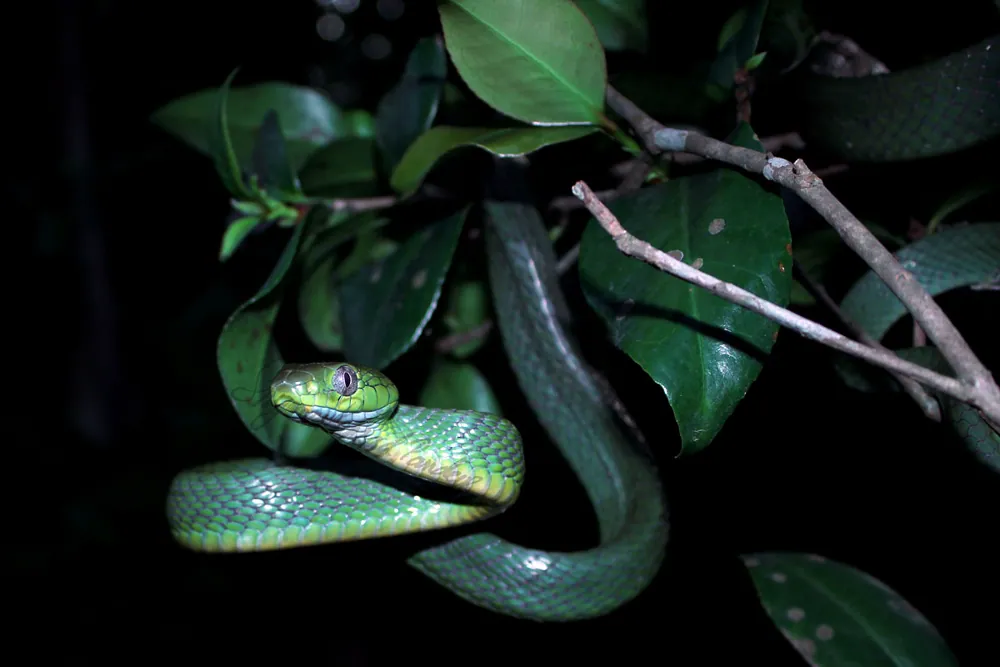
The green cat snake is a slim, bright green snake that lives mostly in trees. It is found in South Asia, China and South-east Asia, mainly in forests. It is a rear-fanged snake that is only mildly venomous to people.1



 No anndirto nde
- Uniform green back, or green mixed with grey or blue1
- Greenish or yellowish white belly1
- Large eyes with vertical, cat-like pupils, and golden brown irises1
- Yellowish upper lip, with most head scales edged in black1
- Hatchlings are reddish brown with a green head, and begin to turn green at about 8 to 9 months old1
Doole tooke
Tooke ina yalta e ñiiƴe mum si nde ŋatii.
Hol ko tooke mum (ŋatol walla fiɗol) waɗata?
This is a rear-fanged snake, meaning its fangs are at the back of the mouth, and it is described as mildly venomous. Its venom can paralyse small prey. Bites are expected to cause only mild to moderate local swelling and pain, with occasional bruising, numbness, redness or bleeding, but no tissue death (necrosis) and no whole-body (systemic) effects.1
Hol no nde woni bone e yimɓe?
Bone e yimɓe: Ina muusaIna waawi muusude sanne, kono ɓadii abada wonaa bone mawɗo.Bites are not expected to cause medically significant effects. Most cases are minor, but some are more severe and need hospital admission and treatment.1
Hol ko nde waɗata si nde hulii?
Usually sluggish and hard to provoke into striking, it may become hostile when threatened and display with its mouth wide open.1
 Si nde ŋatii
- Bites usually need no treatment beyond checking for infection and making sure tetanus protection is up to date. Anyone who develops local symptoms, such as signs of infection, should return for medical review. Some bites are more severe and need hospital care, so a careful assessment is needed before discharge.1
- Lootu ŋatol ngol, deeƴin neɗɗo oo, heɓu ballal doktaa. Ɓoɗɗi goɗɗi (ko wayi no boomslang) ina mbaawi warde caggal awaaji.
Sahaa fof, noddu lamba ballal yaawngal (112, 000, 911) ko adii. Ɗum ko ballal arano kuuɓal, wonaa wasiyya doktaa. Aslu ballal arano
 Reen hoore maa
- Taa memu, taa nanngu, taa aaɓnu dabbaare ladde abada, hay pamaro, hay si ina wayi no ɗaanii walla maayii.
- Accu nde nokku. Si a fottii e gooto, deeƴu, ruttu caggal seeɗa seeɗa, accu nde yaha laawol mum.
- Si gooto e majji ŋatii ma: deeƴu, taa dillu, noddu lamba ballal yaawngal (112, 000, 911) walla yah asibiti law. Siftor no nde wayri, foto ina walla.
Nde ɗaɓɓaaki ma. Nde huutora tooke mum ngam nanngude ñaamdu walla reende hoore mum, nde ɓuri yiɗde suuɗaade. Ɓeydu anndude no reentorto
Hol to e aduna?
Hol no nde mawni?
Hol no nde juuti?
 juuti no ullundi galle 4, hinere haa laaci
 juuti no ayaba 11 jokkondiraaɗi
 ina waawi dogde meeter 100 nder sakan 60 (neɗɗo ɓurɗo yaawde ina haani 9,6)
Hol no Green cat snake mawni, fottindaade e AAN?
Hiisa tan nder browser maa. Alaa ko mooftetee walla ko neletee.
Hol no nde yaawi?


Anndal
It is one of the rear-fanged snakes, and its venom is used to paralyse small prey.1
Its long, grasping tail lets it live entirely in trees, so it is described as purely arboreal.1
Despite its size, it is sluggish and makes no attempt to escape when handled.1
Hatchlings look very different from adults, being reddish brown with a green head.1
It hunts at night and rests during the day, coiled among the branches.1
A female lays between 7 and 14 eggs, which take about 85 days to hatch.1
Ɗo anndal iwi
- Boiga cyanea (Wikipedia (CC BY-SA 4.0))
- Boiga cyanea (iNaturalist): inɗe e tolnugol.
- Venom Wiki: darja bone, mawnude woowaaɗo e miijo yaawre ko amen. Ndaar no min hiisirta ɗum: No min betiri bone.
Kala anndal e ngoo hello ina jogii limre hollirnde iwdi mum. Si min juumii, accu min, min yiɗɓe dabbaaji, wonaa jaridaa ganndal. Wiy min e [email protected] min feewnitay.
 Yaare nden ina heege! Venom Wiki ko golle neɗɗo gooto: meere, tawa tallaaji alaa, trackers alaa. Ballal pamarngal ina walla heddinde ɗum e internet.Ñaamnu yaare nden
 Brown tree snake
 Tiger keelback
 Red-necked keelback
 Mangrove snake
 Asian vine snake
 Golden tree snake
 Yaare deathstalker
 Cobra Indiya
 Viper kiifi kaasa Indiya
 King cobra
 Puff adder
 Mboddi Russell