
 Afirik
 Asiya
Asiya Turai
Turai Amerik Worgo
 Australiya e Oseaniya
 Antarktika
 Baharu Pasifik
 Baharu Atlantik
 Baharu Indiya
 Baharu Arktik
 Baharu Mediterane
 Baharu Boɗeeru
 Baharu Karibiya
 Baharu Koral
 Baharu Ciina Worgo
 Baharu Filipin
 Baharu Andaman
 Baharu Rewo
 Baharu Timor e Arafura
 Baharu Bengal
 Baharu Kaliforniya
Cupboard spider
 Ina ŋata
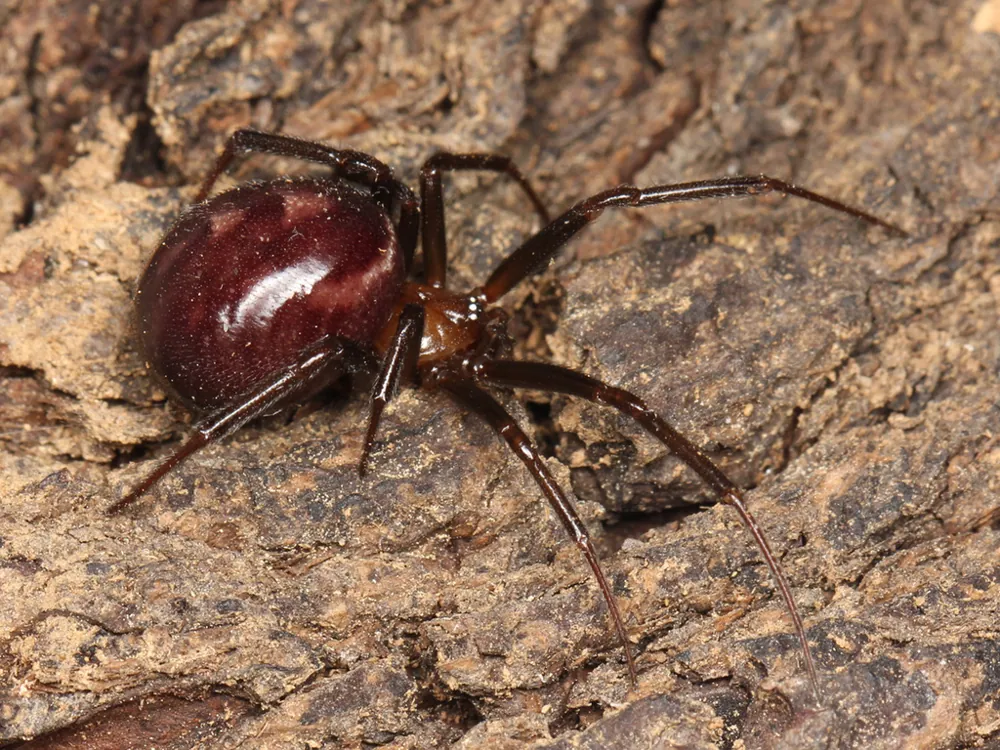
The cupboard spider is a common house spider that lives in dark corners and builds messy, three-dimensional webs. It is often mistaken for the dangerous black widow, but its bite is usually minor. Its name shows that it is found in many parts of the world, including Europe, temperate Asia and areas where it has been introduced.1

 No anndirto nde
- Adult females are 6 to 10.5 mm long, dark coloured and round-bodied, with a bulbous abdomen.1
- Typical colour ranges from purplish brown to black, with light-coloured markings.1
- It has no bright red hourglass pattern or other bright, distinctive markings.1
- Males are thinner and can be nearly as long as females, at 4.1 to 10 mm.1
- Sexually mature males have lighter, more reddish legs than females.1
Ina jiiɓindiree e: It is often confused with black widows and redbacks (Latrodectus species), which have a bright red hourglass pattern that this spider lacks. Steatoda borealis is similar in shape but slightly smaller and found in colder climates. It has coloured markings on the top of the abdomen rather than the underside.1
Doole tooke
Tooke ina yalta e ñiiƴe mum si nde ŋatii.
Hol ko tooke mum (ŋatol walla fiɗol) waɗata?
The bite is minor in humans and has no long-lasting effects. Symptoms can include blistering at the bite site and pain. A few cases have included fever, nausea, sweating and a general feeling of being unwell that lasted several days.1
Hol no nde woni bone e yimɓe?
Bone e yimɓe: HoyɗoNo fiɗol nyaaku walla ɓuri famɗude. Ɓadii alaa bone e yimɓe.The spider is not aggressive. Most injuries to people happen when a spider is accidentally squeezed or pinched and bites in defence. It is possible that a spider may bite a finger pushed into its web by mistake.1
 Kabaru moƴƴo: doktaaɓe ina njogii lekki (antivenom) walla safaara ngam ɗum.1
Hol ko nde waɗata si nde hulii?
It usually flees when a large creature comes near, and it bites when it is squeezed or pinched.1
 Si nde ŋatii
- Lootu ŋatol ngol, waɗu kankara dow mum ngam muusu. Heɓu ballal doktaa si muusu ina tiiɗi, ina yaajoo, walla neɗɗo oo ɓanndu mum welaani.
Sahaa fof, noddu lamba ballal yaawngal (112, 000, 911) ko adii. Ɗum ko ballal arano kuuɓal, wonaa wasiyya doktaa. Aslu ballal arano
 Reen hoore maa
- Taa memu, taa nanngu, taa aaɓnu dabbaare ladde abada, hay pamaro, hay si ina wayi no ɗaanii walla maayii.
- Accu nde nokku. Si a fottii e gooto, deeƴu, ruttu caggal seeɗa seeɗa, accu nde yaha laawol mum.
- Si gooto e majji ŋatii ma: deeƴu, taa dillu, noddu lamba ballal yaawngal (112, 000, 911) walla yah asibiti law. Siftor no nde wayri, foto ina walla.
Nde ɗaɓɓaaki ma. Nde huutora tooke mum ngam nanngude ñaamdu walla reende hoore mum, nde ɓuri yiɗde suuɗaade. Ɓeydu anndude no reentorto
Hol to e aduna?
Hol no nde mawni?
Hol no nde juuti?
 pamaro haa ina waawi joɗaade dow ceɓre feɗeendu maa
Hol no Cupboard spider mawni, fottindaade e AAN?
Hiisa tan nder browser maa. Alaa ko mooftetee walla ko neletee.
Hol no nde yaawi?


Anndal
Director Sam Raimi chose this spider to play the radioactive spider that bites Peter Parker in the 2002 film Spider-Man. The filming spider was painted with red and blue makeup.1
The spider reportedly preys on black widows, which can make it useful to have around.1
It can go several months without feeding, as long as it has access to water.1
Females can live up to six years, while males typically live 1 to 1.5 years and often die shortly after mating.1
Feññinoowo goonga
Fenaande: It is a dangerous widow spider, just like the black widow.
Goonga: Its bite is minor in humans and has no long-lasting effects, although it can cause pain, blistering and, in a few cases, several days of feeling unwell.1
Ngam ganduɓe tooke
- Innde ganndal
- Steatoda grossa
- Fedde
- Gizo-gizo
- Besngu
- Theridiidae2
- Tolno
- Araneae
- Nahiyaaji
- Turai
- Ɓikkoy
- A well-fed female can lay three or more egg sacs each year, with 40 to 100 eggs in each sac. The eggs usually hatch within a month at normal household temperature and humidity, and the spiderlings are independent from the moment they hatch.1
- Duuɓi nguurndam
- ɓadii duuɓi 61
- Bone e yimɓe
- 1 / 5: Hoyɗo3
Ɗo anndal iwi
- Steatoda grossa (Wikipedia (CC BY-SA 4.0))
- Steatoda grossa (iNaturalist): inɗe e tolnugol.
- Venom Wiki: darja bone, mawnude woowaaɗo e miijo yaawre ko amen. Ndaar no min hiisirta ɗum: No min betiri bone.
Kala anndal e ngoo hello ina jogii limre hollirnde iwdi mum. Si min juumii, accu min, min yiɗɓe dabbaaji, wonaa jaridaa ganndal. Wiy min e [email protected] min feewnitay.
 Yaare nden ina heege! Venom Wiki ko golle neɗɗo gooto: meere, tawa tallaaji alaa, trackers alaa. Ballal pamarngal ina walla heddinde ɗum e internet.Ñaamnu yaare nden
Goɗɗi e fedde wootere: Gizo-gizo
 Mediterranean black widow
 Diving bell spider
 European yellow sac spider
 Noble false widow
 Tarantula wolf spider
 Daddy long-legs spider
Ina wona kadi e: Turai
 Common European adderViper e adderIna haani doktaa
 Spanish flyDabbaaji goɗɗi tooke memde walla ñaamdeIna haani doktaaTaa memu
 Common waspNyaakuuje, zanzaro e zanzaro mawɓeIna muusa tan
 European hornetNyaakuuje, zanzaro e zanzaro mawɓeIna muusa tan
 Fire salamanderKwaɗoji tooke, kwaɗoji mawɗi e newtIna muusa tanTaa memu
 Western honey beeNyaakuuje, zanzaro e zanzaro mawɓeIna muusa tan