
 Afirik
 Asiya
Asiya Turai
Turai Amerik Worgo
 Australiya e Oseaniya
 Antarktika
 Baharu Pasifik
 Baharu Atlantik
 Baharu Indiya
 Baharu Arktik
 Baharu Mediterane
 Baharu Boɗeeru
 Baharu Karibiya
 Baharu Koral
 Baharu Ciina Worgo
 Baharu Filipin
 Baharu Andaman
 Baharu Rewo
 Baharu Timor e Arafura
 Baharu Bengal
 Baharu Kaliforniya
East Pacific red octopus
 Ina ŋata
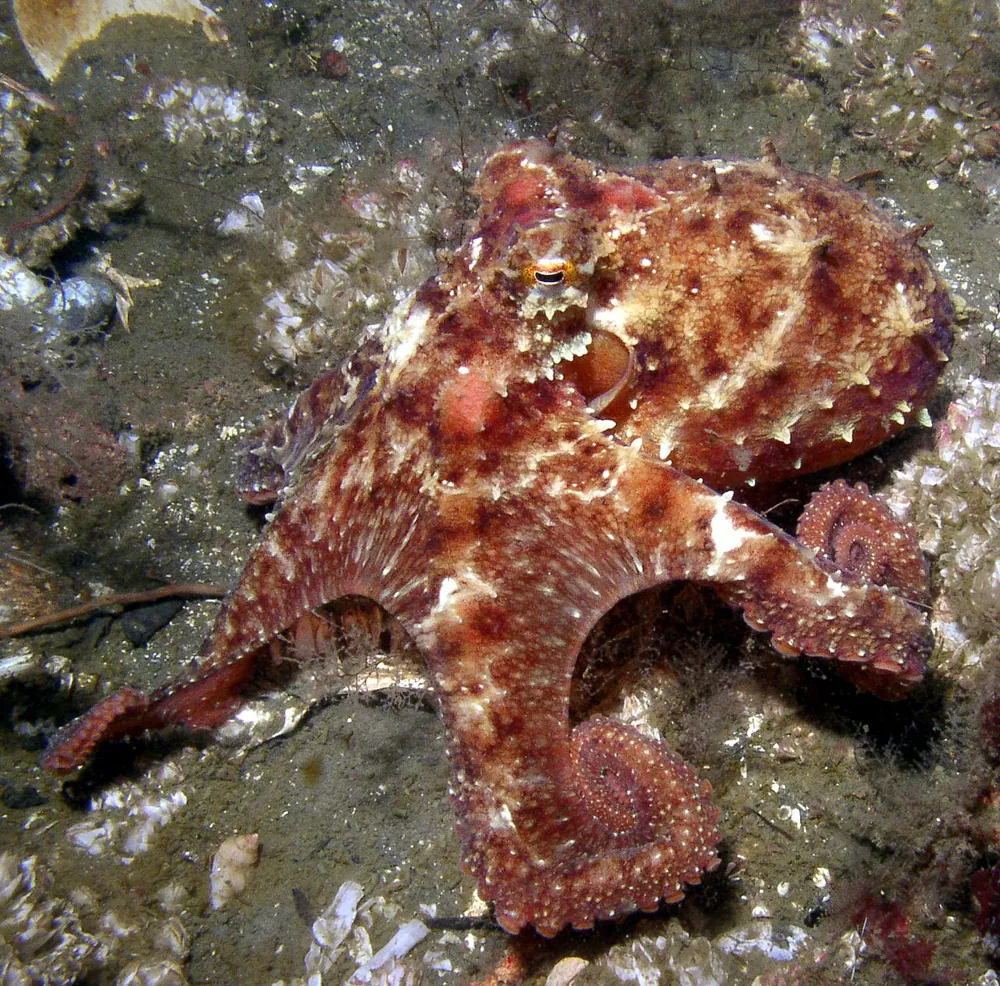
The East Pacific red octopus is a small octopus that lives along the North American West Coast. It is the most common shallow-water octopus in much of this region and hunts on the seabed. It is special because scientists have shown it has individual personalities, the first invertebrate found to have them.1


 No anndirto nde
- Its colour can vary from deep brick red to brown, to white, or a mottled mixture of these.1
- It can change both its colour and skin texture.1
- It has three eyelash-like papillae (small bumps) below each eye.1
- Adults usually have a mantle (body) length of 8–10 cm, with arms of 30–40 cm.1
Ina jiiɓindiree e: Small individuals of the giant Pacific octopus (Enteroctopus dofleini) can be mistaken for it in the north of its range. The East Pacific red octopus has three eyelash-like papillae below each eye, which the giant Pacific octopus lacks.1
Doole tooke
Tooke ina yalta e ñiiƴe mum si nde ŋatii.
Hol ko tooke mum (ŋatol walla fiɗol) waɗata?
It uses venom to subdue its prey. After catching a bivalve such as a clam, it drills a hole through the shell near the adductor muscles and injects venom through that hole.1
Hol no nde woni bone e yimɓe?
Bone e yimɓe: Ina muusaIna waawi muusude sanne, kono ɓadii abada wonaa bone mawɗo. Si nde ŋatii
- Ɗigginde e daranɗinde (pressure immobilisation): haɓɓu bandeeji elastik ɗigginiiɗo dow ŋatol, refti haɓɓu koyngal walla junngo ngal fof haa dow, haɓɓu leggal tiiɗngal (splint) e mum, ngam neɗɗo oo wona ɗoon tawa dillaani fey haa ballal arta.
- Blue-ringed octopus walla cone snail ina waawi haɗde neɗɗo foofde tawa o fini tawon: noddu ballal, wonu hebbinaaɗo hokkude mo fooftaare e hunnduko (rescue breaths) haa yimɓe ambulans ngarta ɓe jogitoo mo.
Sahaa fof, noddu lamba ballal yaawngal (112, 000, 911) ko adii. Ɗum ko ballal arano kuuɓal, wonaa wasiyya doktaa. Aslu ballal arano
 Reen hoore maa
- Taa memu, taa nanngu, taa aaɓnu dabbaare ladde abada, hay pamaro, hay si ina wayi no ɗaanii walla maayii.
- Accu nde nokku. Si a fottii e gooto, deeƴu, ruttu caggal seeɗa seeɗa, accu nde yaha laawol mum.
- Si gooto e majji ŋatii ma: deeƴu, taa dillu, noddu lamba ballal yaawngal (112, 000, 911) walla yah asibiti law. Siftor no nde wayri, foto ina walla.
Nde ɗaɓɓaaki ma. Nde huutora tooke mum ngam nanngude ñaamdu walla reende hoore mum, nde ɓuri yiɗde suuɗaade. Ɓeydu anndude no reentorto
Hol no nde mawni?
Hol no nde juuti?
Hol no nde teddi?

 juuti no bulok fijo 3 jokkondiraaɗi
 ina waawi lumbaade njuuteendi pisin mawɗo (50 m) nder sakan 7,2
Hol no East Pacific red octopus mawni, fottindaade e AAN?
Hiisa tan nder browser maa. Alaa ko mooftetee walla ko neletee.
Hol no nde yaawi?


Anndal
It was the first invertebrate in which individual personalities were demonstrated.1
In the 2016 Pixar film Finding Dory, a character named Hank is an East Pacific red octopus. The animators gave him seven arms because they could not fit all eight on his model.1
It drills holes in bivalve shells, often near the adductor muscles, to reach the prey inside.1
A 2011 study suggested it may choose prey based on how easily the fat can be digested rather than on calories.1
It was widely thought to be a young giant Pacific octopus before it was described as a species in 1953.1
Feññinoowo goonga
Fenaande: Because captive animals were active at night, many people believed it hunts only at night.
Goonga: A study in Puget Sound, Washington, found that a local population was likely active during the day (diurnal).1
Ɗo anndal iwi
- East Pacific red octopus (Wikipedia (CC BY-SA 4.0))
- Octopus rubescens (iNaturalist): inɗe e tolnugol.
- Venom Wiki: darja bone, mawnude woowaaɗo e miijo yaawre ko amen. Ndaar no min hiisirta ɗum: No min betiri bone.
Kala anndal e ngoo hello ina jogii limre hollirnde iwdi mum. Si min juumii, accu min, min yiɗɓe dabbaaji, wonaa jaridaa ganndal. Wiy min e [email protected] min feewnitay.
 Yaare nden ina heege! Venom Wiki ko golle neɗɗo gooto: meere, tawa tallaaji alaa, trackers alaa. Ballal pamarngal ina walla heddinde ɗum e internet.Ñaamnu yaare nden
Goɗɗi e fedde wootere: Cone snail e octopus
 Wiinde cone geographyCone snail e octopusWarooɗo
 Ɗirkuure taakeeje bulaaje mawndeCone snail e octopusWarooɗo
 Ɗirkuure taakeeje bulaaje worgoCone snail e octopusWarooɗo
 Blue sea dragonCone snail e octopusIna muusa tan
 Common octopusCone snail e octopusAlaa bone
 Giant Pacific octopusCone snail e octopusAlaa bone
Ina wona kadi e: Baharu Pasifik
 Box jellyfish OstireliyaJellyfish e fiɗooji baharuWarooɗoTaa memu
 Liingu ufotoongu JafanDabbaaji goɗɗi tooke memde walla ñaamdeWarooɗo
 Hawksbill sea turtleDabbaaji goɗɗi tooke memde walla ñaamdeIna waawi warde
 Irukandji jellyfishJellyfish e fiɗooji baharuIna waawi wardeTaa memu
 Reef stonefishLiddi tookeIna waawi wardeTaa memu
 Crown-of-thorns starfishSea urchin, sea star e gilɗi baharuIna haani doktaaTaa memu