
 Afirik
 Asiya
Asiya Turai
Turai Amerik Worgo
 Australiya e Oseaniya
 Antarktika
 Baharu Pasifik
 Baharu Atlantik
 Baharu Indiya
 Baharu Arktik
 Baharu Mediterane
 Baharu Boɗeeru
 Baharu Karibiya
 Baharu Koral
 Baharu Ciina Worgo
 Baharu Filipin
 Baharu Andaman
 Baharu Rewo
 Baharu Timor e Arafura
 Baharu Bengal
 Baharu Kaliforniya
Fringed ornamental tarantula
 Ina ŋata
The fringed ornamental tarantula is a large spider that lives high in trees. It is found only in Sri Lanka, and its bright, patterned body makes it one of the most striking tarantulas. Its bite is considered medically significant, so it is worth knowing about.1

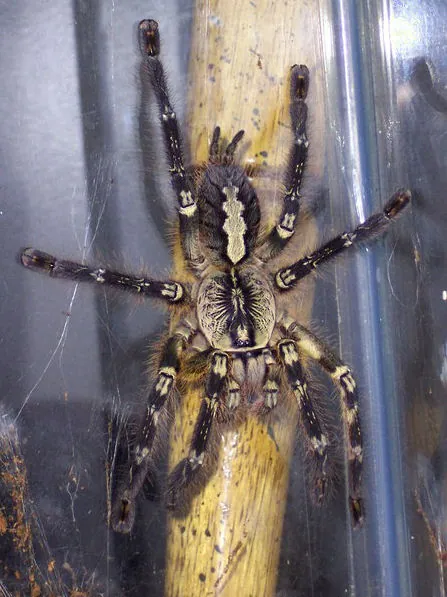
 No anndirto nde
- The top of the body (carapace) is greenish yellow or purplish.1
- Females have yellow undersides, and the thighs of the third and fourth pairs of legs are black with a large blue-grey spot.1
- Males are greenish brown, and their markings are less prominent.1
- Females can reach a legspan of about 25 cm.1
Ina jiiɓindiree e: It is easily told apart from other tiger spiders by its greenish yellow or purplish top side.1
Doole tooke
Tooke ina yalta e ñiiƴe mum si nde ŋatii.
Hol ko tooke mum (ŋatol walla fiɗol) waɗata?
The venom may cause intense pain and extreme muscle cramping. This is judged from the experiences of keepers who have been bitten by this species, rather than from recorded cases of human harm.1
Hol no nde woni bone e yimɓe?
Bone e yimɓe: Bone mawɗoŊatol ina haani doktaa. Maayde ina woodi seeɗa sanne.No death from a tarantula bite has ever been recorded. This species is still considered to have a medically significant bite because of the pain and cramping its venom may cause.1
 Si nde ŋatii
- Lootu ŋatol ngol, ɓuuɓnu ngol. Heɓu ballal doktaa si muusu ina tiiɗi walla neɗɗo oo ɓanndu mum welaani.
Sahaa fof, noddu lamba ballal yaawngal (112, 000, 911) ko adii. Ɗum ko ballal arano kuuɓal, wonaa wasiyya doktaa. Aslu ballal arano
 Reen hoore maa
- Taa memu, taa nanngu, taa aaɓnu dabbaare ladde abada, hay pamaro, hay si ina wayi no ɗaanii walla maayii.
- Accu nde nokku. Si a fottii e gooto, deeƴu, ruttu caggal seeɗa seeɗa, accu nde yaha laawol mum.
- Si gooto e majji ŋatii ma: deeƴu, taa dillu, noddu lamba ballal yaawngal (112, 000, 911) walla yah asibiti law. Siftor no nde wayri, foto ina walla.
Nde ɗaɓɓaaki ma. Nde huutora tooke mum ngam nanngude ñaamdu walla reende hoore mum, nde ɓuri yiɗde suuɗaade. Ɓeydu anndude no reentorto
Hol to e aduna?
Hol no nde mawni?
Hol no nde juuti?
 juuti no bulok fijo 8 jokkondiraaɗi
 ina waawi dogde meeter 100 nder sakan 170 (neɗɗo ɓurɗo yaawde ina haani 9,6)
Hol no Fringed ornamental tarantula mawni, fottindaade e AAN?
Hiisa tan nder browser maa. Alaa ko mooftetee walla ko neletee.
Hol no nde yaawi?


Anndal
It may live in a mutually beneficial relationship with frogs such as Ramanella nagaoi, sharing tree holes that can contain eggs or juveniles from the spider, the frog, or both.1
In a related observation, a frog (Chiasmocleis ventrimaculata) and a different tarantula (Xenesthis immanis) were seen together, with the spider protecting the frog from predators and the frog guarding the spider's eggs from ants.1
When tree holes are scarce, several of these spiders may live together in the same tree.1
Its legspan is probably the second largest in its genus, behind Poecilotheria rufilata.1
Ɗo anndal iwi
- Poecilotheria ornata (Wikipedia (CC BY-SA 4.0))
- Poecilotheria ornata (iNaturalist): inɗe e tolnugol.
- Venom Wiki: darja bone, mawnude woowaaɗo e miijo yaawre ko amen. Ndaar no min hiisirta ɗum: No min betiri bone.
Kala anndal e ngoo hello ina jogii limre hollirnde iwdi mum. Si min juumii, accu min, min yiɗɓe dabbaaji, wonaa jaridaa ganndal. Wiy min e [email protected] min feewnitay.
 Yaare nden ina heege! Venom Wiki ko golle neɗɗo gooto: meere, tawa tallaaji alaa, trackers alaa. Ballal pamarngal ina walla heddinde ɗum e internet.Ñaamnu yaare nden
Goɗɗi e fedde wootere: Tarantula e funnel-web
 Gooty sapphire tarantulaTarantula e funnel-webIna haani doktaa
 Indian ornamental tarantulaTarantula e funnel-webIna haani doktaa
 Cobalt blue tarantulaTarantula e funnel-webIna muusa tan
 Chinese bird spiderTarantula e funnel-webIna haani doktaa
 Chinese black earth tiger tarantulaTarantula e funnel-webIna haani doktaa
 Japanese funnel-web spiderTarantula e funnel-webIna haani doktaa
 Yaare deathstalker
 Cobra Indiya
 Viper kiifi kaasa Indiya
 King cobra
 Puff adder
 Mboddi Russell