
 Afirik
 Asiya
Asiya Turai
Turai Amerik Worgo
 Australiya e Oseaniya
 Antarktika
 Baharu Pasifik
 Baharu Atlantik
 Baharu Indiya
 Baharu Arktik
 Baharu Mediterane
 Baharu Boɗeeru
 Baharu Karibiya
 Baharu Koral
 Baharu Ciina Worgo
 Baharu Filipin
 Baharu Andaman
 Baharu Rewo
 Baharu Timor e Arafura
 Baharu Bengal
 Baharu Kaliforniya
Giant desert hairy scorpion
 Ina fiɗa
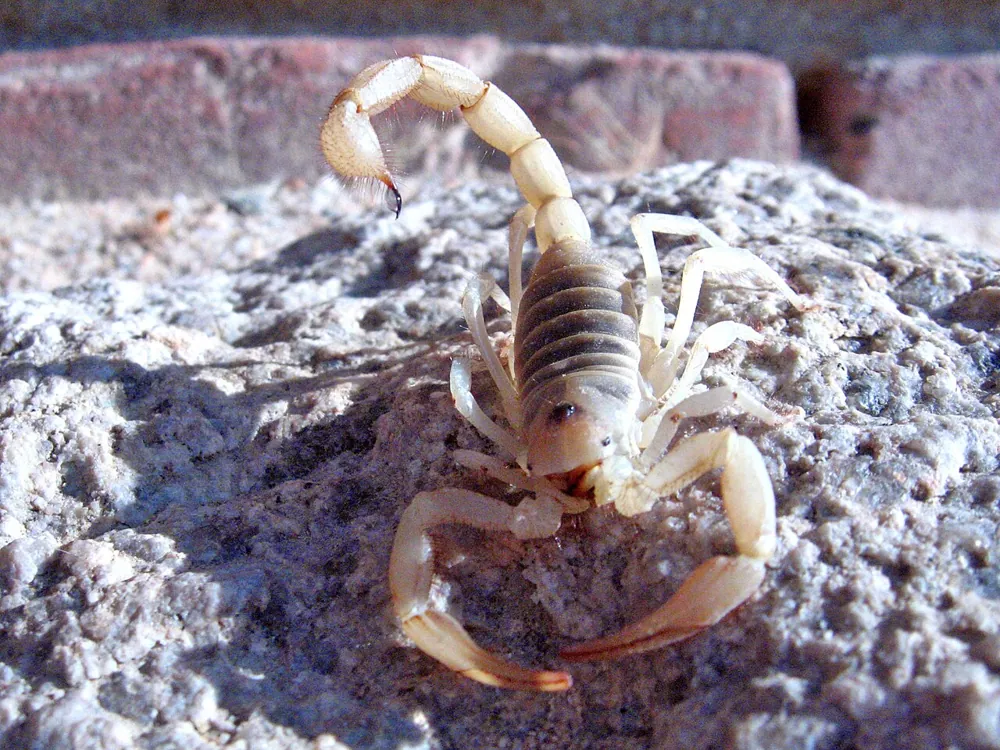
The giant desert hairy scorpion is the largest scorpion in North America. It lives in the hot deserts of the southwest United States and northwest Mexico. Its sting is painful, but its venom is not strong enough to be fatal.1


 No anndirto nde
- Usually tan to olive-green, with a darker back and yellow pedipalps, legs and tail1
- Body covered in brown hairs, which give it its common name1
- Crab-like pincers1
- Length of 10 to 18 cm, with an average of 15 cm1
- Females have wider, stockier bodies; males have larger pincers1
Ina jiiɓindiree e: A similar species is Hadrurus spadix. Hadrurus is a genus of large hairy scorpions found in the United States.1
Doole tooke
Tooke ina yalta e fiɗirgal.
Hol ko tooke mum (ŋatol walla fiɗol) waɗata?
Its venom is not very potent, but the sting is commonly compared in pain to a honeybee sting. The venom is used to immobilise prey. Allergic reactions are uncommon, but they can cause difficulty breathing, excessive swelling and prolonged pain.1
Hol no nde woni bone e yimɓe?
Bone e yimɓe: HoyɗoNo fiɗol nyaaku walla ɓuri famɗude. Ɓadii alaa bone e yimɓe.Its venom is not potent enough to be fatal. Most stings are compared to a honeybee sting in pain. Serious allergic reactions are uncommon but possible.1
Hol ko nde waɗata si nde hulii?
When provoked, it is active and aggressive, and it stings more often when it senses a predator such as a Norway rat by smell.1
 Si nde fiɗii
- Ɓuuɓnu fiɗol ngol e kankara, deeƴin neɗɗo oo taa o dilla. Heɓu ballal doktaa law, haa teeŋti e sukaaɓe: yaaje goɗɗe ina mbaroo sukaaɓe.
Sahaa fof, noddu lamba ballal yaawngal (112, 000, 911) ko adii. Ɗum ko ballal arano kuuɓal, wonaa wasiyya doktaa. Aslu ballal arano
 Reen hoore maa
- Taa memu, taa nanngu, taa aaɓnu dabbaare ladde abada, hay pamaro, hay si ina wayi no ɗaanii walla maayii.
- Accu nde nokku. Si a fottii e gooto, deeƴu, ruttu caggal seeɗa seeɗa, accu nde yaha laawol mum.
- Si gooto e majji fiɗii ma: deeƴu, taa dillu, noddu lamba ballal yaawngal (112, 000, 911) walla yah asibiti law. Siftor no nde wayri, foto ina walla.
Nde ɗaɓɓaaki ma. Nde huutora tooke mum ngam nanngude ñaamdu walla reende hoore mum, nde ɓuri yiɗde suuɗaade. Ɓeydu anndude no reentorto
Hol to e aduna?
Hol no nde mawni?
Hol no nde juuti?
Hol no nde teddi?

 juuti no bulok fijo 6 jokkondiraaɗi
 hoyi haa a nanataa nde e junngo maa
 ina waawi dogde meeter 100 nder sakan 140 (neɗɗo ɓurɗo yaawde ina haani 9,6)
Hol no Giant desert hairy scorpion mawni, fottindaade e AAN?
Hiisa tan nder browser maa. Alaa ko mooftetee walla ko neletee.
Hol no nde yaawi?


Anndal
Small snakes may make up to 10% of its diet, according to field observations.1
Its blood-like fluid, called hemolymph, can kill some bacteria within 1 to 2 minutes in favourable conditions, according to a 2021 study.1
It is the largest scorpion in North America.1
It digs deep burrows, up to 2.5 m long, and comes out at night to hunt and find mates.1
It can sense vibrations in the soil through its brown hairs.1
Feññinoowo goonga
Fenaande: Big scorpions have dangerous venom.
Goonga: Although this scorpion is big, its venom is not very potent and is not fatal.1
Ɗo anndal iwi
- Hadrurus arizonensis (Wikipedia (CC BY-SA 4.0))
- Hadrurus arizonensis (iNaturalist): inɗe e tolnugol.
- Venom Wiki: darja bone, mawnude woowaaɗo e miijo yaawre ko amen. Ndaar no min hiisirta ɗum: No min betiri bone.
Kala anndal e ngoo hello ina jogii limre hollirnde iwdi mum. Si min juumii, accu min, min yiɗɓe dabbaaji, wonaa jaridaa ganndal. Wiy min e [email protected] min feewnitay.
 Yaare nden ina heege! Venom Wiki ko golle neɗɗo gooto: meere, tawa tallaaji alaa, trackers alaa. Ballal pamarngal ina walla heddinde ɗum e internet.Ñaamnu yaare nden
 Arizona bark scorpion
 Cuban blue scorpion
 Striped bark scorpion
 Colima scorpion
 Durango scorpion
 Mexican bark scorpion
 Terciopelo
 Eastern coral snake
 Eastern diamondback rattlesnake
 Eyelash viper
 Timber rattlesnake
 Western diamondback rattlesnake