
 Afirik
 Asiya
Asiya Turai
Turai Amerik Worgo
 Australiya e Oseaniya
 Antarktika
 Baharu Pasifik
 Baharu Atlantik
 Baharu Indiya
 Baharu Arktik
 Baharu Mediterane
 Baharu Boɗeeru
 Baharu Karibiya
 Baharu Koral
 Baharu Ciina Worgo
 Baharu Filipin
 Baharu Andaman
 Baharu Rewo
 Baharu Timor e Arafura
 Baharu Bengal
 Baharu Kaliforniya
Horn shark
 Gi'e tooke
The horn shark is a small shark with a blunt head and two tall fins, each with a large spine at the front. It lives along the western coast of North America, from California to the Gulf of California. It spends its days hidden in caves and crevices and hunts at night.1



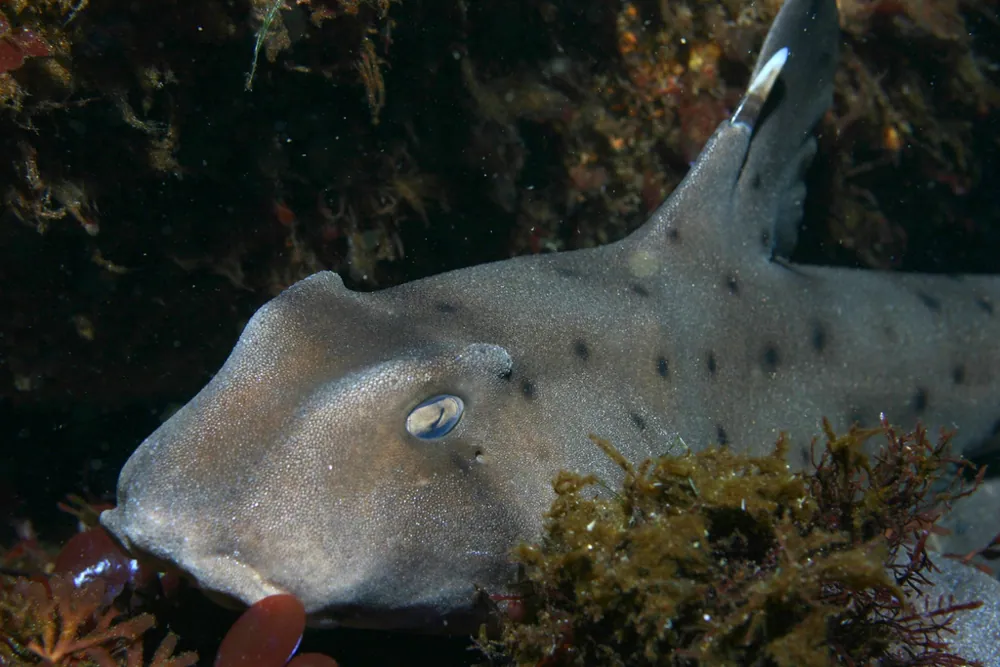
 No anndirto nde
Doole tooke
Gi'e ceeɓɗe ina njogii tooke. Yaabude nde walla nanngude nde ina muusa.
Hol no nde woni bone e yimɓe?
Bone e yimɓe: HoyɗoNo fiɗol nyaaku walla ɓuri famɗude. Ɓadii alaa bone e yimɓe.Horn sharks are harmless unless they are harassed. They are not targeted by commercial or recreational fisheries, though small numbers are caught by accident.1
Hol ko nde waɗata si nde hulii?
During the day they stay still in hiding places, but they swim away quickly if disturbed.1
 Si gi'e mum naatii e ɓanndu maa
- Naatnu barme e ndiyam wulɗam, wulɗam no neɗɗo oo waawi muñde tawa sumataa (ƴeewu ɗam e junngo maa), hakkunde minti 30 e minti 90. Heɓu ballal doktaa, haa teeŋti e stonefish e stingray.
Sahaa fof, noddu lamba ballal yaawngal (112, 000, 911) ko adii. Ɗum ko ballal arano kuuɓal, wonaa wasiyya doktaa. Aslu ballal arano
 Reen hoore maa
- Taa memu, taa nanngu, taa aaɓnu dabbaare ladde abada, hay pamaro, hay si ina wayi no ɗaanii walla maayii.
- Accu nde nokku. Si a fottii e gooto, deeƴu, ruttu caggal seeɗa seeɗa, accu nde yaha laawol mum.
- Si gi'e mum naatii e ɓanndu maa: deeƴu, taa dillu, noddu lamba ballal yaawngal (112, 000, 911) walla yah asibiti law. Siftor no nde wayri, foto ina walla.
Nde ɗaɓɓaaki ma. Nde huutora tooke mum ngam nanngude ñaamdu walla reende hoore mum, nde ɓuri yiɗde suuɗaade. Ɓeydu anndude no reentorto
Hol to e aduna?
Hol no nde mawni?
Hol no nde juuti?
 juuti no ullundi galle 2,5, hinere haa laaci
 juuti no ayaba 7 jokkondiraaɗi
 ina waawi lumbaade njuuteendi pisin mawɗo (50 m) nder sakan 9
Hol no Horn shark mawni, fottindaade e AAN?
Hiisa tan nder browser maa. Alaa ko mooftetee walla ko neletee.
Hol no nde yaawi?

Anndal
For its size, the horn shark has the strongest bite of any shark that has been measured.1
To pull prey loose, the shark pushes its head up with a downward stroke of its tail. No other shark has been seen doing this.1
Large horn sharks that eat many sea urchins can have purple-stained teeth and fin spines.1
A Pacific angelshark was filmed trying to swallow a juvenile horn shark, but spat it out because of the spines.1
Horn sharks have only 148 electroreceptors (ampullae of Lorenzini), far fewer than most sharks, which may have over 2,000. They rely mainly on smell to find food.1
A dropped tooth takes about 4 weeks to be replaced.1
Ngam ganduɓe tooke
- Innde ganndal
- Heterodontus francisci
- Fedde
- Liddi tooke
- Besngu
- Heterodontidae2
- Tolno
- Heterodontiformes
- Nahiyaaji
- Baharu Pasifik, Baharu Kaliforniya, Baharuuji mawɗi
- Ɓikkoy
- They lay eggs. From February to April, females lay up to 24 eggs, two at a time, every 11 to 14 days, and wedge the egg cases into crevices to protect them.1
- Hol no nde wonata e ladde
- Insufficient data (IUCN); population listed as stable on 10 October 20251
- Bone e yimɓe
- 1 / 5: Hoyɗo3
Ɗo anndal iwi
- Horn shark (Wikipedia (CC BY-SA 4.0))
- Heterodontus francisci (iNaturalist): inɗe e tolnugol.
- Venom Wiki: darja bone, mawnude woowaaɗo e miijo yaawre ko amen. Ndaar no min hiisirta ɗum: No min betiri bone.
Kala anndal e ngoo hello ina jogii limre hollirnde iwdi mum. Si min juumii, accu min, min yiɗɓe dabbaaji, wonaa jaridaa ganndal. Wiy min e [email protected] min feewnitay.
 Yaare nden ina heege! Venom Wiki ko golle neɗɗo gooto: meere, tawa tallaaji alaa, trackers alaa. Ballal pamarngal ina walla heddinde ɗum e internet.Ñaamnu yaare nden
Goɗɗi e fedde wootere: Liddi tooke
 Reef stonefish
 Red lionfish
 Estuarine stonefish
 Short-tail stingray
 Striped eel catfish
 Bluespotted ribbontail ray
Ina wona kadi e: Baharu Pasifik
 Box jellyfish OstireliyaJellyfish e fiɗooji baharuWarooɗoTaa memu
 Wiinde cone geographyCone snail e octopusWarooɗo
 Ɗirkuure taakeeje bulaaje mawndeCone snail e octopusWarooɗo
 Liingu ufotoongu JafanDabbaaji goɗɗi tooke memde walla ñaamdeWarooɗo
 Ɗirkuure taakeeje bulaaje worgoCone snail e octopusWarooɗo
 Hawksbill sea turtleDabbaaji goɗɗi tooke memde walla ñaamdeIna waawi warde