
 Afirik
 Asiya
Asiya Turai
Turai Amerik Worgo
 Australiya e Oseaniya
 Antarktika
 Baharu Pasifik
 Baharu Atlantik
 Baharu Indiya
 Baharu Arktik
 Baharu Mediterane
 Baharu Boɗeeru
 Baharu Karibiya
 Baharu Koral
 Baharu Ciina Worgo
 Baharu Filipin
 Baharu Andaman
 Baharu Rewo
 Baharu Timor e Arafura
 Baharu Bengal
 Baharu Kaliforniya
Io moth
 Leeɓi fiɗooji
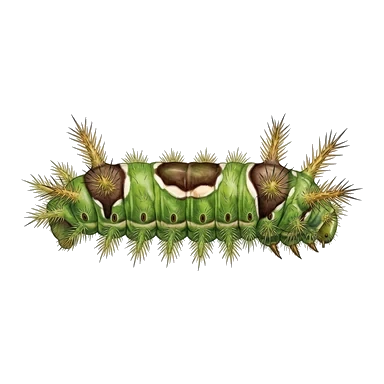
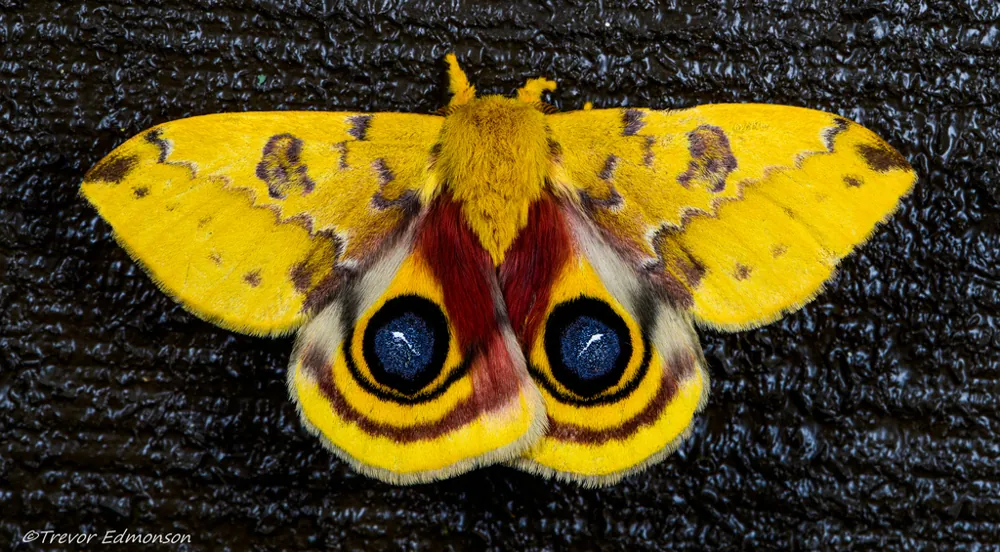
The Io moth is a colourful moth from North America. Its adults are striking, with large eyespots on their wings. Its green caterpillars carry spines that release a very painful venom, so they should be left alone.1
 No anndirto nde
- Males have bright yellow forewings, body and legs, and much bigger feathery antennae than females.1
- Females have reddish-brown to purple forewings, body and legs.1
- Both sexes have one large black to bluish eyespot with some white in the centre on each hindwing.1
- Mature caterpillars are bright green and covered in spines, with two lateral stripes: the upper one bright red and the lower one white.1
- Adults have a wingspan of 6.3 to 8.8 cm.1
Doole tooke
Leeɓi pamari walla gi'e pamari ina taƴa nder nguru, ina fiɗa.
Hol ko tooke mum (ŋatol walla fiɗol) waɗata?
The spines of the green caterpillars release a very painful venom at the slightest touch. Contact is not life-threatening to humans, but it irritates the skin and causes an acute skin inflammation called erucism.1
Hol no nde woni bone e yimɓe?
Bone e yimɓe: Ina muusaIna waawi muusude sanne, kono ɓadii abada wonaa bone mawɗo.Contact with the spines is not life-threatening to humans, but it causes painful skin irritation.1
Hol ko nde waɗata si nde hulii?
When sitting head-down or when touched, adults shake and expose their hindwing eyespots. Caterpillars defend themselves with stinging spines.1
 Si a memii leeɓi mum
- Ngam leeɓi gilɗi fiɗooji: ittu ɗi e selotef, refti lootu nguru. Taa momtu.
- Ngam ŋatol: lootu e ɓuuɓnu. Heɓu ballal doktaa si neɗɗo oo ɓanndu mum welaani walla ƴiiƴam ina yalta mo ko newi.
Sahaa fof, noddu lamba ballal yaawngal (112, 000, 911) ko adii. Ɗum ko ballal arano kuuɓal, wonaa wasiyya doktaa. Aslu ballal arano
 Reen hoore maa
- Taa memu, taa nanngu, taa aaɓnu dabbaare ladde abada, hay pamaro, hay si ina wayi no ɗaanii walla maayii.
- Accu nde nokku. Si a fottii e gooto, deeƴu, ruttu caggal seeɗa seeɗa, accu nde yaha laawol mum.
- Si a memii leeɓi mum: deeƴu, taa dillu, noddu lamba ballal yaawngal (112, 000, 911) walla yah asibiti law. Siftor no nde wayri, foto ina walla.
Nde ɗaɓɓaaki ma. Nde huutora tooke mum ngam nanngude ñaamdu walla reende hoore mum, nde ɓuri yiɗde suuɗaade. Ɓeydu anndude no reentorto
Hol to e aduna?
Hol no nde mawni?
Hol no nde juuti?
 juuti no bulok fijo 3 jokkondiraaɗi
 ɓuri leeltude katantanwa ngesa
Hol no Io moth mawni, fottindaade e AAN?
Hiisa tan nder browser maa. Alaa ko mooftetee walla ko neletee.
Hol no nde yaawi?

Anndal
The caterpillars' spines are urticating, meaning they can cause a stinging reaction on contact.1
Adults live only 1 to 2 weeks and do not eat during this stage.1
After emerging from the cocoon, adults inflate their furled wings with fluid pumped from the body, which takes about twenty minutes.1
Females attract males by releasing wind-borne scent chemicals (pheromones) from a gland at the end of the abdomen.1
Many flies and wasps are parasitoids of this moth, laying their eggs in or on it.1
Ngam ganduɓe tooke
- Innde ganndal
- Automeris io
- Fedde
- Gilɗi leeɓi e dabbaaji pamari
- Besngu
- Saturniidae2
- Tolno
- Lepidoptera
- Nahiyaaji
- Amerik Rewo
- Ɓikkoy
- Females lay clusters of more than twenty small white eggs on leaves. The eggs hatch within 8 to 11 days.1
- Hol no nde wonata e ladde
- Not evaluated by the IUCN Red List and has no special status on the US Federal List. Populations in the eastern US are declining and becoming more localised.1
- Bone e yimɓe
- 2 / 5: Ina muusa3
Ɗo anndal iwi
- Automeris io (Wikipedia (CC BY-SA 4.0))
- Automeris io (iNaturalist): inɗe e tolnugol.
- Venom Wiki: darja bone, mawnude woowaaɗo e miijo yaawre ko amen. Ndaar no min hiisirta ɗum: No min betiri bone.
Kala anndal e ngoo hello ina jogii limre hollirnde iwdi mum. Si min juumii, accu min, min yiɗɓe dabbaaji, wonaa jaridaa ganndal. Wiy min e [email protected] min feewnitay.
 Yaare nden ina heege! Venom Wiki ko golle neɗɗo gooto: meere, tawa tallaaji alaa, trackers alaa. Ballal pamarngal ina walla heddinde ɗum e internet.Ñaamnu yaare nden
Goɗɗi e fedde wootere: Gilɗi leeɓi e dabbaaji pamari
 Giant water bugGilɗi leeɓi e dabbaaji pamariIna muusa tan
 Puss caterpillarGilɗi leeɓi e dabbaaji pamariIna muusa tanTaa memu
 Saddleback caterpillarGilɗi leeɓi e dabbaaji pamariIna muusa tanTaa memu
 Wheel bugGilɗi leeɓi e dabbaaji pamariIna muusa tan
 Giant vinegaroonGilɗi leeɓi e dabbaaji pamariAlaa bone
 Rhodnius kissing bugGilɗi leeɓi e dabbaaji pamariIna haani doktaa
 Terciopelo
 Eastern coral snake
 Eastern diamondback rattlesnake
 Eyelash viper
 Timber rattlesnake
 Western diamondback rattlesnake