
 Afirik
 Asiya
Asiya Turai
Turai Amerik Worgo
 Australiya e Oseaniya
 Antarktika
 Baharu Pasifik
 Baharu Atlantik
 Baharu Indiya
 Baharu Arktik
 Baharu Mediterane
 Baharu Boɗeeru
 Baharu Karibiya
 Baharu Koral
 Baharu Ciina Worgo
 Baharu Filipin
 Baharu Andaman
 Baharu Rewo
 Baharu Timor e Arafura
 Baharu Bengal
 Baharu Kaliforniya
Magical cone
 Ina fiɗa
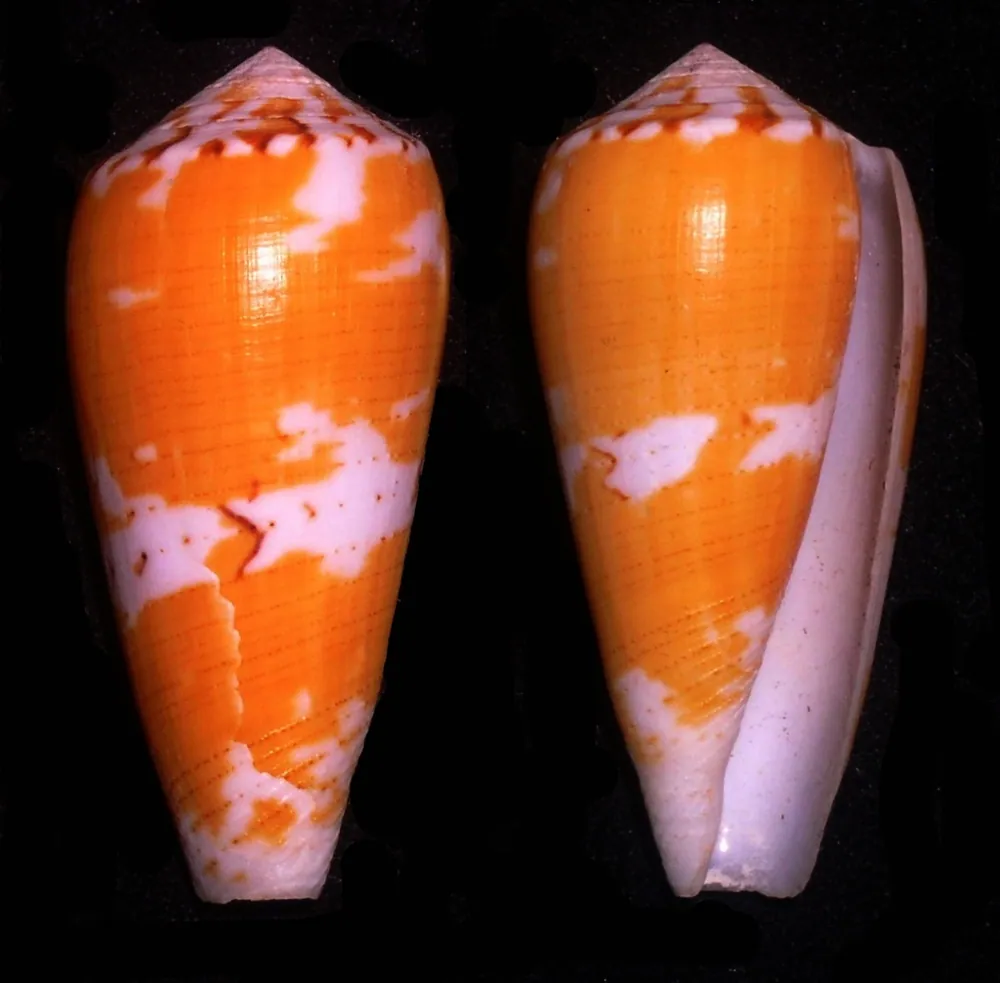
The magical cone is a sea snail with a cone-shaped shell. It is venomous, so it can sting people, and it lives in warm seas across the Indian and Pacific Oceans. Its venom has produced a powerful painkiller that is used in medicine.1

 No anndirto nde
- The shell is white, clouded with bluish ash, orange-brown, chestnut or chocolate.1
- Narrow chocolate lines encircle the shell, often broken into separate dots.1
- The middle of the body whorl is usually marked irregularly with white.1
- The spire (the upper part of the shell) is tessellated, or patterned like tiles, in chestnut or chocolate.1
- The pattern and shade of colour vary a lot between individuals.1
Doole tooke
Tooke ina yalta e fiɗirgal.
Hol ko tooke mum (ŋatol walla fiɗol) waɗata?
Its venom contains conotoxins, which have powerful neurotoxic effects. Neurotoxic venom attacks the nerves.1
Hol no nde woni bone e yimɓe?
Bone e yimɓe: Bone mawɗoFiɗol ina haani doktaa. Maayde ina woodi seeɗa sanne.Because these snails can sting humans, live cone shells should be handled with great care or preferably not at all.1
 Si nde fiɗii
- Ɗigginde e daranɗinde (pressure immobilisation): haɓɓu bandeeji elastik ɗigginiiɗo dow ŋatol, refti haɓɓu koyngal walla junngo ngal fof haa dow, haɓɓu leggal tiiɗngal (splint) e mum, ngam neɗɗo oo wona ɗoon tawa dillaani fey haa ballal arta.
- Blue-ringed octopus walla cone snail ina waawi haɗde neɗɗo foofde tawa o fini tawon: noddu ballal, wonu hebbinaaɗo hokkude mo fooftaare e hunnduko (rescue breaths) haa yimɓe ambulans ngarta ɓe jogitoo mo.
Sahaa fof, noddu lamba ballal yaawngal (112, 000, 911) ko adii. Ɗum ko ballal arano kuuɓal, wonaa wasiyya doktaa. Aslu ballal arano
 Reen hoore maa
- Taa memu, taa nanngu, taa aaɓnu dabbaare ladde abada, hay pamaro, hay si ina wayi no ɗaanii walla maayii.
- Accu nde nokku. Si a fottii e gooto, deeƴu, ruttu caggal seeɗa seeɗa, accu nde yaha laawol mum.
- Si gooto e majji fiɗii ma: deeƴu, taa dillu, noddu lamba ballal yaawngal (112, 000, 911) walla yah asibiti law. Siftor no nde wayri, foto ina walla.
Nde ɗaɓɓaaki ma. Nde huutora tooke mum ngam nanngude ñaamdu walla reende hoore mum, nde ɓuri yiɗde suuɗaade. Ɓeydu anndude no reentorto
Hol to e aduna?
Hol no nde mawni?
Hol no nde juuti?
 juuti no bulok fijo 3 jokkondiraaɗi
 ɓuri leeltude katantanwa ngesa
Hol no Magical cone mawni, fottindaade e AAN?
Hiisa tan nder browser maa. Alaa ko mooftetee walla ko neletee.
Hol no nde yaawi?

Anndal
A painkiller called ziconotide is made from a chemical derived from this snail's toxin. It is about 1000 times as potent as morphine.1
Ziconotide works by blocking calcium channels in pain-carrying nerve cells, so they cannot send pain signals to the brain. It is injected into the spinal fluid.1
The US Food and Drug Administration approved ziconotide in December 2004, under the name Prialt.1
Dr. Baldomero Olivera at the University of Utah discovered the compound that led to ziconotide.1
Ɗo anndal iwi
- Conus magus (Wikipedia (CC BY-SA 4.0))
- Conus magus (iNaturalist): inɗe e tolnugol.
- Venom Wiki: darja bone, mawnude woowaaɗo e miijo yaawre ko amen. Ndaar no min hiisirta ɗum: No min betiri bone.
Kala anndal e ngoo hello ina jogii limre hollirnde iwdi mum. Si min juumii, accu min, min yiɗɓe dabbaaji, wonaa jaridaa ganndal. Wiy min e [email protected] min feewnitay.
 Yaare nden ina heege! Venom Wiki ko golle neɗɗo gooto: meere, tawa tallaaji alaa, trackers alaa. Ballal pamarngal ina walla heddinde ɗum e internet.Ñaamnu yaare nden
Goɗɗi e fedde wootere: Cone snail e octopus
 Wiinde cone geographyCone snail e octopusWarooɗo
 Ɗirkuure taakeeje bulaaje mawndeCone snail e octopusWarooɗo
 Ɗirkuure taakeeje bulaaje worgoCone snail e octopusWarooɗo
 Blue sea dragonCone snail e octopusIna muusa tan
 Common octopusCone snail e octopusAlaa bone
 Giant Pacific octopusCone snail e octopusAlaa bone
Ina wona kadi e: Baharu Indiya
 Box jellyfish OstireliyaJellyfish e fiɗooji baharuWarooɗoTaa memu
 Hawksbill sea turtleDabbaaji goɗɗi tooke memde walla ñaamdeIna waawi warde
 Irukandji jellyfishJellyfish e fiɗooji baharuIna waawi wardeTaa memu
 Reef stonefishLiddi tookeIna waawi wardeTaa memu
 Crown-of-thorns starfishSea urchin, sea star e gilɗi baharuIna haani doktaaTaa memu
 Portuguese man o' warJellyfish e fiɗooji baharuIna haani doktaaTaa memu