
 Afirik
 Asiya
Asiya Turai
Turai Amerik Worgo
 Australiya e Oseaniya
 Antarktika
 Baharu Pasifik
 Baharu Atlantik
 Baharu Indiya
 Baharu Arktik
 Baharu Mediterane
 Baharu Boɗeeru
 Baharu Karibiya
 Baharu Koral
 Baharu Ciina Worgo
 Baharu Filipin
 Baharu Andaman
 Baharu Rewo
 Baharu Timor e Arafura
 Baharu Bengal
 Baharu Kaliforniya
Persian horned viper
 Ina ŋata
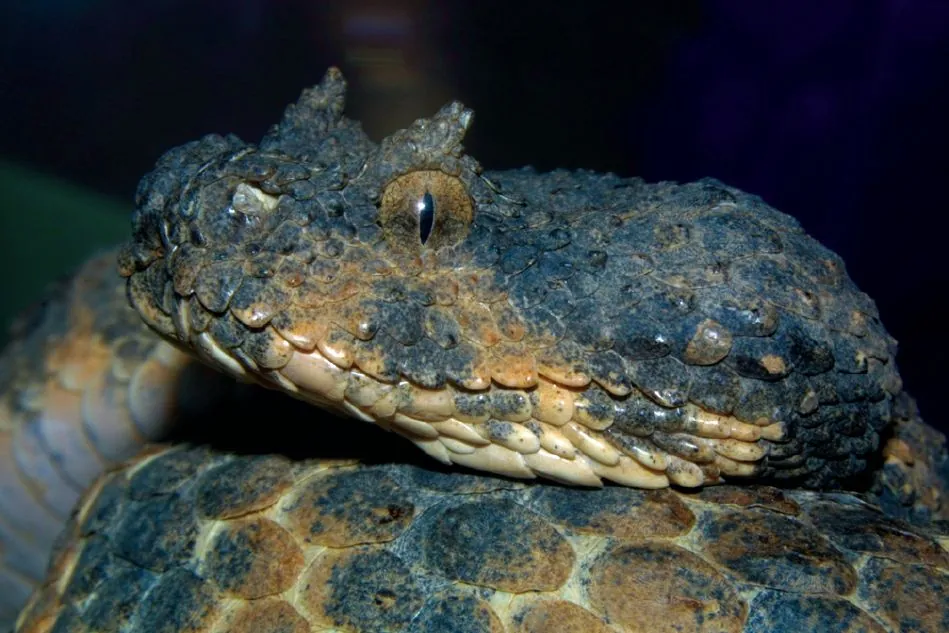
The Persian horned viper is a venomous viper with horn-like scales above each eye. It lives in deserts and hill country in the Middle East and parts of Asia, and it is mostly active at night. Its venom causes strong bleeding, and no specific antivenom is available for its bites.1



 No anndirto nde
- A broad, flat head that is clearly distinct from the neck1
- A horn-like structure of small scales above each eye, also present in juveniles1
- A short tail1
- Body scales with keels that often end in a bump or a point1
- Slow-moving and almost entirely nocturnal, so usually seen at night or in the early evening during colder periods1
Doole tooke
Tooke ina yalta e ñiiƴe mum si nde ŋatii.
Hol ko tooke mum (ŋatol walla fiɗol) waɗata?
Its venom has strong haemorrhagic activity, which means it causes bleeding by damaging blood vessels, as is typical of most vipers. No specific antivenom is available for its bites. A polyvalent antiserum, which is made to work against several snake species, is reported to offer some protection.1
Hol no nde woni bone e yimɓe?
Bone e yimɓe: Bone mawɗoŊatol ina haani doktaa. Maayde ina woodi seeɗa sanne.Hol ko nde waɗata si nde hulii?
It is not particularly aggressive, but it will hiss loudly when disturbed.1
 Si nde ŋatii
- Deeƴin neɗɗo oo, taa o dilla, waɗu koyngal walla junngo ŋataangal e toowal ɓernde, ittu zoobe e geɗe ɗigginiiɗe, yahra mo asibiti law.
Sahaa fof, noddu lamba ballal yaawngal (112, 000, 911) ko adii. Ɗum ko ballal arano kuuɓal, wonaa wasiyya doktaa. Aslu ballal arano
 Reen hoore maa
- Taa memu, taa nanngu, taa aaɓnu dabbaare ladde abada, hay pamaro, hay si ina wayi no ɗaanii walla maayii.
- Accu nde nokku. Si a fottii e gooto, deeƴu, ruttu caggal seeɗa seeɗa, accu nde yaha laawol mum.
- Si gooto e majji ŋatii ma: deeƴu, taa dillu, noddu lamba ballal yaawngal (112, 000, 911) walla yah asibiti law. Siftor no nde wayri, foto ina walla.
Nde ɗaɓɓaaki ma. Nde huutora tooke mum ngam nanngude ñaamdu walla reende hoore mum, nde ɓuri yiɗde suuɗaade. Ɓeydu anndude no reentorto
Hol to e aduna?
Hol no nde mawni?
Hol no nde juuti?
Hol no nde teddi?
 juuti no ullundi galle 2, hinere haa laaci
 juuti no ayaba 6 jokkondiraaɗi
 ina waawi dogde meeter 100 nder sakan 110 (neɗɗo ɓurɗo yaawde ina haani 9,6)
Hol no Persian horned viper mawni, fottindaade e AAN?
Hiisa tan nder browser maa. Alaa ko mooftetee walla ko neletee.
Hol no nde yaawi?


Anndal
Unlike the sand-dwelling Cerastes vipers, it cannot sink into sand vertically.1
It moves by sidewinding, serpentine and rectilinear movement, depending on the situation.1
It can attain a considerable weight for its size, with some specimens exceeding 500 g.1
Its horn-like scales are present even in young snakes.1
Females are usually larger than males.1
Ɗo anndal iwi
- Persian horned viper (Wikipedia (CC BY-SA 4.0))
- Pseudocerastes persicus (iNaturalist): inɗe e tolnugol.
- Venom Wiki: darja bone, mawnude woowaaɗo e miijo yaawre ko amen. Ndaar no min hiisirta ɗum: No min betiri bone.
Kala anndal e ngoo hello ina jogii limre hollirnde iwdi mum. Si min juumii, accu min, min yiɗɓe dabbaaji, wonaa jaridaa ganndal. Wiy min e [email protected] min feewnitay.
 Yaare nden ina heege! Venom Wiki ko golle neɗɗo gooto: meere, tawa tallaaji alaa, trackers alaa. Ballal pamarngal ina walla heddinde ɗum e internet.Ñaamnu yaare nden
 Viper kiifi kaasa Indiya
 Puff adder
 Mboddi Russell
 Common European adder
 Eastern Russell's viper
 Northeast African carpet viper
 Yaare deathstalker
 Cobra Indiya
 King cobra
 Asian giant hornet
 Komodo dragon
 Spanish fly