
 Afirik
 Asiya
Asiya Turai
Turai Amerik Worgo
 Australiya e Oseaniya
 Antarktika
 Baharu Pasifik
 Baharu Atlantik
 Baharu Indiya
 Baharu Arktik
 Baharu Mediterane
 Baharu Boɗeeru
 Baharu Karibiya
 Baharu Koral
 Baharu Ciina Worgo
 Baharu Filipin
 Baharu Andaman
 Baharu Rewo
 Baharu Timor e Arafura
 Baharu Bengal
 Baharu Kaliforniya
Red bull ant
 Ina fiɗa
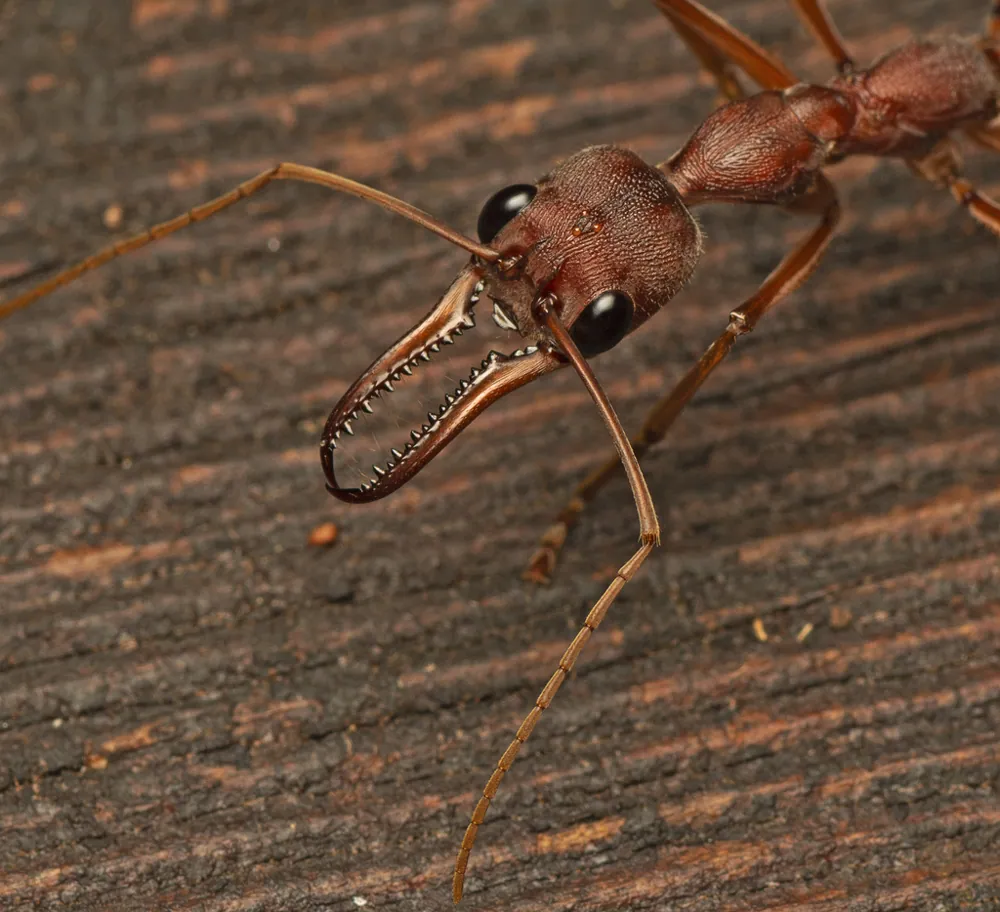
The red bull ant is a large ant that lives in eastern Australia. Adults can give a painful sting, and they are fierce hunters that can overpower bees and other ants. Their large size and aggressive behaviour make them one of Australia's best-known ants.1


 No anndirto nde
- Adults have a red-brown head and thorax (the middle part of the body).1
- The rear half of the abdomen (the back of the body) is black.1
- The mandibles (jaws) are brown-yellow and long, powerful and serrated (saw-edged).1
- Adults measure about 15 to 30 mm in body length, making them one of the larger ant species.1
Doole tooke
Tooke ina yalta e fiɗirgal.
Hol ko tooke mum (ŋatol walla fiɗol) waɗata?
They have a venom-laced sting, which can cause severe pain for a couple of days.1
Hol no nde woni bone e yimɓe?
Bone e yimɓe: Ina muusaIna waawi muusude sanne, kono ɓadii abada wonaa bone mawɗo.The sting causes severe pain that can last a couple of days. Red bull ants are described as notoriously aggressive hunters.1
 Si nde fiɗii
- Lootu fiɗe ɗe, ɓuuɓnu ɗe.
- Si neɗɗo oo ina tampa foofde, yeeso walla daande mum ina ɓutta, walla ina yiɗi waasude hakkille, ɗum ko musiiba allergy: noddu lamba ballal yaawngal.
Sahaa fof, noddu lamba ballal yaawngal (112, 000, 911) ko adii. Ɗum ko ballal arano kuuɓal, wonaa wasiyya doktaa. Aslu ballal arano
 Reen hoore maa
- Taa memu, taa nanngu, taa aaɓnu dabbaare ladde abada, hay pamaro, hay si ina wayi no ɗaanii walla maayii.
- Accu nde nokku. Si a fottii e gooto, deeƴu, ruttu caggal seeɗa seeɗa, accu nde yaha laawol mum.
- Si gooto e majji fiɗii ma: deeƴu, taa dillu, noddu lamba ballal yaawngal (112, 000, 911) walla yah asibiti law. Siftor no nde wayri, foto ina walla.
Nde ɗaɓɓaaki ma. Nde huutora tooke mum ngam nanngude ñaamdu walla reende hoore mum, nde ɓuri yiɗde suuɗaade. Ɓeydu anndude no reentorto
Hol to e aduna?
Hol no nde mawni?
Hol no nde juuti?
 juuti ɓadii no kilip kaayit
Hol no Red bull ant mawni, fottindaade e AAN?
Hiisa tan nder browser maa. Alaa ko mooftetee walla ko neletee.
Hol no nde yaawi?


Anndal
They cannot smell or use chemical senses like most ants, but their eyesight is extremely keen. They can spot and respond to intruders up to two metres away.1
Workers' infertile eggs are fed to the queen and larvae as part of their diet.1
The first specimen was collected in 1770 by Joseph Banks, making it one of the first Australian insects collected and described by a European.1
Their nests are built with tunnel systems that may become quite large.1
Ɗo anndal iwi
- Myrmecia gulosa (Wikipedia (CC BY-SA 4.0))
- Myrmecia gulosa (iNaturalist): inɗe e tolnugol.
- Venom Wiki: darja bone, mawnude woowaaɗo e miijo yaawre ko amen. Ndaar no min hiisirta ɗum: No min betiri bone.
Kala anndal e ngoo hello ina jogii limre hollirnde iwdi mum. Si min juumii, accu min, min yiɗɓe dabbaaji, wonaa jaridaa ganndal. Wiy min e [email protected] min feewnitay.
 Yaare nden ina heege! Venom Wiki ko golle neɗɗo gooto: meere, tawa tallaaji alaa, trackers alaa. Ballal pamarngal ina walla heddinde ɗum e internet.Ñaamnu yaare nden
 Bulldog ant
 Jack jumper ant
 Green weaver ant
 Black-banded jumper ant
 Giant bull ant
 Green-head ant
 Taipan takko baharu
 Death adder
 Brown snake fuɗnaange
 Taayipan joornde (Inland taipan)
 Gizo-gizo funnel-web Sydney
 Mboddi Cewngu