
 Afirik
 Asiya
Asiya Turai
Turai Amerik Worgo
 Australiya e Oseaniya
 Antarktika
 Baharu Pasifik
 Baharu Atlantik
 Baharu Indiya
 Baharu Arktik
 Baharu Mediterane
 Baharu Boɗeeru
 Baharu Karibiya
 Baharu Koral
 Baharu Ciina Worgo
 Baharu Filipin
 Baharu Andaman
 Baharu Rewo
 Baharu Timor e Arafura
 Baharu Bengal
 Baharu Kaliforniya
Sidewinder
 Ina ŋata
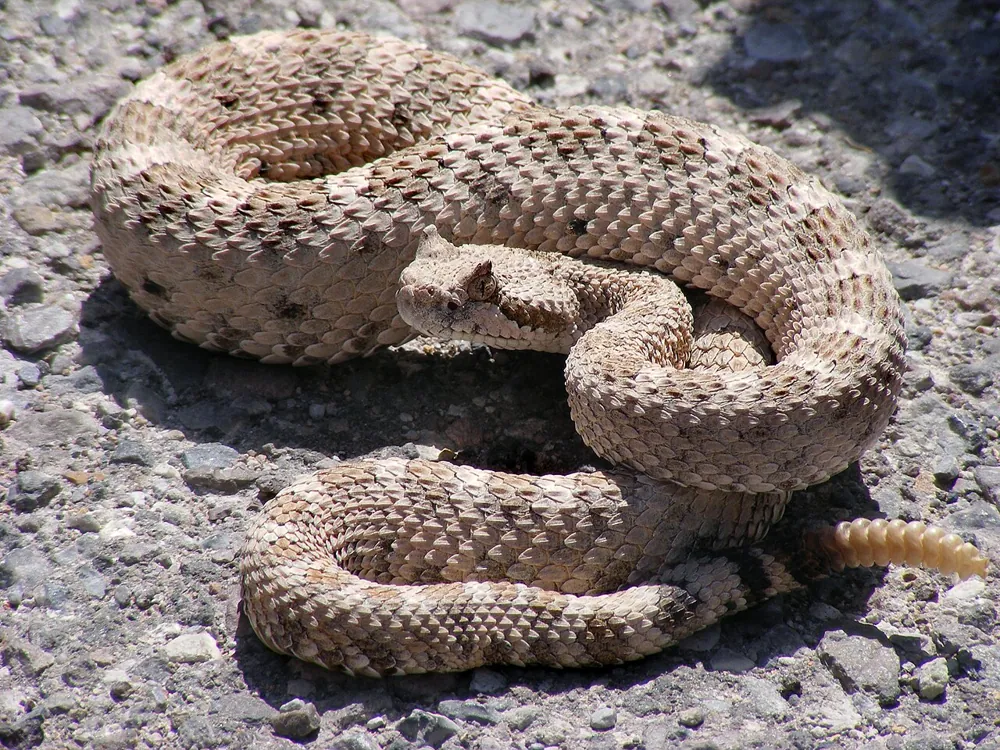
The sidewinder is a small rattlesnake that lives in the deserts of the south-western United States and north-western Mexico. It gets its name from the unusual sideways way it moves over loose sand. It is venomous, but its venom is weaker than that of many other rattlesnakes.1
 No anndirto nde
- Small, measuring 43 to 80 cm in total length including the tail.1
- Raised scales above the eyes give it horns.1
- The ground colour may be cream, buff, yellowish-brown, pink or ash grey, with 28 to 47 darker blotches along the back.1
- It moves with a sidewinding motion, leaving a J-shaped track in the sand with the tip of the hook pointing in the direction of travel.1
- Females are larger than males, which is unusual among United States rattlesnakes.1
Doole tooke
Tooke ina yalta e ñiiƴe mum si nde ŋatii.
Hol ko tooke mum (ŋatol walla fiɗol) waɗata?
The venom causes pain, swelling and bruising, and can create bleeding blisters. Symptoms can include nausea, dizziness, chills, blood clotting disorders and shock. In one recorded case, a bitten man's whole arm was badly swollen and very painful within about 2.5 hours.1
Hol no nde woni bone e yimɓe?
Bone e yimɓe: Bone mawɗoŊatol ina haani doktaa. Maayde ina woodi seeɗa sanne.Its venom is weaker than that of many other rattlesnakes, and its venom glands are smaller, so it is less dangerous than its larger relatives. Any rattlesnake bite can still be fatal and should be taken seriously.1
 Kabaru moƴƴo: doktaaɓe ina njogii lekki (antivenom) walla safaara ngam ɗum.1
 Si nde ŋatii
- Seek medical attention immediately after any rattlesnake bite. Consult a local expert or regional poison control centre before giving antivenom.1
- Deeƴin neɗɗo oo, taa o dilla, waɗu koyngal walla junngo ŋataangal e toowal ɓernde, ittu zoobe e geɗe ɗigginiiɗe, yahra mo asibiti law.
Sahaa fof, noddu lamba ballal yaawngal (112, 000, 911) ko adii. Ɗum ko ballal arano kuuɓal, wonaa wasiyya doktaa. Aslu ballal arano
 Reen hoore maa
- Taa memu, taa nanngu, taa aaɓnu dabbaare ladde abada, hay pamaro, hay si ina wayi no ɗaanii walla maayii.
- Accu nde nokku. Si a fottii e gooto, deeƴu, ruttu caggal seeɗa seeɗa, accu nde yaha laawol mum.
- Si gooto e majji ŋatii ma: deeƴu, taa dillu, noddu lamba ballal yaawngal (112, 000, 911) walla yah asibiti law. Siftor no nde wayri, foto ina walla.
Nde ɗaɓɓaaki ma. Nde huutora tooke mum ngam nanngude ñaamdu walla reende hoore mum, nde ɓuri yiɗde suuɗaade. Ɓeydu anndude no reentorto
Hol to e aduna?
Hol no nde mawni?
Hol no nde juuti?
 juuti no ullundi galle 1,5, hinere haa laaci
 juuti no ayaba 4 jokkondiraaɗi
 ina waawi dogde meeter 100 nder sakan 12 (neɗɗo ɓurɗo yaawde ina haani 9,6)
Hol no Sidewinder mawni, fottindaade e AAN?
Hiisa tan nder browser maa. Alaa ko mooftetee walla ko neletee.
Hol no nde yaawi?

Anndal
The AIM-9 Sidewinder missile was named after this snake, because both use infrared signals to track their targets.1
Juveniles and adults use different hunting methods. Juveniles lure lizards with fast tail movements that look like a moth or slower ones that look like a caterpillar.1
The raised scales above its eyes may shade the eyes or stop sand drifting over them. When the snake strikes against a burrow roof, pressure on these horns folds them down, which is thought to protect the eyes.1
Newborn sidewinders huddle together in a burrow for their first week or so, plugging the entrance during the day. Their combined body heat keeps the group at an average of about 32 °C, which is warm enough for shedding.1
Sidewinding is also used by other desert snakes, such as the horned adder and Peringuey's adder, and by robots that copy this movement.1
Ngam ganduɓe tooke
Ɗo anndal iwi
- Crotalus cerastes (Wikipedia (CC BY-SA 4.0))
- Crotalus cerastes (iNaturalist): inɗe e tolnugol.
- Venom Wiki: darja bone, mawnude woowaaɗo e miijo yaawre ko amen. Ndaar no min hiisirta ɗum: No min betiri bone.
Kala anndal e ngoo hello ina jogii limre hollirnde iwdi mum. Si min juumii, accu min, min yiɗɓe dabbaaji, wonaa jaridaa ganndal. Wiy min e [email protected] min feewnitay.
 Yaare nden ina heege! Venom Wiki ko golle neɗɗo gooto: meere, tawa tallaaji alaa, trackers alaa. Ballal pamarngal ina walla heddinde ɗum e internet.Ñaamnu yaare nden
 Eastern diamondback rattlesnake
 Timber rattlesnake
 Western diamondback rattlesnake
 Mojave rattlesnake
 Aruba rattlesnake
 Black-tailed rattlesnake
 Terciopelo
 Eastern coral snake
 Eyelash viper
 Arizona bark scorpion
 Brown recluse
 Cane toad