
 Afirik
 Asiya
Asiya Turai
Turai Amerik Worgo
 Australiya e Oseaniya
 Antarktika
 Baharu Pasifik
 Baharu Atlantik
 Baharu Indiya
 Baharu Arktik
 Baharu Mediterane
 Baharu Boɗeeru
 Baharu Karibiya
 Baharu Koral
 Baharu Ciina Worgo
 Baharu Filipin
 Baharu Andaman
 Baharu Rewo
 Baharu Timor e Arafura
 Baharu Bengal
 Baharu Kaliforniya
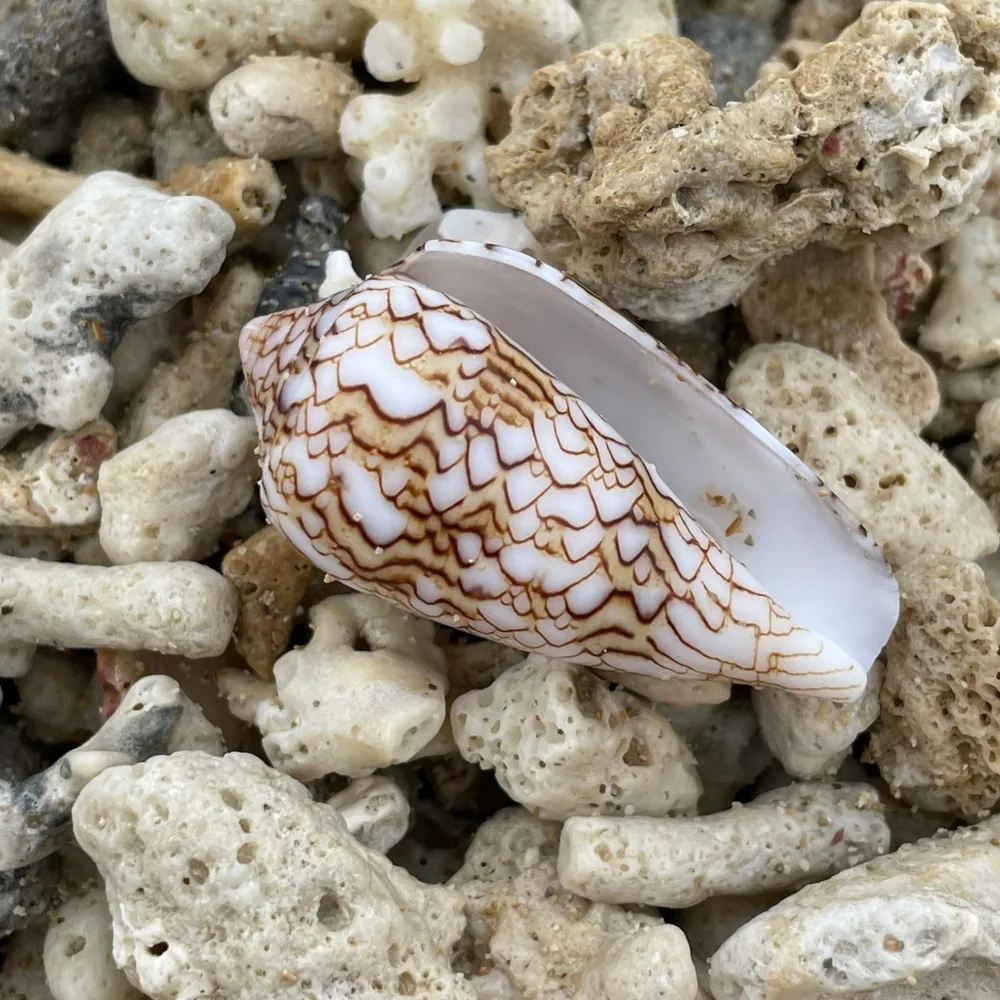
Textile cone
 Ina fiɗa
The textile cone is a venomous sea snail. It is a mollusc with a patterned shell, and it hunts other snails at night. It lives in warm seas around Africa, Australia and the Pacific, and it can sting people, so it is important to know it.1

 No anndirto nde
Doole tooke
Tooke ina yalta e fiɗirgal.
Hol ko tooke mum (ŋatol walla fiɗol) waɗata?
Its venom is a conotoxin, a mix of toxins injected through the harpoon-like radular tooth. The venom contains the neurotoxin RPRFamide, which attacks the nerves.1
Hol no nde woni bone e yimɓe?
Bone e yimɓe: Bone sanneIna waawi warde neɗɗo mo heɓaali safaara.Several human deaths have been attributed to this species. A 2004 report linked about 30 human deaths to cone snails as a group. Live animals should be handled carefully or not at all, and anyone handling one without protecting exposed skin is at risk.1
 Si nde fiɗii
- Ɗigginde e daranɗinde (pressure immobilisation): haɓɓu bandeeji elastik ɗigginiiɗo dow ŋatol, refti haɓɓu koyngal walla junngo ngal fof haa dow, haɓɓu leggal tiiɗngal (splint) e mum, ngam neɗɗo oo wona ɗoon tawa dillaani fey haa ballal arta.
- Blue-ringed octopus walla cone snail ina waawi haɗde neɗɗo foofde tawa o fini tawon: noddu ballal, wonu hebbinaaɗo hokkude mo fooftaare e hunnduko (rescue breaths) haa yimɓe ambulans ngarta ɓe jogitoo mo.
Sahaa fof, noddu lamba ballal yaawngal (112, 000, 911) ko adii. Ɗum ko ballal arano kuuɓal, wonaa wasiyya doktaa. Aslu ballal arano
 Reen hoore maa
- Taa memu, taa nanngu, taa aaɓnu dabbaare ladde abada, hay pamaro, hay si ina wayi no ɗaanii walla maayii.
- Accu nde nokku. Si a fottii e gooto, deeƴu, ruttu caggal seeɗa seeɗa, accu nde yaha laawol mum.
- Si gooto e majji fiɗii ma: deeƴu, taa dillu, noddu lamba ballal yaawngal (112, 000, 911) walla yah asibiti law. Siftor no nde wayri, foto ina walla.
Nde ɗaɓɓaaki ma. Nde huutora tooke mum ngam nanngude ñaamdu walla reende hoore mum, nde ɓuri yiɗde suuɗaade. Ɓeydu anndude no reentorto
Hol to e aduna?
Hol no nde mawni?
Hol no nde juuti?
 juuti no bulok fijo 5 jokkondiraaɗi
 ɓuri leeltude katantanwa ngesa
Hol no Textile cone mawni, fottindaade e AAN?
Hiisa tan nder browser maa. Alaa ko mooftetee walla ko neletee.
Hol no nde yaawi?

Anndal
Its shell pattern is made by natural cellular automata, and it resembles Wolfram's rule 30 pattern.1
The pigment cells that make the pattern sit in a narrow band along the shell's lip, and each cell responds to its neighbours.1
Its proboscis can reach any part of its own shell.1
In Australia it is most common in northern Queensland, but sightings are spreading south into New South Wales as ocean temperatures warm with climate change.1
Its larvae drift in the current for about 16 days before settling on the bottom of the sea.1
Ngam ganduɓe tooke
- Innde ganndal
- Conus textile
- Fedde
- Cone snail e octopus
- Besngu
- Conidae2
- Tolno
- Neogastropoda
- Nahiyaaji
- Baharu Indiya, Baharu Pasifik, Baharu Koral, Baharu Boɗeeru, Baharu Filipin, Baharu Arab e Gulf Persiya, Baharu Timor e Arafura, Baharu Bengal, Baharuuji mawɗi
- Ɓikkoy
- The female lays several hundred eggs at a time. They hatch after about 16 or 17 days, and the larvae float in the current for about 16 days before settling on the sea floor at about 1.5 mm long.1
- Bone e yimɓe
- 4 / 5: Bone sanne3
Ɗo anndal iwi
- Conus textile (Wikipedia (CC BY-SA 4.0))
- Conus textile (iNaturalist): inɗe e tolnugol.
- Venom Wiki: darja bone, mawnude woowaaɗo e miijo yaawre ko amen. Ndaar no min hiisirta ɗum: No min betiri bone.
Kala anndal e ngoo hello ina jogii limre hollirnde iwdi mum. Si min juumii, accu min, min yiɗɓe dabbaaji, wonaa jaridaa ganndal. Wiy min e [email protected] min feewnitay.
 Yaare nden ina heege! Venom Wiki ko golle neɗɗo gooto: meere, tawa tallaaji alaa, trackers alaa. Ballal pamarngal ina walla heddinde ɗum e internet.Ñaamnu yaare nden
Goɗɗi e fedde wootere: Cone snail e octopus
 Geography cone
 Greater blue-ringed octopus
 Southern blue-ringed octopus
 Blue sea dragon
 Common octopus
 Giant Pacific octopus
Ina wona kadi e: Baharu Indiya
 Australian box jellyfishJellyfish e fiɗooji baharuWarooɗoTaa memu
 Hawksbill sea turtleDabbaaji goɗɗi tooke memde walla ñaamdeIna waawi warde
 Irukandji jellyfishJellyfish e fiɗooji baharuIna waawi wardeTaa memu
 Reef stonefishLiddi tookeIna waawi wardeTaa memu
 Crown-of-thorns starfishSea urchin, sea star e gilɗi baharuIna haani doktaaTaa memu
 Portuguese man o' warJellyfish e fiɗooji baharuIna haani doktaaTaa memu