
 Afirik
 Asiya
Asiya Turai
Turai Amerik Worgo
 Australiya e Oseaniya
 Antarktika
 Baharu Pasifik
 Baharu Atlantik
 Baharu Indiya
 Baharu Arktik
 Baharu Mediterane
 Baharu Boɗeeru
 Baharu Karibiya
 Baharu Koral
 Baharu Ciina Worgo
 Baharu Filipin
 Baharu Andaman
 Baharu Rewo
 Baharu Timor e Arafura
 Baharu Bengal
 Baharu Kaliforniya
Western harvester ant
 Ina fiɗa
The western harvester ant is a species of ant that lives in the dry deserts and grasslands of the American West and Canada. It gets its name from collecting seeds to eat. It has a painful, venomous sting, and large colonies can damage grazing land.1



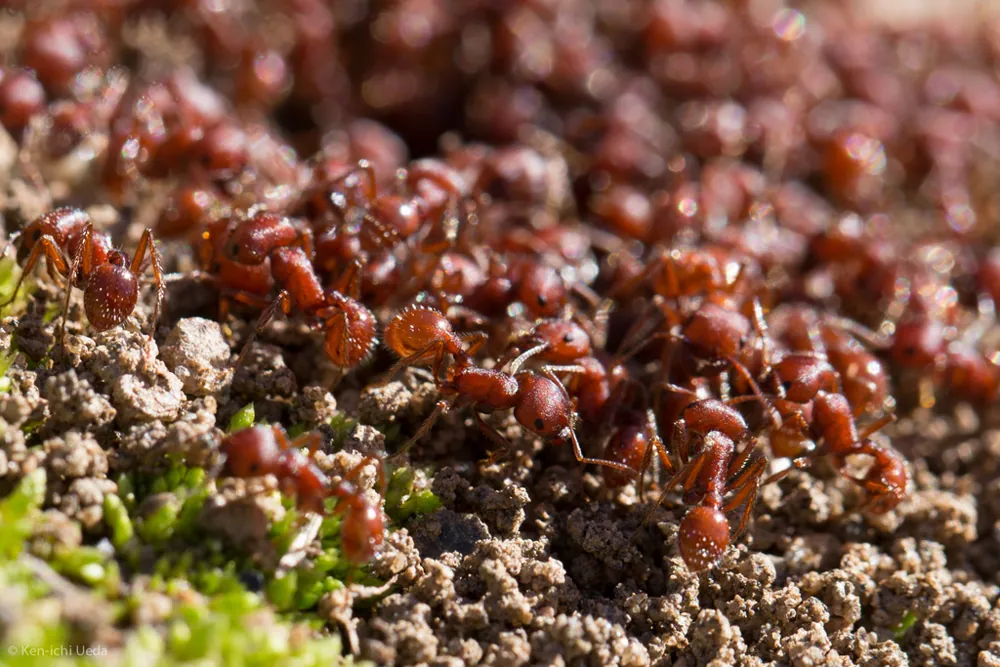
 No anndirto nde
Doole tooke
Tooke ina yalta e fiɗirgal.
Hol ko tooke mum (ŋatol walla fiɗol) waɗata?
The sting is venomous and painful.1
Hol no nde woni bone e yimɓe?
Bone e yimɓe: Ina muusaIna waawi muusude sanne, kono ɓadii abada wonaa bone mawɗo.Its sting is painful. Where there are many colonies, they can cause such loss of grazing plants and seeds that they are a severe ecological and economic burden.1
 Si nde fiɗii
- Lootu fiɗe ɗe, ɓuuɓnu ɗe.
- Si neɗɗo oo ina tampa foofde, yeeso walla daande mum ina ɓutta, walla ina yiɗi waasude hakkille, ɗum ko musiiba allergy: noddu lamba ballal yaawngal.
Sahaa fof, noddu lamba ballal yaawngal (112, 000, 911) ko adii. Ɗum ko ballal arano kuuɓal, wonaa wasiyya doktaa. Aslu ballal arano
 Reen hoore maa
- Taa memu, taa nanngu, taa aaɓnu dabbaare ladde abada, hay pamaro, hay si ina wayi no ɗaanii walla maayii.
- Accu nde nokku. Si a fottii e gooto, deeƴu, ruttu caggal seeɗa seeɗa, accu nde yaha laawol mum.
- Si gooto e majji fiɗii ma: deeƴu, taa dillu, noddu lamba ballal yaawngal (112, 000, 911) walla yah asibiti law. Siftor no nde wayri, foto ina walla.
Nde ɗaɓɓaaki ma. Nde huutora tooke mum ngam nanngude ñaamdu walla reende hoore mum, nde ɓuri yiɗde suuɗaade. Ɓeydu anndude no reentorto
Hol to e aduna?
Hol no nde mawni?
Hol no nde juuti?
 pamaro haa ina waawi joɗaade dow ceɓre feɗeendu maa
Hol no Western harvester ant mawni, fottindaade e AAN?
Hiisa tan nder browser maa. Alaa ko mooftetee walla ko neletee.
Hol no nde yaawi?


Anndal
Mounds are surrounded by bare ground, so they do not burn during fires.1
A mature colony can have up to 20,000 workers and one queen, and its nest can reach 5 metres (16 ft) deep.1
Honey ants (Myrmecocystus mexicanus) often nest close to western harvester ant colonies and feed on dead or dying workers.1
A queen mates with 2 to 11 different males, with an average of 6.3.1
Workers usually change their jobs as they age, and they forage towards the ends of their lives. A worker lives for an average of six months.1
In cooler months, workers forage throughout the day. In summer they forage only from 5–11 am and 3–9 pm.1
Ngam ganduɓe tooke
- Innde ganndal
- Pogonomyrmex occidentalis
- Fedde
- Tururuwa
- Besngu
- Formicidae2
- Tolno
- Hymenoptera
- Nahiyaaji
- Amerik Rewo
- Ɓikkoy
- The queen lays eggs, and many of the eggs in the first batch die. The first workers, called nanitics, are stunted and measure about 2 mm long.1
- Duuɓi nguurndam
- ɓadii duuɓi 301
- Bone e yimɓe
- 2 / 5: Ina muusa3
Ɗo anndal iwi
- Pogonomyrmex occidentalis (Wikipedia (CC BY-SA 4.0))
- Pogonomyrmex occidentalis (iNaturalist): inɗe e tolnugol.
- Venom Wiki: darja bone, mawnude woowaaɗo e miijo yaawre ko amen. Ndaar no min hiisirta ɗum: No min betiri bone.
Kala anndal e ngoo hello ina jogii limre hollirnde iwdi mum. Si min juumii, accu min, min yiɗɓe dabbaaji, wonaa jaridaa ganndal. Wiy min e [email protected] min feewnitay.
 Yaare nden ina heege! Venom Wiki ko golle neɗɗo gooto: meere, tawa tallaaji alaa, trackers alaa. Ballal pamarngal ina walla heddinde ɗum e internet.Ñaamnu yaare nden
 Bullet ant
 Army ant
 Maricopa harvester ant
 Trap-jaw ant
 Acacia ant
 California harvester ant
 Terciopelo
 Eastern coral snake
 Eastern diamondback rattlesnake
 Eyelash viper
 Timber rattlesnake
 Western diamondback rattlesnake