
 Afrik
Afrik Aazi
Aazi Orop
Orop Amerik Worgo
 Ostaraali e Oseyaani
 Antarktik
 Geec Pasifik
 Geec Atlantik
 Geec Enndo
 Geec Arktik
 Geec Mediteraane
 Geec Boɗeejo
 Geec Karayib
 Geec Korayl
 Geec Siin Worgo
 Geec Filipiin
 Geec Andaman
 Geec Rewo
 Geec Timor e Arafura
 Gulf Bengal
 Gulf Kaliforni
Antilles pinktoe tarantula
 Ŋatgol
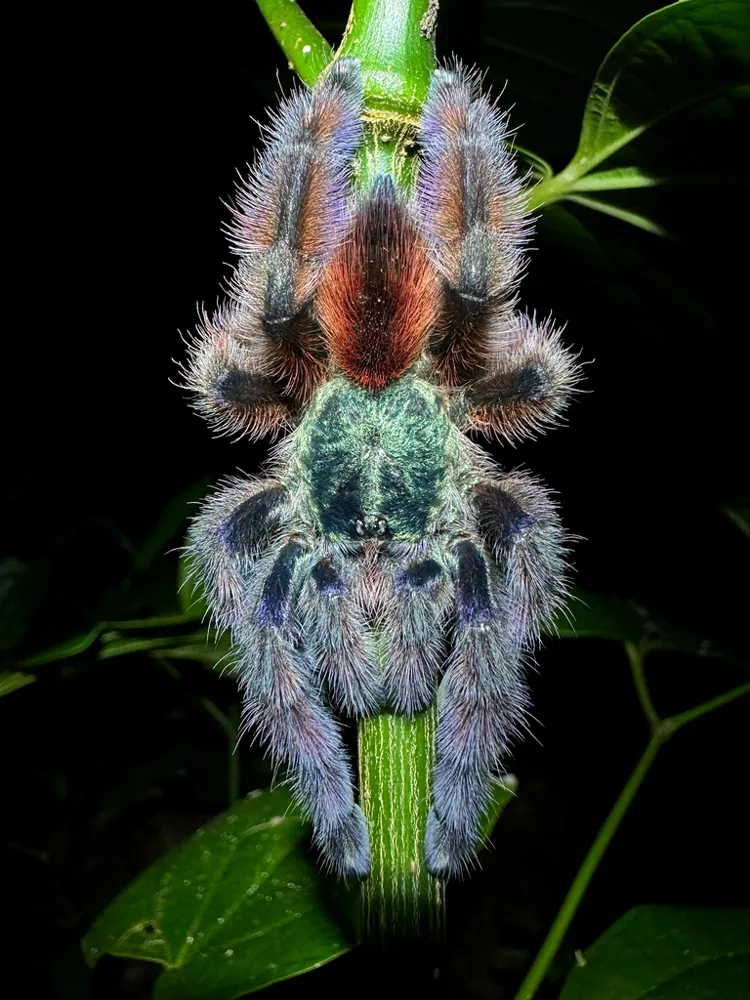
The Antilles pinktoe tarantula is a large, tree-dwelling spider found in the Lesser Antilles, including the island of Martinique in the Caribbean Sea. It spends most of its time in funnel webs that it spins. Its colours change as it grows, so the young and adults look very different.1
 No anndirte ngal
- Spiderlings are bright blue with a black tree trunk pattern on the abdomen.1
- As it grows, it loses the blue colour. The carapace (top of the body) turns green and the abdomen turns red.1
- Adults have green legs with pink tarsi (the feet at the end of the legs) and a covering of purple hairs.1
- Males are usually slightly more brightly coloured than females.1
- Males do not grow as large as females, and their abdomens are smaller, even in proportion to their size.1
Doole tooke
Tooke ngal ina yaltira ñiiƴe mum so ina ŋata.
Hol no bone mum heewiri e yimɓe?
Bone e yimɓe: HoyɗoNo jukkugol ñaaki walla ko ɓuri famɗude. Ko ɓuri heewde alaa bone e yimɓe. So ina ŋata
- Loot nokku ŋataaɗo oo, ɓuuɓnu mo. Heɓ ballal cafrol so muusu ngu ina tiiɗi walla neɗɗo oo ina wiya wonaa e jam.
Adii fof noddu nimero urgence (112, 000, 911). Ɗum ko anndinal ballal adiingal, wonaa saaraangal doktoor. Ko adii e ballal adiingal
 Reen hoore maa
- Wota a meem, wota a nanngu, wota a ñiŋŋu kullal ladde haa abada, hay so ngal ina famɗi, hay so ina nanndi e ɗaaniingal walla maayngal.
- Accu ngal nokku. So a fotti e ngal, deƴƴu, ruttu ɓaawo seeɗa seeɗa, accu ngal yaha laawol mum.
- So gooto ŋatii ma: deƴƴu, wota a dillu, noddu nimero urgence (112, 000, 911) walla yahu opitaal law. Jogo e hakkille no ngal nanndi, natal ina walla.
Ngal faalaaka gaañde ma. Ina huutoroo tooke mum ngam nanngude ñaamdu walla reenaade, ina ɓuri yiɗde suuɗaade. Ɓeydu anndude no reentortoo
Hol to e aduna?
Hol no mawniri?
Hol no juutiri?
 juutde no kaaɗe mahirɗe 4 ɗaɓɓondiraaɗe
 ina waawi taƴde 100 meeteer e segonde 220 (neɗɗo ɓurɗo yaawde ina sokli 9,6)
Hol no Antilles pinktoe tarantula mawniri, so fooɗondiraama e AN?
Limgal tan e navigatoor maa. Alaa ko danndetee walla ko neldetee.
Hol no yaawiri?


Humpito
Spiderlings are bright blue, and their colours change gradually as they grow into adults.1
This spider was first described in 1837 by Charles Athanase Walckenaer, who used a female said to be from Guadeloupe and a male from Brazil. The two actually belong to different species.1
Males are smaller than females and have smaller abdomens, even when size is taken into account.1
Ɗo humpito iwri
- Antilles pinktoe tarantula (Wikipedia (CC BY-SA 4.0))
- Caribena versicolor (iNaturalist): inɗe e ceergal.
- Venom Wiki: tolno bone, mawnude heewnde e miijo yaawde ko amen. Yiy no men keɓirta ɗum: No men tolnirta bone.
Kala humpito e ngoo hello ina jogii limoore hollirnde iwdi mum. So men juumii, yaafo, men ko yiɗɓe kulle, wonaa jaaynde ganndal. Wiy men e [email protected], men feewnita.
 Yaare nden ina weelaa! Venom Wiki ko golle neɗɗo gooto: yoɓetaake, alaa ko jeeyetee, alaa rewɓe. Ndokkal seeɗa ina walla ngam heddude e enternet.Ñaam yaare nden
Goɗɗe e nder fedde wootere: Taranteel e funnel-web
 Mexican redknee tarantulaTaranteel e funnel-webAlaa bone
 Arizona blond tarantulaTaranteel e funnel-webAlaa bone
 Ravine trapdoor spiderTaranteel e funnel-webAlaa bone
 Trinidad chevron tarantulaTaranteel e funnel-webIna muusi tan
 California trapdoor spiderTaranteel e funnel-webAlaa bone
 Costa Rican zebra tarantulaTaranteel e funnel-webAlaa bone
 Terciopelo
 Eastern coral snake
 Eastern diamondback rattlesnake
 Eyelash viper
 Timber rattlesnake
 Western diamondback rattlesnake