
 Afrik
Afrik Aazi
Aazi Orop
Orop Amerik Worgo
 Ostaraali e Oseyaani
 Antarktik
 Geec Pasifik
 Geec Atlantik
 Geec Enndo
 Geec Arktik
 Geec Mediteraane
 Geec Boɗeejo
 Geec Karayib
 Geec Korayl
 Geec Siin Worgo
 Geec Filipiin
 Geec Andaman
 Geec Rewo
 Geec Timor e Arafura
 Gulf Bengal
 Gulf Kaliforni
Army ant
 Jukkugol
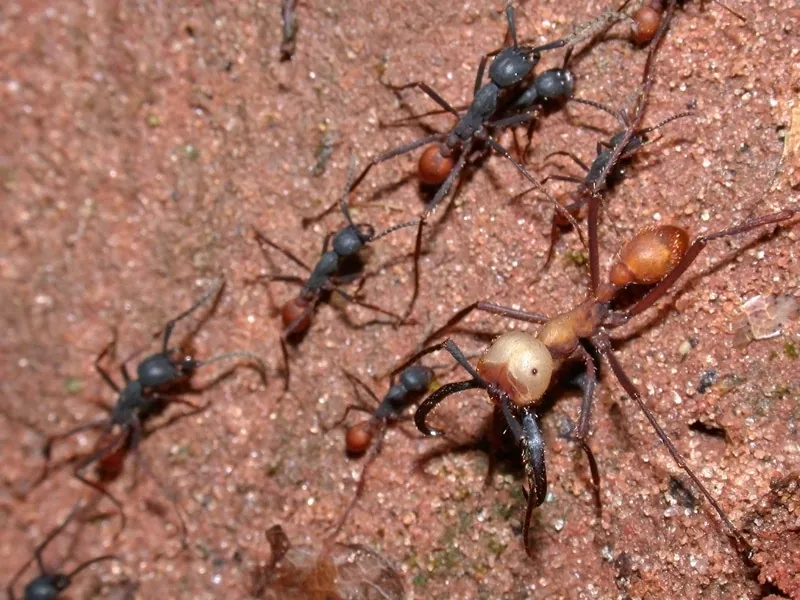
The Burchell's army ant is a tropical ant that moves in huge, organised swarms called raids. It lives in the jungles of Central and South America. Its raids are so large that many other animals, including birds, follow them to catch prey.1


 No anndirte ngal
- Colour varies from deep golden to dark brown.1
- Workers are 3 mm to 12 mm long, and there are four sizes of worker.1
- Soldiers have much larger heads and long, pointed, sickle-shaped jaws (mandibles).1
- Long legs and an elongated body give it a spider-like appearance.1
- Raids move as a loose swarm over the leaf litter on the forest floor.1
Doole tooke
Tooke ngal ina yaltira jukkirgal.
Hol no bone mum heewiri e yimɓe?
Bone e yimɓe: MuusɗoIna waawi muusde sanne, kono hertaani wonde huunde mawnde.Hol ko ngal waɗata so ina hula?
Soldier ants have much larger heads and specialised jaws for defence, and workers have a well-developed sting.1
 So ina jukka
- Loot nokkuuje jukkaaɗe ɗee, ɓuuɓnu ɗe.
- So neɗɗo oo ina tampa e foofaade, yeeso walla daande mum ina ufoo, walla ina yiɗi yanaade, ɗum ko urgence allergi: noddu nimero urgence.
Adii fof noddu nimero urgence (112, 000, 911). Ɗum ko anndinal ballal adiingal, wonaa saaraangal doktoor. Ko adii e ballal adiingal
 Reen hoore maa
- Wota a meem, wota a nanngu, wota a ñiŋŋu kullal ladde haa abada, hay so ngal ina famɗi, hay so ina nanndi e ɗaaniingal walla maayngal.
- Accu ngal nokku. So a fotti e ngal, deƴƴu, ruttu ɓaawo seeɗa seeɗa, accu ngal yaha laawol mum.
- So gooto jukkii ma: deƴƴu, wota a dillu, noddu nimero urgence (112, 000, 911) walla yahu opitaal law. Jogo e hakkille no ngal nanndi, natal ina walla.
Ngal faalaaka gaañde ma. Ina huutoroo tooke mum ngam nanngude ñaamdu walla reenaade, ina ɓuri yiɗde suuɗaade. Ɓeydu anndude no reentortoo
Hol to e aduna?
Hol no mawniri?
Hol no juutiri?
 tokooso haa ina waawi jooɗaade e dow ceŋol hondu maa
Hol no Army ant mawniri, so fooɗondiraama e AN?
Limgal tan e navigatoor maa. Alaa ko danndetee walla ko neldetee.
Hol no yaawiri?


Humpito
Workers can link their bodies to form living bridges and fill holes in the trail, so the whole colony can move faster.1
A single raid can be up to 200 metres long and use up to 200,000 ants.1
Over 500 other species live around these colonies, more than for any other single species, and over 300 are thought to depend on them.1
Colonies move their living nest, called a bivouac, almost every night, taking six to eight hours to relocate.1
Colonies can have 100,000 to 600,000 adult ants, all from one queen.1
Workers are a mix of four sizes, and genetics as well as diet affect which size an ant becomes.1
Ɗo humpito iwri
- Eciton burchellii (Wikipedia (CC BY-SA 4.0))
- Eciton burchellii (iNaturalist): inɗe e ceergal.
- Venom Wiki: tolno bone, mawnude heewnde e miijo yaawde ko amen. Yiy no men keɓirta ɗum: No men tolnirta bone.
Kala humpito e ngoo hello ina jogii limoore hollirnde iwdi mum. So men juumii, yaafo, men ko yiɗɓe kulle, wonaa jaaynde ganndal. Wiy men e [email protected], men feewnita.
 Yaare nden ina weelaa! Venom Wiki ko golle neɗɗo gooto: yoɓetaake, alaa ko jeeyetee, alaa rewɓe. Ndokkal seeɗa ina walla ngam heddude e enternet.Ñaam yaare nden
 Bullet ant
 Red imported fire ant
 Giant Amazonian ant
 Maricopa harvester ant
 Trap-jaw ant
 Acacia ant
 Terciopelo
 Eastern coral snake
 Eastern diamondback rattlesnake
 Eyelash viper
 Timber rattlesnake
 Western diamondback rattlesnake