
 Afrik
Afrik Aazi
Aazi Orop
Orop Amerik Worgo
 Ostaraali e Oseyaani
 Antarktik
 Geec Pasifik
 Geec Atlantik
 Geec Enndo
 Geec Arktik
 Geec Mediteraane
 Geec Boɗeejo
 Geec Karayib
 Geec Korayl
 Geec Siin Worgo
 Geec Filipiin
 Geec Andaman
 Geec Rewo
 Geec Timor e Arafura
 Gulf Bengal
 Gulf Kaliforni
Ashe's spitting cobra
 Ina tuha walla ina wuja
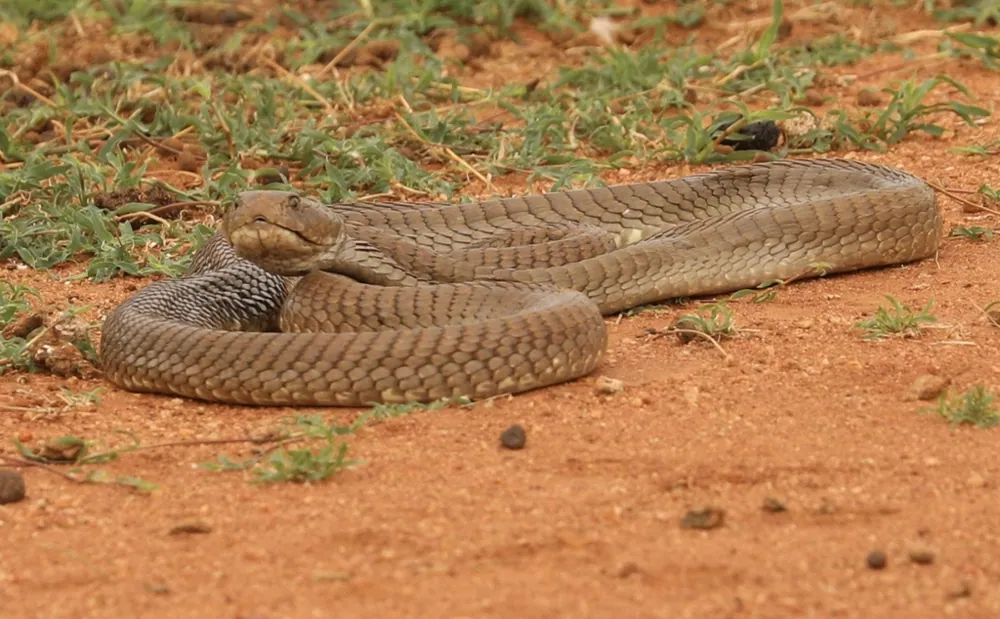
Ashe's spitting cobra is a large venomous snake from eastern and northeastern Africa. It is the largest of all the spitting cobras, and it can spray venom from a distance as well as bite. Its venom can cause blindness if it gets into the eyes and not treated at once.1
 No anndirte ngal
- Very heavily built, with a big head1
- Colour ranges from light grey and pale mustard to dark brown1
- Pale along the belly, sometimes with slight speckling or blotches1
- A dark brown band across the throat1
- Average length about 1.3 to 2.0 m including the tail, making it the largest spitting cobra1
Ina heewi waylondireede e: It was once thought to be a brown form of the black-necked spitting cobra. It was classed as a separate species in 2007.1
Doole tooke
Ina tuha walla ina wuja ndiyam muusɗam e ko jangii ngal.
Hol ko tooke ŋatgol mum waɗata?
Its venom is neurotoxic, meaning it attacks the nerves, and cytotoxic, meaning it destroys cells. It is very similar to the venom of other spitting cobras, but it can inject a much larger volume in one bite. Its venom also causes strong tissue death around a wound.1
Hol no bone mum heewiri e yimɓe?
Bone e yimɓe: Bone sanneIna waawi warde neɗɗo mo safraaka.The venom has low whole-body toxicity, so survival is very likely with proper treatment. Survivors may be left disfigured by tissue damage. If venom gets into the eyes and is not treated immediately, blindness is likely. Even with antivenom, amputation may be needed after a full dose from a large specimen.1
 Kabaaru moƴƴo: doktooruuji ina njogii lekki (sérum antivenimeux) walla safaara ngam ɗum.1
Hol ko ngal waɗata so ina hula?
It is very defensive and does not hesitate to spit when it feels cornered. It can keep spitting for hours without running out of venom straight away.1
 So ina ŋata walla ina tuha
- If venom gets into the eyes, rinse them straight away with water or another bland liquid, as delay can cause permanent blindness. Whether the person has been bitten or spat at, they should see a doctor as soon as possible. Treatment is the appropriate antivenom, SAVP polyvalent from South African Vaccine Producers, and the dose may need to be higher than for the average black-necked spitting cobra bite.1
- Haɗ neɗɗo oo dillaade, deƴƴin mo, ittu jabbe e kala ko tiiɗi, yahra mo opitaal law: sérum antivenimeux woni safaara.
- So tooke tuhaama e gite, loot ɗe e ndiyam laaɓɗam keewɗam ɗoo e sahaa oo.
Adii fof noddu nimero urgence (112, 000, 911). Ɗum ko anndinal ballal adiingal, wonaa saaraangal doktoor. Ko adii e ballal adiingal
 Reen hoore maa
- Wota a meem, wota a nanngu, wota a ñiŋŋu kullal ladde haa abada, hay so ngal ina famɗi, hay so ina nanndi e ɗaaniingal walla maayngal.
- Accu ngal nokku. So a fotti e ngal, deƴƴu, ruttu ɓaawo seeɗa seeɗa, accu ngal yaha laawol mum.
- So gooto ŋatii ma walla tuhii tooke e gite maa: deƴƴu, wota a dillu, noddu nimero urgence (112, 000, 911) walla yahu opitaal law. Jogo e hakkille no ngal nanndi, natal ina walla.
Ngal faalaaka gaañde ma. Ina huutoroo tooke mum ngam nanngude ñaamdu walla reenaade, ina ɓuri yiɗde suuɗaade. Ɓeydu anndude no reentortoo
Hol to e aduna?
Hol no mawniri?
Hol no juutiri?
 juutde no dawaaɗi 2,5, hinere haa lawol
 juutde no banaanaaji 15 sammondiraaɗi
 ina waawi taƴde 100 meeteer e segonde 41 (neɗɗo ɓurɗo yaawde ina sokli 9,6)
Hol no Ashe's spitting cobra mawniri, so fooɗondiraama e AN?
Limgal tan e navigatoor maa. Alaa ko danndetee walla ko neldetee.
Hol no yaawiri?


Humpito
It is the world's largest species of spitting cobra.1
It can spit venom in large amounts for hours.1
The largest specimen recorded, caught in Kenya, measured 270 cm in total length.1
One milked specimen at the Bio-Ken Snake Farm in 2004 produced a wet venom yield of 6.2 ml.1
It is most closely related to the Mozambique spitting cobra.1
Feññinoowo fenaande
Fenaande: It is just a brown form of the black-necked spitting cobra.
Goonga: It was classed as a separate species in 2007, after experts recognised its differences from other spitting cobras.1
Ɗo humpito iwri
- Naja ashei (Wikipedia (CC BY-SA 4.0))
- Naja ashei (iNaturalist): inɗe e ceergal.
- Venom Wiki: tolno bone, mawnude heewnde e miijo yaawde ko amen. Yiy no men keɓirta ɗum: No men tolnirta bone.
Kala humpito e ngoo hello ina jogii limoore hollirnde iwdi mum. So men juumii, yaafo, men ko yiɗɓe kulle, wonaa jaaynde ganndal. Wiy men e [email protected], men feewnita.
 Yaare nden ina weelaa! Venom Wiki ko golle neɗɗo gooto: yoɓetaake, alaa ko jeeyetee, alaa rewɓe. Ndokkal seeɗa ina walla ngam heddude e enternet.Ñaam yaare nden
 Mamba ɓaleeri
 Kobra Misra
 Cape cobra
 Eastern green mamba
 Jameson's mamba
 Western green mamba
 Yaare oolnde maayde
 Mbaa-ndiyam (Puff adder)
 Boomslang
 Fat-tailed scorpion
 Gaboon viper
 Western honey bee