
 Afrik
Afrik Aazi
Aazi Orop
Orop Amerik Worgo
 Ostaraali e Oseyaani
 Antarktik
 Geec Pasifik
 Geec Atlantik
 Geec Enndo
 Geec Arktik
 Geec Mediteraane
 Geec Boɗeejo
 Geec Karayib
 Geec Korayl
 Geec Siin Worgo
 Geec Filipiin
 Geec Andaman
 Geec Rewo
 Geec Timor e Arafura
 Gulf Bengal
 Gulf Kaliforni
Baron's green racer
 Ŋatgol
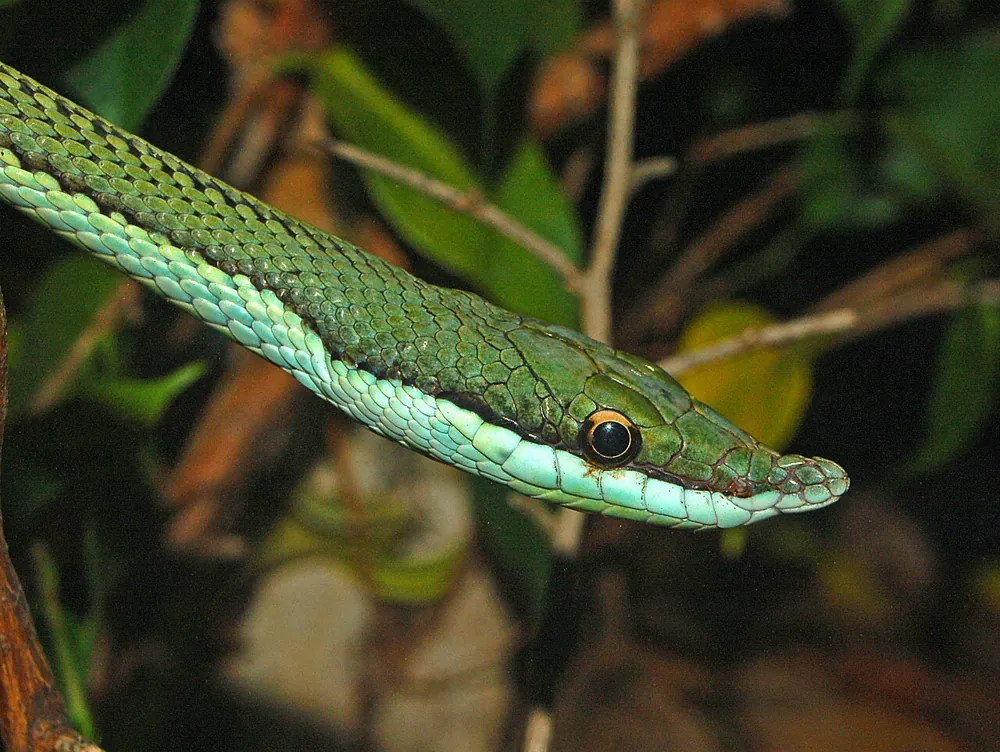
Baron's green racer is a long, green tree snake that lives in South America. It has rear fangs at the back of its mouth and its venom can harm people, so it should be treated with caution. It is one of the longest snakes in its genus, Philodryas.1



 No anndirte ngal
- Usually green, but some individuals are blue or brown.1
- The body is either plain or has black stripes running along the back and sides, on the front third of the body.1
- The underside under the black side lines is white or yellowish-white, sometimes with green or blue shades.1
- The head is small and elongated, with a small, flexible nasal point that is more developed in males.1
- Adults can reach 150 to 180 cm, and the tail makes up about 30% of the total length.1
Doole tooke
Tooke ngal ina yaltira ñiiƴe mum so ina ŋata.
Hol ko tooke ŋatgol mum waɗata?
It is rear-fanged, which means its fangs sit at the back of the mouth. Its venom has proteolytic activity, meaning it breaks down proteins, and it can stop blood platelets from clumping together, which affects clotting. Local effects include bleeding, muscle death, swelling and inflammation of the tissue.1
Hol no bone mum heewiri e yimɓe?
Bone e yimɓe: MuusɗoIna waawi muusde sanne, kono hertaani wonde huunde mawnde.It is considered dangerous to humans and should be treated with caution. No bite numbers or deaths are recorded.1
Hol ko ngal waɗata so ina hula?
When frightened, it releases a foul-smelling substance from its cloaca, which is the common opening for its digestive, urinary and reproductive systems. It is generally non-aggressive.1
 So ina ŋata
- Loot nokku ŋataaɗo oo, deƴƴin neɗɗo oo, heɓ ballal cafrol. Noone goɗɗe (ko wayi no boomslang) ina mbaawi warde caggal waktuuji.
Adii fof noddu nimero urgence (112, 000, 911). Ɗum ko anndinal ballal adiingal, wonaa saaraangal doktoor. Ko adii e ballal adiingal
 Reen hoore maa
- Wota a meem, wota a nanngu, wota a ñiŋŋu kullal ladde haa abada, hay so ngal ina famɗi, hay so ina nanndi e ɗaaniingal walla maayngal.
- Accu ngal nokku. So a fotti e ngal, deƴƴu, ruttu ɓaawo seeɗa seeɗa, accu ngal yaha laawol mum.
- So gooto ŋatii ma: deƴƴu, wota a dillu, noddu nimero urgence (112, 000, 911) walla yahu opitaal law. Jogo e hakkille no ngal nanndi, natal ina walla.
Ngal faalaaka gaañde ma. Ina huutoroo tooke mum ngam nanngude ñaamdu walla reenaade, ina ɓuri yiɗde suuɗaade. Ɓeydu anndude no reentortoo
Hol to e aduna?
Hol no mawniri?
Hol no juutiri?
 juutde no ulluuɗi galle 4, hinere haa lawol
 juutde no banaanaaji 10 sammondiraaɗi
 ina waawi taƴde 100 meeteer e segonde 60 (neɗɗo ɓurɗo yaawde ina sokli 9,6)
Hol no Baron's green racer mawniri, so fooɗondiraama e AN?
Limgal tan e navigatoor maa. Alaa ko danndetee walla ko neldetee.
Hol no yaawiri?


Humpito
When frightened, it gives off a foul-smelling liquid from its cloaca.1
Larger members of its species have been reported eating immature individuals.1
Its colour varies, with green being most common but blue and brown individuals also found.1
It is the longest known species in the genus Philodryas.1
Its tail makes up about 30% of its total body length.1
Ɗo humpito iwri
- Philodryas baroni (Wikipedia (CC BY-SA 4.0))
- Philodryas baroni (iNaturalist): inɗe e ceergal.
- Venom Wiki: tolno bone, mawnude heewnde e miijo yaawde ko amen. Yiy no men keɓirta ɗum: No men tolnirta bone.
Kala humpito e ngoo hello ina jogii limoore hollirnde iwdi mum. So men juumii, yaafo, men ko yiɗɓe kulle, wonaa jaaynde ganndal. Wiy men e [email protected], men feewnita.
 Yaare nden ina weelaa! Venom Wiki ko golle neɗɗo gooto: yoɓetaake, alaa ko jeeyetee, alaa rewɓe. Ndokkal seeɗa ina walla ngam heddude e enternet.Ñaam yaare nden
 False water cobra
 Brown vine snake
 Green vine snake
 Lichtenstein's green racer
 Peruvian slender snake
 Chilean green racer
 Faaɓru tooke kaŋŋe
 Terciopelo
 Brazilian wandering spider
 Eyelash viper
 Golden lancehead
 South American bushmaster