
 Afrik
Afrik Aazi
Aazi Orop
Orop Amerik Worgo
 Ostaraali e Oseyaani
 Antarktik
 Geec Pasifik
 Geec Atlantik
 Geec Enndo
 Geec Arktik
 Geec Mediteraane
 Geec Boɗeejo
 Geec Karayib
 Geec Korayl
 Geec Siin Worgo
 Geec Filipiin
 Geec Andaman
 Geec Rewo
 Geec Timor e Arafura
 Gulf Bengal
 Gulf Kaliforni
Green vine snake
 Ŋatgol
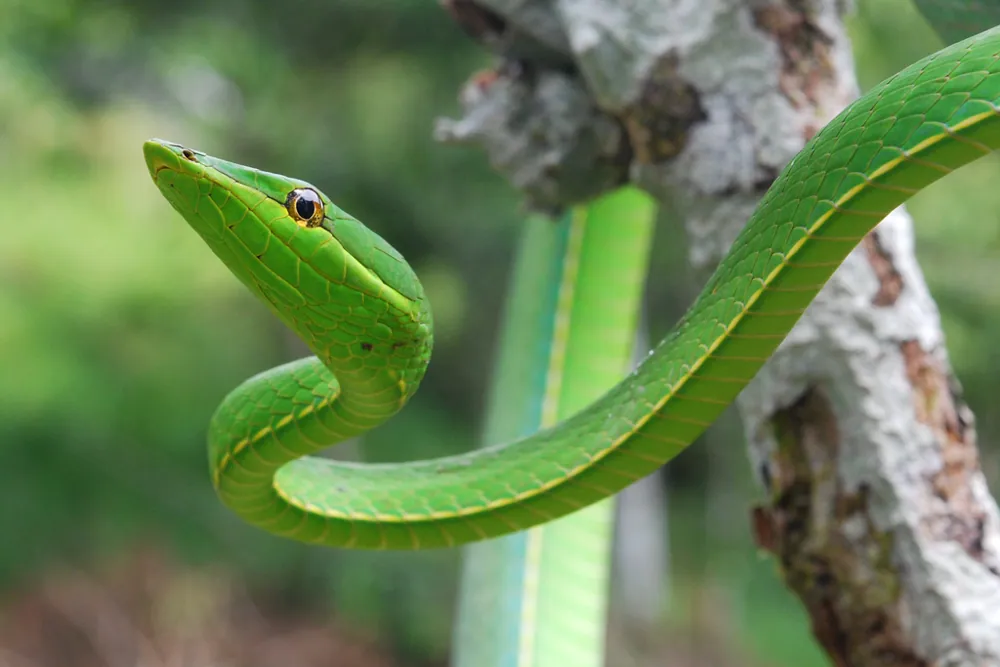
The green vine snake is a slender, bright green snake that lives high in the trees of Central and northern South America. It hunts small animals from the branches, and it is rear-fanged, which means its venom is delivered from the back of the mouth.1



 No anndirte ngal
- Bright green on its back, with yellowish green underneath and on the upper lip1
- A narrow yellowish-white stripe runs along each side of the belly and tail1
- Very slender body with a long, pointed head and a very large mouth that reaches almost the whole length of the head1
- Long green tongue, kept outside the mouth and moved up and down1
- Long, delicate tail, used to hold on while reaching for prey1
Doole tooke
Tooke ngal ina yaltira ñiiƴe mum so ina ŋata.
Hol ko tooke ŋatgol mum waɗata?
Its saliva is toxic, and it works quickly on small animals, so they are stopped from fighting back. It has little to no effect on humans. In the rare reported bites, slight tingling or temporary numbness at the bite site has been reported.1
Hol no bone mum heewiri e yimɓe?
Bone e yimɓe: HoyɗoNo jukkugol ñaaki walla ko ɓuri famɗude. Ko ɓuri heewde alaa bone e yimɓe.Bites to people are rare, because the snake has to grab hold and chew its saliva into the skin, which most people will not allow. Serious allergic reactions are possible, as with any venomous animal, and most allergies are not known before a bite.1
 So ina ŋata
- Loot nokku ŋataaɗo oo, deƴƴin neɗɗo oo, heɓ ballal cafrol. Noone goɗɗe (ko wayi no boomslang) ina mbaawi warde caggal waktuuji.
Adii fof noddu nimero urgence (112, 000, 911). Ɗum ko anndinal ballal adiingal, wonaa saaraangal doktoor. Ko adii e ballal adiingal
 Reen hoore maa
- Wota a meem, wota a nanngu, wota a ñiŋŋu kullal ladde haa abada, hay so ngal ina famɗi, hay so ina nanndi e ɗaaniingal walla maayngal.
- Accu ngal nokku. So a fotti e ngal, deƴƴu, ruttu ɓaawo seeɗa seeɗa, accu ngal yaha laawol mum.
- So gooto ŋatii ma: deƴƴu, wota a dillu, noddu nimero urgence (112, 000, 911) walla yahu opitaal law. Jogo e hakkille no ngal nanndi, natal ina walla.
Ngal faalaaka gaañde ma. Ina huutoroo tooke mum ngam nanngude ñaamdu walla reenaade, ina ɓuri yiɗde suuɗaade. Ɓeydu anndude no reentortoo
Hol to e aduna?
Hol no mawniri?
Hol no juutiri?
 juutde no ulluuɗi galle 4, hinere haa lawol
 juutde no banaanaaji 11 sammondiraaɗi
 ina waawi taƴde 100 meeteer e segonde 57 (neɗɗo ɓurɗo yaawde ina sokli 9,6)
Hol no Green vine snake mawniri, so fooɗondiraama e AN?
Limgal tan e navigatoor maa. Alaa ko danndetee walla ko neldetee.
Hol no yaawiri?


Humpito
Its tongue is thought to work like a cat's whiskers, helping it sense its way through branches and brush as it moves quickly.1
After biting, it coils around its prey. It does not squeeze the prey the way a constrictor does, but the coil helps to hold it.1
It is rear-fanged, with two larger but blunted, peg-like teeth at the upper back of the mouth. These teeth have grooves on the sides that deliver its saliva.1
After swallowing a meal, it usually moves to the highest point of a tree to rest.1
In captivity it readily takes mice, and some are large enough to eat rats, which makes it a prized choice among reptile collectors.1
Feññinoowo fenaande
Fenaande: That the bite of this snake is dangerous to people.
Goonga: Its venom has little to no effect on humans. It is fast-acting on small animals, but bites to people are rare and usually cause only slight tingling or temporary numbness.1
Ɗo humpito iwri
- Oxybelis fulgidus (Wikipedia (CC BY-SA 4.0))
- Oxybelis fulgidus (iNaturalist): inɗe e ceergal.
- Venom Wiki: tolno bone, mawnude heewnde e miijo yaawde ko amen. Yiy no men keɓirta ɗum: No men tolnirta bone.
Kala humpito e ngoo hello ina jogii limoore hollirnde iwdi mum. So men juumii, yaafo, men ko yiɗɓe kulle, wonaa jaaynde ganndal. Wiy men e [email protected], men feewnita.
 Yaare nden ina weelaa! Venom Wiki ko golle neɗɗo gooto: yoɓetaake, alaa ko jeeyetee, alaa rewɓe. Ndokkal seeɗa ina walla ngam heddude e enternet.Ñaam yaare nden
 Western hognose snake
 Baron's green racer
 False water cobra
 Brown vine snake
 Eastern hognose snake
 Lichtenstein's green racer
 Terciopelo
 Eastern coral snake
 Eastern diamondback rattlesnake
 Eyelash viper
 Timber rattlesnake
 Western diamondback rattlesnake