
 Afrik
Afrik Aazi
Aazi Orop
Orop Amerik Worgo
 Ostaraali e Oseyaani
 Antarktik
 Geec Pasifik
 Geec Atlantik
 Geec Enndo
 Geec Arktik
 Geec Mediteraane
 Geec Boɗeejo
 Geec Karayib
 Geec Korayl
 Geec Siin Worgo
 Geec Filipiin
 Geec Andaman
 Geec Rewo
 Geec Timor e Arafura
 Gulf Bengal
 Gulf Kaliforni
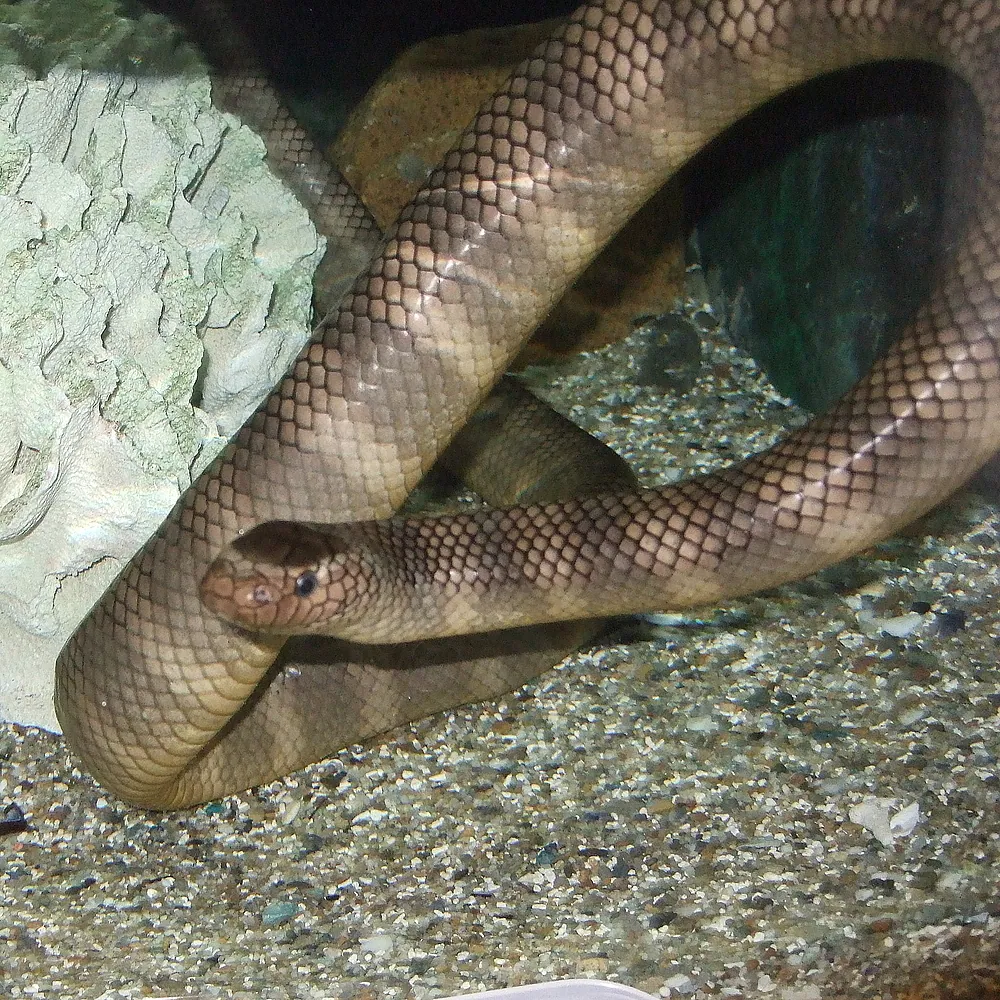
Black-banded sea krait
 Ŋatgol
The black-banded sea krait is a sea snake with venom that is reportedly ten times stronger than a cobra's. It lives in the warm western Pacific Ocean, mostly around coral reefs. It spends much of its life in water but needs to come up to breathe.1



 No anndirte ngal
Doole tooke
Tooke ngal ina yaltira ñiiƴe mum so ina ŋata.
Hol ko tooke ŋatgol mum waɗata?
The bite is highly venomous and paralyses the prey. The venom glands are located behind the eyes.1
Hol no bone mum heewiri e yimɓe?
Bone e yimɓe: Bone sanneIna waawi warde neɗɗo mo safraaka.Its venom is reportedly ten times stronger than cobra venom, so any bite should be treated as serious.1
Hol ko ngal waɗata so ina hula?
It prefers to save its energy and venom for hunting, so it strikes only as a very last resort when cornered, threatened or provoked.1
 So ina ŋata
- Habbugol ɗiwɗiingol (immobilisation): taarnu bando elastik tiiɗɗo e dow nokku ŋataaɗo, refti yawnu e dow terɗe ndee fof, haɓɓu attel, haɗ neɗɗo oo dillaade fey haa ballal hewta.
- Yaltin neɗɗo oo e ndiyam, yahra mo opitaal law.
Adii fof noddu nimero urgence (112, 000, 911). Ɗum ko anndinal ballal adiingal, wonaa saaraangal doktoor. Ko adii e ballal adiingal
 Reen hoore maa
- Wota a meem, wota a nanngu, wota a ñiŋŋu kullal ladde haa abada, hay so ngal ina famɗi, hay so ina nanndi e ɗaaniingal walla maayngal.
- Accu ngal nokku. So a fotti e ngal, deƴƴu, ruttu ɓaawo seeɗa seeɗa, accu ngal yaha laawol mum.
- So gooto ŋatii ma: deƴƴu, wota a dillu, noddu nimero urgence (112, 000, 911) walla yahu opitaal law. Jogo e hakkille no ngal nanndi, natal ina walla.
Ngal faalaaka gaañde ma. Ina huutoroo tooke mum ngam nanngude ñaamdu walla reenaade, ina ɓuri yiɗde suuɗaade. Ɓeydu anndude no reentortoo
Hol to e aduna?
Hol no mawniri?
Hol no juutiri?
 juutde no ulluuɗi galle 3, hinere haa lawol
 juutde no banaanaaji 9 sammondiraaɗi
 ina waawi yoowde juuteendi pisin mawɗo (50 m) e segonde 43
Hol no Black-banded sea krait mawniri, so fooɗondiraama e AN?
Limgal tan e navigatoor maa. Alaa ko danndetee walla ko neldetee.
Hol no yaawiri?
Humpito
Its venom is reportedly ten times stronger than that of a cobra.1
It has been observed hunting in cooperative 'alliances' with bluefin trevally, which pick off small fish that the snake flushes from the coral.1
In some warm years, large numbers gather in sea caves and tide pools on the Ryukyu cliffs in search of fresh water and possibly to mate.1
Although it lives in the sea, it lays its eggs on land.1
In southern Japan its meat is used in a winter broth called irabu-jiru, which is said to taste like miso and a little like tuna.1
Its northward spread into waters near South Korea is linked to climate change, which has damaged its habitat.1
Ɗo humpito iwri
- Black-banded sea krait (Wikipedia (CC BY-SA 4.0))
- Laticauda semifasciata (iNaturalist): inɗe e ceergal.
- Venom Wiki: tolno bone, mawnude heewnde e miijo yaawde ko amen. Yiy no men keɓirta ɗum: No men tolnirta bone.
Kala humpito e ngoo hello ina jogii limoore hollirnde iwdi mum. So men juumii, yaafo, men ko yiɗɓe kulle, wonaa jaaynde ganndal. Wiy men e [email protected], men feewnita.
 Yaare nden ina weelaa! Venom Wiki ko golle neɗɗo gooto: yoɓetaake, alaa ko jeeyetee, alaa rewɓe. Ndokkal seeɗa ina walla ngam heddude e enternet.Ñaam yaare nden
Goɗɗe e nder fedde wootere: Ɓoɗɗi geec
 Beaked sea snake
 Belcher's sea snake
 Blue-lipped sea krait
 Dubois' sea snake
 Olive sea snake
 Yellow-lipped sea krait
Ina wuuri kadi e: Geec Pasifik
 Meduus kaaɗe OstaraaliMeduusaaji e kulle geec jukkoojeBareejoWota a meem
 Kokiyaas kone jeografiKokiyaas kone e pulpuujiBareejo
 Pulp mawɗo koode bulaajeKokiyaas kone e pulpuujiBareejo
 Liingu puffer SapoŋKulle goɗɗe jogiiɗe tooke ɓannduBareejo
 Pulp koode bulaaje worgoKokiyaas kone e pulpuujiBareejo
 Hawksbill sea turtleKulle goɗɗe jogiiɗe tooke ɓannduIna waawi warde