
 Afrik
Afrik Aazi
Aazi Orop
Orop Amerik Worgo
 Ostaraali e Oseyaani
 Antarktik
 Geec Pasifik
 Geec Atlantik
 Geec Enndo
 Geec Arktik
 Geec Mediteraane
 Geec Boɗeejo
 Geec Karayib
 Geec Korayl
 Geec Siin Worgo
 Geec Filipiin
 Geec Andaman
 Geec Rewo
 Geec Timor e Arafura
 Gulf Bengal
 Gulf Kaliforni
Common vampire bat
 Ŋatgol
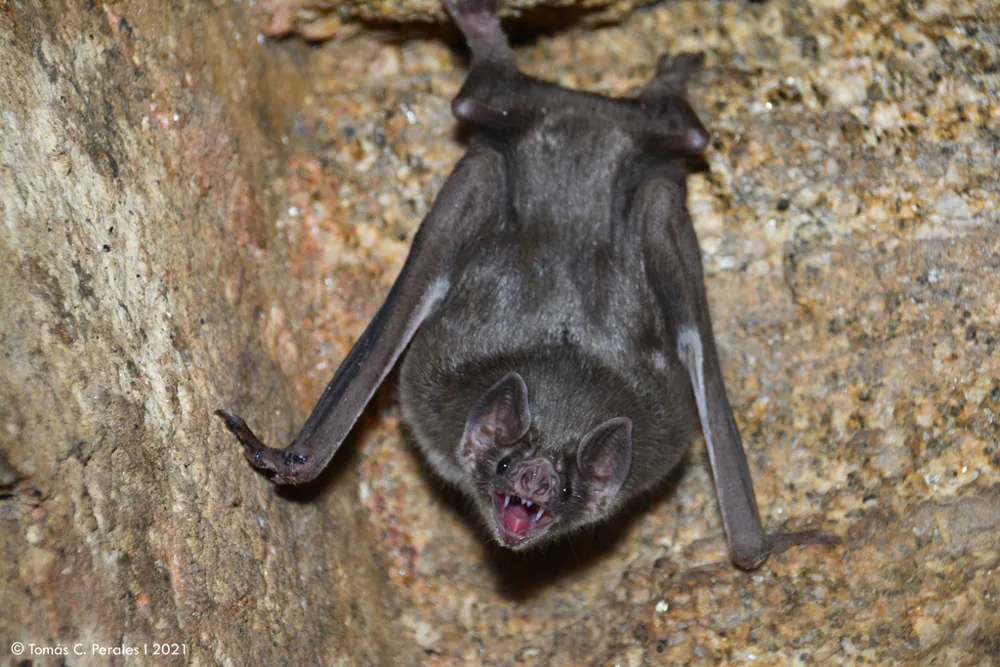
The common vampire bat is a small bat that feeds on the blood of mammals, mostly farm animals such as cattle and horses. It lives in the Americas, from Mexico to Chile and Argentina, and it is one of only three vampire bat species in the world. It matters because it can carry rabies and is considered a pest by farmers.1

 No anndirte ngal
- Short-haired fur, silver-grey on the underside and darker on the back1
- Flat, leaf-shaped nose and a deeply grooved lower lip1
- A well-developed, clawed thumb on each wing, longer than in its relatives1
- Average body length of about 9 cm, with an 18 cm wingspan1
- Can run and leap on the ground, using its wings to push forward1
Ina heewi waylondireede e: The hairy-legged vampire bat and the white-winged vampire bat look very similar. The common vampire bat can be told apart by its longer thumb, and it feeds on mammal blood far more often than the other two, which mostly feed on birds.1
Doole tooke
Tooke ngal ina yaltira ñiiƴe mum so ina ŋata.
Hol no bone mum heewiri e yimɓe?
Bone e yimɓe: MuusɗoIna waawi muusde sanne, kono hertaani wonde huunde mawnde.The bat is a carrier of rabies, and the danger is mostly to livestock rather than to people. Any person who wakes to find a vampire bat in their sleeping quarters should seek medical attention, and young children may not fully wake up during a bite.1
 So ina ŋata
- Anyone who wakes to find a vampire bat in their sleeping area should get medical attention. Bats should be avoided and not handled, and they should not be kept in living spaces.1
- Loot gaañande nden no moƴƴiri, heɓ ballal cafrol.
Adii fof noddu nimero urgence (112, 000, 911). Ɗum ko anndinal ballal adiingal, wonaa saaraangal doktoor. Ko adii e ballal adiingal
 Reen hoore maa
- Wota a meem, wota a nanngu, wota a ñiŋŋu kullal ladde haa abada, hay so ngal ina famɗi, hay so ina nanndi e ɗaaniingal walla maayngal.
- Accu ngal nokku. So a fotti e ngal, deƴƴu, ruttu ɓaawo seeɗa seeɗa, accu ngal yaha laawol mum.
- So gooto ŋatii ma: deƴƴu, wota a dillu, noddu nimero urgence (112, 000, 911) walla yahu opitaal law. Jogo e hakkille no ngal nanndi, natal ina walla.
Ngal faalaaka gaañde ma. Ina huutoroo tooke mum ngam nanngude ñaamdu walla reenaade, ina ɓuri yiɗde suuɗaade. Ɓeydu anndude no reentortoo
Hol to e aduna?
Hol no mawniri?
Hol no juutiri?
Hol no teddiri?

 juutde no kaaɗe mahirɗe 3 ɗaɓɓondiraaɗe
 ina waawi diwde taƴde nokku ball timmuɗo e segonde 19
Hol no Common vampire bat mawniri, so fooɗondiraama e AN?
Limgal tan e navigatoor maa. Alaa ko danndetee walla ko neldetee.
Hol no yaawiri?


Humpito
Its saliva contains an anticoagulant called Draculin, named after Count Dracula, which keeps the blood from clotting while it feeds.1
A genetically engineered drug based on the anticoagulant in its saliva, called desmoteplase, has been shown to increase blood flow in stroke patients.1
Heat sensors in its nose help it find blood vessels close to the surface of the skin.1
It has the fewest teeth of any bat, and its upper incisors have no enamel, which keeps them sharp.1
Vampire bats share food with each other, and a bat that is well fed will regurgitate blood to a hungry roost-mate, mostly to its own young.1
It hunts at night and can travel 5 to 8 km from its roost to find food.1
Ngam ganduɓe tooke
- Innde ganndal
- Desmodus rotundus
- Fedde
- Kulle muynooje jogiiɗe tooke
- Ɓesngu
- Phyllostomidae2
- Ordre
- Chiroptera
- Leyɗe mawɗe
- Amerik Rewo, Amerik Worgo
- Ɓiɓɓe tokooso
- Females give birth to one offspring per pregnancy after a gestation period of about seven months.1
- Hol no ngal woniri e ladde
- Least Concern1
- Bone e yimɓe
- 2 / 5: Muusɗo3
Ɗo humpito iwri
- Common vampire bat (Wikipedia (CC BY-SA 4.0))
- Desmodus rotundus (iNaturalist): inɗe e ceergal.
- Venom Wiki: tolno bone, mawnude heewnde e miijo yaawde ko amen. Yiy no men keɓirta ɗum: No men tolnirta bone.
Kala humpito e ngoo hello ina jogii limoore hollirnde iwdi mum. So men juumii, yaafo, men ko yiɗɓe kulle, wonaa jaaynde ganndal. Wiy men e [email protected], men feewnita.
 Yaare nden ina weelaa! Venom Wiki ko golle neɗɗo gooto: yoɓetaake, alaa ko jeeyetee, alaa rewɓe. Ndokkal seeɗa ina walla ngam heddude e enternet.Ñaam yaare nden
Goɗɗe e nder fedde wootere: Kulle muynooje jogiiɗe tooke
 Cuban solenodonKulle muynooje jogiiɗe tookeIna muusi tan
 Hispaniolan solenodonKulle muynooje jogiiɗe tookeIna muusi tan
 Northern short-tailed shrewKulle muynooje jogiiɗe tookeAlaa bone
 Hairy-legged vampire batKulle muynooje jogiiɗe tookeAlaa bone
 White-winged vampire batKulle muynooje jogiiɗe tookeAlaa bone
 PlatypusKulle muynooje jogiiɗe tookeIna muusi tan
 Terciopelo
 Eastern coral snake
 Eastern diamondback rattlesnake
 Eyelash viper
 Timber rattlesnake
 Western diamondback rattlesnake