
 Afrik
Afrik Aazi
Aazi Orop
Orop Amerik Worgo
 Ostaraali e Oseyaani
 Antarktik
 Geec Pasifik
 Geec Atlantik
 Geec Enndo
 Geec Arktik
 Geec Mediteraane
 Geec Boɗeejo
 Geec Karayib
 Geec Korayl
 Geec Siin Worgo
 Geec Filipiin
 Geec Andaman
 Geec Rewo
 Geec Timor e Arafura
 Gulf Bengal
 Gulf Kaliforni
Eel-tailed catfish
 Gaaɗe tooke
The eel-tailed catfish is a freshwater fish with a large head, thick lips and a tail that narrows like an eel's. It lives in the Murray-Darling river system in eastern Australia. Its fins carry sharp, venomous spines, so it is important to know it when you are in the water.1



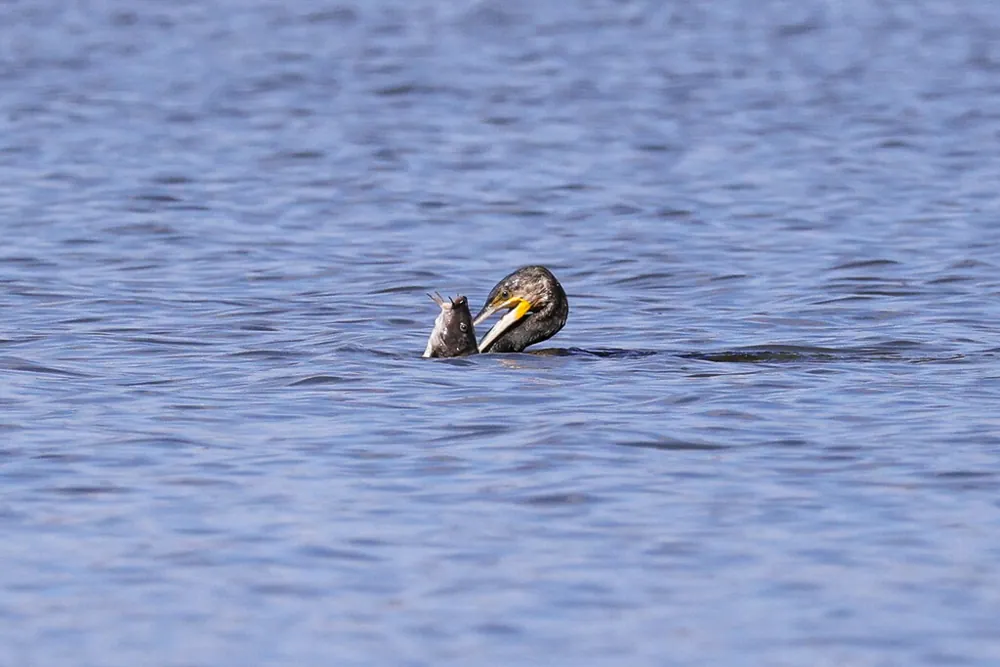
 No anndirte ngal
- Large head with thick, fleshy lips and tube-shaped nostrils1
- Four pairs of barbels (whisker-like feelers) around the mouth1
- Almost cylindrical body that tapers into a pointed, eel-like tail with a continuous fin edge1
- Olive-green to brown, black or purplish back with a white underside1
- Sharp, serrated spines on the dorsal (back) and pectoral (side) fins, which are venomous1
Doole tooke
Gaaɗe ceeɓɗe ina ndondii tooke. Yaabde e mum walla nanngude ɗum ina muusi.
Hol ko tooke ŋatgol mum waɗata?
Its fin spines are venomous and can cause a very painful wound.1
Hol no bone mum heewiri e yimɓe?
Bone e yimɓe: MuusɗoIna waawi muusde sanne, kono hertaani wonde huunde mawnde.The spines can cause a very painful wound.1
 So gaaɗe mum tuƴii ma
- Naatnu gaañande nden e ndiyam guleeɗam, guleeɗam no neɗɗo oo waawi muññude tawa sumaani (ƴeewr ɗum e jungo maa), hojomaaji 30 haa 90. Heɓ ballal cafrol, ɓuri noon ngam liƴƴi kaaƴe e liƴƴi raay.
Adii fof noddu nimero urgence (112, 000, 911). Ɗum ko anndinal ballal adiingal, wonaa saaraangal doktoor. Ko adii e ballal adiingal
 Reen hoore maa
- Wota a meem, wota a nanngu, wota a ñiŋŋu kullal ladde haa abada, hay so ngal ina famɗi, hay so ina nanndi e ɗaaniingal walla maayngal.
- Accu ngal nokku. So a fotti e ngal, deƴƴu, ruttu ɓaawo seeɗa seeɗa, accu ngal yaha laawol mum.
- So gaaɗe mum tuƴii ma: deƴƴu, wota a dillu, noddu nimero urgence (112, 000, 911) walla yahu opitaal law. Jogo e hakkille no ngal nanndi, natal ina walla.
Ngal faalaaka gaañde ma. Ina huutoroo tooke mum ngam nanngude ñaamdu walla reenaade, ina ɓuri yiɗde suuɗaade. Ɓeydu anndude no reentortoo
Hol to e aduna?
Hol no mawniri?
Hol no juutiri?
Hol no teddiri?
 juutde no ulluuɗi galle 2, hinere haa lawol
 juutde no banaanaaji 5 sammondiraaɗihedde teddude no ullundu galle
 ina waawi yoowde juuteendi pisin mawɗo (50 m) e segonde 24
Hol no Eel-tailed catfish mawniri, so fooɗondiraama e AN?
Limgal tan e navigatoor maa. Alaa ko danndetee walla ko neldetee.
Hol no yaawiri?
Humpito
Males and females both help: the parents guard the nest of eggs until they hatch.1
The nest is built one or two weeks before spawning, when water reaches 20–24 °C.1
Juveniles often gather in groups, although adults usually live alone.1
Its populations in the southern Murray-Darling have declined so much that most are extinct or nearly so.1
Ngam ganduɓe tooke
- Innde ganndal
- Tandanus tandanus
- Fedde
- Liƴƴi jogiiɗi tooke
- Ɓesngu
- Plotosidae2
- Ordre
- Siluriformes
- Leyɗe mawɗe
- Ostaraali e Oseyaani
- Ɓiɓɓe tokooso
- Eggs are laid in a large nest of small stones and gravel, up to a metre across. One or both parents guard the eggs until they hatch.1
- Juuteendi nguurndam
- hedde duuɓi 81
- Hol no ngal woniri e ladde
- Endangered in New South Wales; Threatened in Victoria; Protected in South Australia1
- Bone e yimɓe
- 2 / 5: Muusɗo3
Ɗo humpito iwri
- Eel-tailed catfish (Wikipedia (CC BY-SA 4.0))
- Tandanus tandanus (iNaturalist): inɗe e ceergal.
- Venom Wiki: tolno bone, mawnude heewnde e miijo yaawde ko amen. Yiy no men keɓirta ɗum: No men tolnirta bone.
Kala humpito e ngoo hello ina jogii limoore hollirnde iwdi mum. So men juumii, yaafo, men ko yiɗɓe kulle, wonaa jaaynde ganndal. Wiy men e [email protected], men feewnita.
 Yaare nden ina weelaa! Venom Wiki ko golle neɗɗo gooto: yoɓetaake, alaa ko jeeyetee, alaa rewɓe. Ndokkal seeɗa ina walla ngam heddude e enternet.Ñaam yaare nden
Goɗɗe e nder fedde wootere: Liƴƴi jogiiɗi tooke
 BullroutLiƴƴi jogiiɗi tookeIna sokli doktoorWota a meem
 Reef stonefishLiƴƴi jogiiɗi tookeIna waawi wardeWota a meem
 Red lionfishLiƴƴi jogiiɗi tookeIna sokli doktoorWota a meem
 Estuarine stonefishLiƴƴi jogiiɗi tookeIna waawi wardeWota a meem
 Short-tail stingrayLiƴƴi jogiiɗi tookeIna waawi warde
 Striped eel catfishLiƴƴi jogiiɗi tookeIna waawi wardeWota a meem
 Taipan daande geec
 Death adder heewndi
 Mboddi ooleeri fuɗnaange
 Taypan pellital
 Araañe funnel-web Sidnee
 Laddeewu Tiger