
 Afrik
Afrik Aazi
Aazi Orop
Orop Amerik Worgo
 Ostaraali e Oseyaani
 Antarktik
 Geec Pasifik
 Geec Atlantik
 Geec Enndo
 Geec Arktik
 Geec Mediteraane
 Geec Boɗeejo
 Geec Karayib
 Geec Korayl
 Geec Siin Worgo
 Geec Filipiin
 Geec Andaman
 Geec Rewo
 Geec Timor e Arafura
 Gulf Bengal
 Gulf Kaliforni
Giant vinegaroon
 Ina tuha walla ina wuja
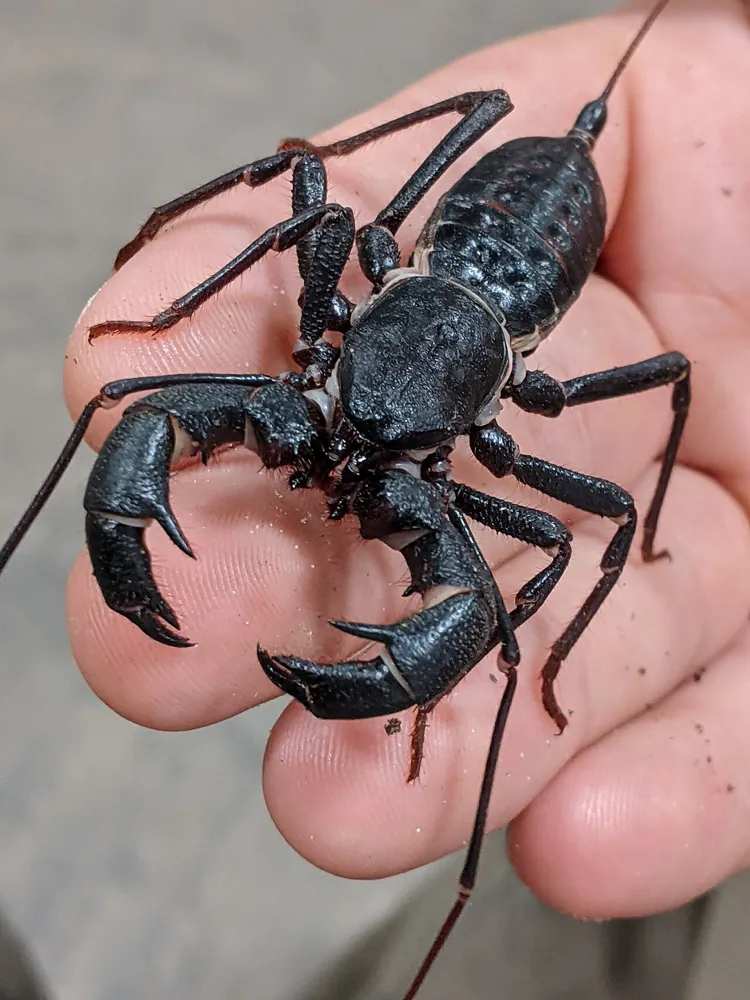
The giant vinegaroon is a large, harmless-to-people relative of the scorpion, known for the vinegar smell it gives off when threatened. It lives in the southern United States and Mexico, where it hunts insects and other small creatures at night. It is useful to people because it eats scorpions and other pests.1



 No anndirte ngal
- Body length is 40 to 60 millimetres, not counting the tail.1
- Has a long, thin, whip-like tail at the back.1
- Has two long front legs that it uses to feel around and sense vibrations.1
- Has two large pedipalps (front limbs) modified into claws for crushing prey.1
- When sprayed, it smells strongly of vinegar.1
Doole tooke
Ina tuha walla ina wuja ndiyam muusɗam e ko jangii ngal.
Hol ko tooke ŋatgol mum waɗata?
It is not venomous. From the base of its tail it sprays a liquid made of 85% acetic acid, the main component of vinegar. If the spray gets into mucous membranes or cuts, it can sting, and it can irritate the eyes.1
Hol no bone mum heewiri e yimɓe?
Bone e yimɓe: HoyɗoNo jukkugol ñaaki walla ko ɓuri famɗude. Ko ɓuri heewde alaa bone e yimɓe.It seldom bites or pinches people. Its main risk is the acid spray, which can sting and cause eye irritation.1
Hol ko ngal waɗata so ina hula?
When threatened, it sprays acetic acid from the base of its tail.1
 So ina wuja ma
- Ngam leɓɓe ngooɓuuli jukkooje: ittu ɗe e skots ɓataaɗo, refti loot nguru ngu. Wota a moomtu.
- Ngam ŋatgol: loot nokku oo, ɓuuɓnu. Heɓ ballal cafrol so neɗɗo oo ina wiya wonaa e jam, walla ina ƴiiɗa ko newii.
Adii fof noddu nimero urgence (112, 000, 911). Ɗum ko anndinal ballal adiingal, wonaa saaraangal doktoor. Ko adii e ballal adiingal
 Reen hoore maa
- Wota a meem, wota a nanngu, wota a ñiŋŋu kullal ladde haa abada, hay so ngal ina famɗi, hay so ina nanndi e ɗaaniingal walla maayngal.
- Accu ngal nokku. So a fotti e ngal, deƴƴu, ruttu ɓaawo seeɗa seeɗa, accu ngal yaha laawol mum.
- So gooto wujii ma: deƴƴu, wota a dillu, noddu nimero urgence (112, 000, 911) walla yahu opitaal law. Jogo e hakkille no ngal nanndi, natal ina walla.
Ngal faalaaka gaañde ma. Ina huutoroo tooke mum ngam nanngude ñaamdu walla reenaade, ina ɓuri yiɗde suuɗaade. Ɓeydu anndude no reentortoo
Hol to e aduna?
Hol no mawniri?
Hol no juutiri?
 juutde no kaaɗe mahirɗe 2 ɗaɓɓondiraaɗe
Hol no Giant vinegaroon mawniri, so fooɗondiraama e AN?
Limgal tan e navigatoor maa. Alaa ko danndetee walla ko neldetee.
Hol no yaawiri?


Humpito
Its common name 'vinegaroon' comes from the vinegar smell of the acid it sprays.1
It is an efficient predator of scorpions, and it is sometimes bought for that purpose.1
Males fight each other at night in fierce battles for the chance to mate with a female.1
It has eight eyes, but they are very weak, so it finds its way mostly by feeling with its front legs, tail and pedipalps.1
Raccoons, coatis, armadillos, skunks, bears, roadrunners, lizards and tarantulas may all eat it.1
It is sold in the exotic animal trade as a pet.1
Feññinoowo fenaande
Fenaande: Giant vinegaroons are dangerous and venomous to people.
Goonga: They are non-venomous and seldom bite or pinch people. The main risk is the acid spray, which can irritate the eyes or sting if it reaches cuts or mucous membranes.1
Ngam ganduɓe tooke
- Innde ganndal
- Mastigoproctus giganteus
- Fedde
- Ngooɓuuli e ɓuuɓuuli
- Ɓesngu
- Thelyphonidae2
- Ordre
- Uropygi
- Leyɗe mawɗe
- Amerik Rewo
- Ɓiɓɓe tokooso
- The female produces about 40 offspring, which she protects and feeds during their early lives. She reproduces only once.1
- Juuteendi nguurndam
- hedde duuɓi 71
- Bone e yimɓe
- 1 / 5: Hoyɗo3
Ɗo humpito iwri
- Mastigoproctus giganteus (Wikipedia (CC BY-SA 4.0))
- Mastigoproctus giganteus (iNaturalist): inɗe e ceergal.
- Venom Wiki: tolno bone, mawnude heewnde e miijo yaawde ko amen. Yiy no men keɓirta ɗum: No men tolnirta bone.
Kala humpito e ngoo hello ina jogii limoore hollirnde iwdi mum. So men juumii, yaafo, men ko yiɗɓe kulle, wonaa jaaynde ganndal. Wiy men e [email protected], men feewnita.
 Yaare nden ina weelaa! Venom Wiki ko golle neɗɗo gooto: yoɓetaake, alaa ko jeeyetee, alaa rewɓe. Ndokkal seeɗa ina walla ngam heddude e enternet.Ñaam yaare nden
Goɗɗe e nder fedde wootere: Ngooɓuuli e ɓuuɓuuli
 Giant water bugNgooɓuuli e ɓuuɓuuliIna muusi tan
 Puss caterpillarNgooɓuuli e ɓuuɓuuliIna muusi tanWota a meem
 Saddleback caterpillarNgooɓuuli e ɓuuɓuuliIna muusi tanWota a meem
 Wheel bugNgooɓuuli e ɓuuɓuuliIna muusi tan
 Rhodnius kissing bugNgooɓuuli e ɓuuɓuuliIna sokli doktoor
 Black-waved flannel mothNgooɓuuli e ɓuuɓuuliIna muusi tanWota a meem
 Terciopelo
 Eastern coral snake
 Eastern diamondback rattlesnake
 Eyelash viper
 Timber rattlesnake
 Western diamondback rattlesnake
_face.jpg)