
 Afrik
Afrik Aazi
Aazi Orop
Orop Amerik Worgo
 Ostaraali e Oseyaani
 Antarktik
 Geec Pasifik
 Geec Atlantik
 Geec Enndo
 Geec Arktik
 Geec Mediteraane
 Geec Boɗeejo
 Geec Karayib
 Geec Korayl
 Geec Siin Worgo
 Geec Filipiin
 Geec Andaman
 Geec Rewo
 Geec Timor e Arafura
 Gulf Bengal
 Gulf Kaliforni
Glory of the sea cone
 Jukkugol
The Glory of the Sea Cone is a sea snail with a striking shell, part of the cone snail family. It lives in the warm waters of the Pacific and Indian Oceans. It is special because collectors once thought it was the rarest shell in the world.1
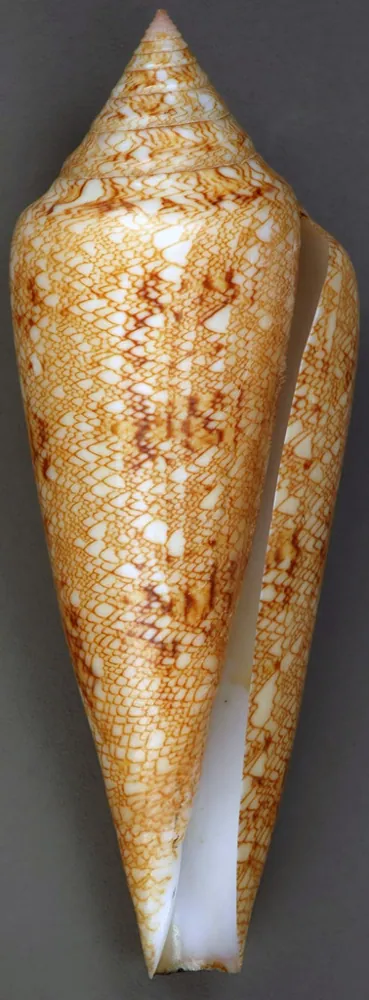
 No anndirte ngal
- A relatively large, slender shell with a tall spire1
- Typical shell length is 8 to 12 cm, and it can reach 16 cm1
- A fine net-like pattern of orange-brown lines that enclose triangular spaces1
- Two or three bands of chestnut, hieroglyphic-like markings across the body1
- Tan colouring that can range from light golden to deep dark brown1
Ina heewi waylondireede e: It is sometimes confused with the common Textile cone, and it has a similarity to the Bengal cone.1
Doole tooke
Tooke ngal ina yaltira jukkirgal.
Hol no bone mum heewiri e yimɓe?
Bone e yimɓe: Ina tiiɗiJukkugol ina sokli doktoor. Maayde ina famɗi sanne. So ina jukka
- Habbugol ɗiwɗiingol (immobilisation): taarnu bando elastik tiiɗɗo e dow nokku ŋataaɗo, refti yawnu e dow terɗe ndee fof, haɓɓu attel, haɗ neɗɗo oo dillaade fey haa ballal hewta.
- Pulp koode bulaaje walla kokiyaas kone ina waawi haɗde neɗɗo foofaade tawa himo finii: noddu ballal, heblo foofnude mo (bouche-à-bouche) haa ambilaas ŋoo hewta, ɓe nanngoo.
Adii fof noddu nimero urgence (112, 000, 911). Ɗum ko anndinal ballal adiingal, wonaa saaraangal doktoor. Ko adii e ballal adiingal
 Reen hoore maa
- Wota a meem, wota a nanngu, wota a ñiŋŋu kullal ladde haa abada, hay so ngal ina famɗi, hay so ina nanndi e ɗaaniingal walla maayngal.
- Accu ngal nokku. So a fotti e ngal, deƴƴu, ruttu ɓaawo seeɗa seeɗa, accu ngal yaha laawol mum.
- So gooto jukkii ma: deƴƴu, wota a dillu, noddu nimero urgence (112, 000, 911) walla yahu opitaal law. Jogo e hakkille no ngal nanndi, natal ina walla.
Ngal faalaaka gaañde ma. Ina huutoroo tooke mum ngam nanngude ñaamdu walla reenaade, ina ɓuri yiɗde suuɗaade. Ɓeydu anndude no reentortoo
Hol to e aduna?
Hol no mawniri?
Hol no juutiri?
 juutde no kaaɗe mahirɗe 5 ɗaɓɓondiraaɗe
 ɓuri kokiyaas ngesa leelde
Hol no Glory of the sea cone mawniri, so fooɗondiraama e AN?
Limgal tan e navigatoor maa. Alaa ko danndetee walla ko neldetee.
Hol no yaawiri?

Humpito
For about two centuries, this shell was regarded as the rarest shell in the world.1
Specimens were once valued in the thousands of U.S. dollars and were generally owned only by museums and wealthy private collectors.1
Today, shells can often be found from retailers or online auction sites for less than $100 U.S.1
Its habitat was not discovered until 1969.1
Improvements in diving technology, such as scuba, led to the discovery of far more shells.1
Feññinoowo fenaande
Fenaande: A collector bought one at auction in 1792 and destroyed it to keep the value of another one he owned.
Goonga: This is an urban legend, a popular story that has spread among collectors. It is not an established fact.1
Ɗo humpito iwri
- Conus gloriamaris (Wikipedia (CC BY-SA 4.0))
- Conus gloriamaris (iNaturalist): inɗe e ceergal.
- Venom Wiki: tolno bone, mawnude heewnde e miijo yaawde ko amen. Yiy no men keɓirta ɗum: No men tolnirta bone.
Kala humpito e ngoo hello ina jogii limoore hollirnde iwdi mum. So men juumii, yaafo, men ko yiɗɓe kulle, wonaa jaaynde ganndal. Wiy men e [email protected], men feewnita.
 Yaare nden ina weelaa! Venom Wiki ko golle neɗɗo gooto: yoɓetaake, alaa ko jeeyetee, alaa rewɓe. Ndokkal seeɗa ina walla ngam heddude e enternet.Ñaam yaare nden
Goɗɗe e nder fedde wootere: Kokiyaas kone e pulpuuji
 Kokiyaas kone jeografiKokiyaas kone e pulpuujiBareejo
 Pulp mawɗo koode bulaajeKokiyaas kone e pulpuujiBareejo
 Pulp koode bulaaje worgoKokiyaas kone e pulpuujiBareejo
 Blue sea dragonKokiyaas kone e pulpuujiIna muusi tan
 Common octopusKokiyaas kone e pulpuujiAlaa bone
 Giant Pacific octopusKokiyaas kone e pulpuujiAlaa bone
Ina wuuri kadi e: Geec Pasifik
 Meduus kaaɗe OstaraaliMeduusaaji e kulle geec jukkoojeBareejoWota a meem
 Liingu puffer SapoŋKulle goɗɗe jogiiɗe tooke ɓannduBareejo
 Hawksbill sea turtleKulle goɗɗe jogiiɗe tooke ɓannduIna waawi warde
 Irukandji jellyfishMeduusaaji e kulle geec jukkoojeIna waawi wardeWota a meem
 Reef stonefishLiƴƴi jogiiɗi tookeIna waawi wardeWota a meem
 Crown-of-thorns starfishƁuuɓuuli geec gaaɗe, koode geec e ngilnooɗeIna sokli doktoorWota a meem