
 Afrik
Afrik Aazi
Aazi Orop
Orop Amerik Worgo
 Ostaraali e Oseyaani
 Antarktik
 Geec Pasifik
 Geec Atlantik
 Geec Enndo
 Geec Arktik
 Geec Mediteraane
 Geec Boɗeejo
 Geec Karayib
 Geec Korayl
 Geec Siin Worgo
 Geec Filipiin
 Geec Andaman
 Geec Rewo
 Geec Timor e Arafura
 Gulf Bengal
 Gulf Kaliforni
Mediterranean false widow
 Ŋatgol
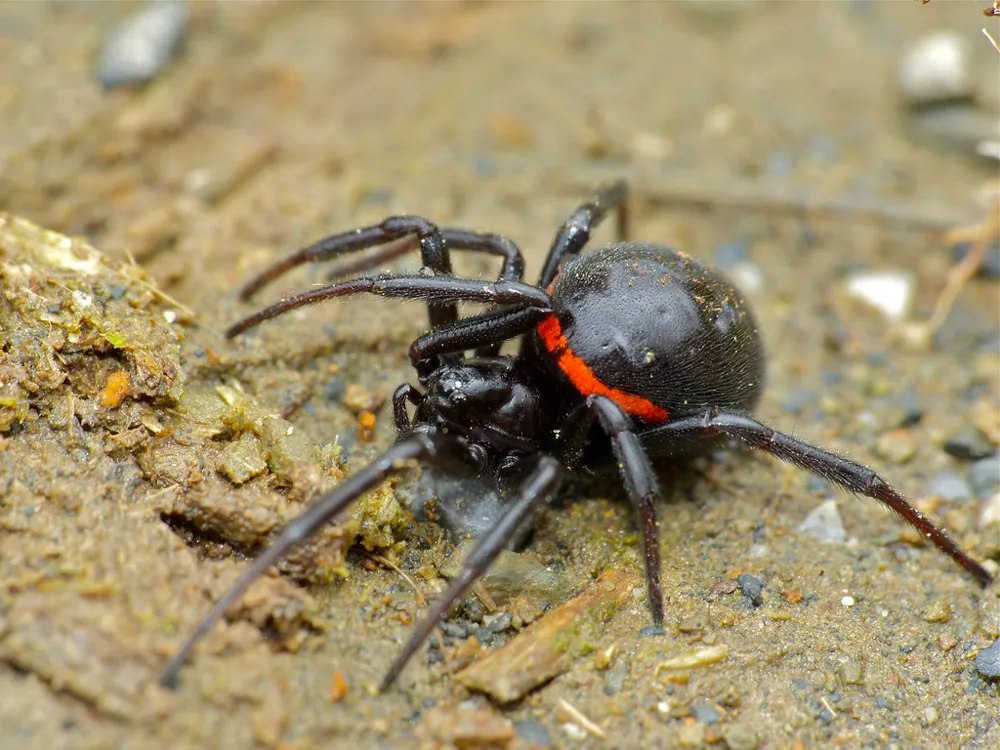
The Mediterranean false widow is a spider that looks a lot like the black widow. It lives across southern Europe, the Mediterranean region and parts of western Asia. Its bite is much milder than a true black widow's, and it is usually compared to a wasp sting.1
 No anndirte ngal
- Shiny black, globular abdomen (rear body part)1
- Two separate, non-overlapping stripes on the top and sides of the abdomen1
- Stripes are ivory-yellow on young females and orange-red on mature females1
- Females are 8 mm to 12 mm long, with the larger size when pregnant1
- Males are about half the size of females, with less prominent markings1
Ina heewi waylondireede e: It resembles the true black widow, but the true black widow has markings on both the top and the underside of the abdomen. This species has only two stripes on the top and sides, which do not overlap.1
Doole tooke
Tooke ngal ina yaltira ñiiƴe mum so ina ŋata.
Hol ko tooke ŋatgol mum waɗata?
Its venom is much less potent than that of true black widows. Its effect on humans is minor, similar to a wasp sting.1
Hol no bone mum heewiri e yimɓe?
Bone e yimɓe: MuusɗoIna waawi muusde sanne, kono hertaani wonde huunde mawnde.Its bite is considered minor for humans, similar to a wasp sting.1
 So ina ŋata
- Loot nokku ŋataaɗo oo, waɗ galaas e mum ngam muusu ngu. Heɓ ballal cafrol so muusu ngu ina tiiɗi, ina saakoo walla neɗɗo oo ina wiya wonaa e jam.
Adii fof noddu nimero urgence (112, 000, 911). Ɗum ko anndinal ballal adiingal, wonaa saaraangal doktoor. Ko adii e ballal adiingal
 Reen hoore maa
- Wota a meem, wota a nanngu, wota a ñiŋŋu kullal ladde haa abada, hay so ngal ina famɗi, hay so ina nanndi e ɗaaniingal walla maayngal.
- Accu ngal nokku. So a fotti e ngal, deƴƴu, ruttu ɓaawo seeɗa seeɗa, accu ngal yaha laawol mum.
- So gooto ŋatii ma: deƴƴu, wota a dillu, noddu nimero urgence (112, 000, 911) walla yahu opitaal law. Jogo e hakkille no ngal nanndi, natal ina walla.
Ngal faalaaka gaañde ma. Ina huutoroo tooke mum ngam nanngude ñaamdu walla reenaade, ina ɓuri yiɗde suuɗaade. Ɓeydu anndude no reentortoo
Hol to e aduna?
Hol no mawniri?
Hol no juutiri?
 tokooso haa ina waawi jooɗaade e dow ceŋol hondu maa
Hol no Mediterranean false widow mawniri, so fooɗondiraama e AN?
Limgal tan e navigatoor maa. Alaa ko danndetee walla ko neldetee.
Hol no yaawiri?


Humpito
Feññinoowo fenaande
Fenaande: It is as dangerous to people as a true black widow spider.
Goonga: Its venom is much less potent than the true black widow's, and its effect on humans is minor, similar to a wasp sting.1
Ngam ganduɓe tooke
- Innde ganndal
- Steatoda paykulliana
- Fedde
- Araañeeji
- Ɓesngu
- Theridiidae2
- Ordre
- Araneae
- Leyɗe mawɗe
- Orop, Aazi, Afrik
- Ɓiɓɓe tokooso
- The female wraps her eggs in a cocoon. In countries of former Yugoslavia, the spiderlings hatch at the end of summer, hibernate over winter and reach adulthood at the start of the next summer.1
- Bone e yimɓe
- 2 / 5: Muusɗo3
Ɗo humpito iwri
- Steatoda paykulliana (Wikipedia (CC BY-SA 4.0))
- Steatoda paykulliana (iNaturalist): inɗe e ceergal.
- Venom Wiki: tolno bone, mawnude heewnde e miijo yaawde ko amen. Yiy no men keɓirta ɗum: No men tolnirta bone.
Kala humpito e ngoo hello ina jogii limoore hollirnde iwdi mum. So men juumii, yaafo, men ko yiɗɓe kulle, wonaa jaaynde ganndal. Wiy men e [email protected], men feewnita.
 Yaare nden ina weelaa! Venom Wiki ko golle neɗɗo gooto: yoɓetaake, alaa ko jeeyetee, alaa rewɓe. Ndokkal seeɗa ina walla ngam heddude e enternet.Ñaam yaare nden
Goɗɗe e nder fedde wootere: Araañeeji
 Mediterranean black widow
 Six-eyed sand spider
 Brown widow
 Diving bell spider
 European yellow sac spider
 Noble false widow
Ina wuuri kadi e: Orop
 Common European adderƁoɗɗi wipeerIna sokli doktoor
 Spanish flyKulle goɗɗe jogiiɗe tooke ɓannduIna sokli doktoorWota a meem
 Common waspÑaaki, ɗuggi e ɗuggi mawɗiIna muusi tan
 European hornetÑaaki, ɗuggi e ɗuggi mawɗiIna muusi tan
 Fire salamanderÑaari tooke, ñaari e newtsIna muusi tanWota a meem
 Western honey beeÑaaki, ɗuggi e ɗuggi mawɗiIna muusi tan