
 Afrik
Afrik Aazi
Aazi Orop
Orop Amerik Worgo
 Ostaraali e Oseyaani
 Antarktik
 Geec Pasifik
 Geec Atlantik
 Geec Enndo
 Geec Arktik
 Geec Mediteraane
 Geec Boɗeejo
 Geec Karayib
 Geec Korayl
 Geec Siin Worgo
 Geec Filipiin
 Geec Andaman
 Geec Rewo
 Geec Timor e Arafura
 Gulf Bengal
 Gulf Kaliforni
Natterjack toad
 Tooke e nguru mum
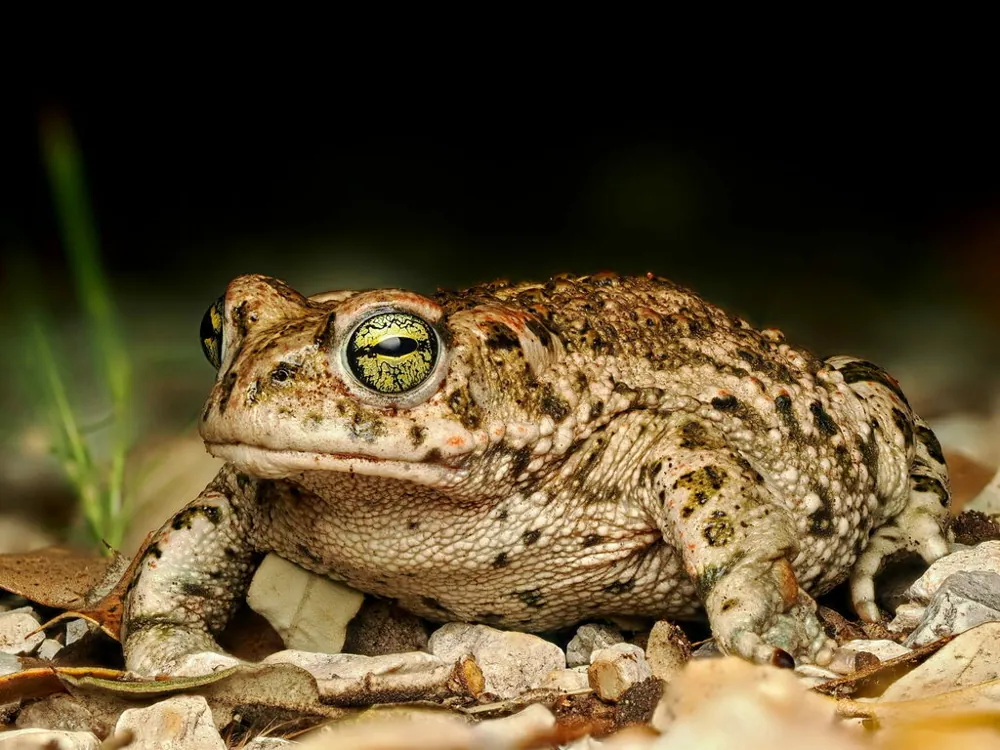
The natterjack toad is a toad that lives on sandy ground and heathland in Europe. It is easy to tell apart from other toads by the yellow line down its back, and it is known for its very loud mating call. In Ireland, it is the only native toad.1


 No anndirte ngal
- A yellow line runs down the middle of the back.1
- Parallel paratoid glands (the raised glands behind the eyes) are a key feature.1
- Adults are 60 to 70 mm long.1
- Short legs give it a distinctive walk, unlike the hopping of many other toads.1
- Males have a single vocal sac under the chin that amplifies a very loud, distinctive call.1
Ina heewi waylondireede e: It is often confused with common toads. Natterjacks are told apart by the yellow line down the back and the parallel paratoid glands.1
Doole tooke ɓanndu
Nguru mum ina jogii tooke. Ina bonna so meemaama, lakkaama walla ñaamaama.
Hol no bone mum heewiri e yimɓe?
Bone e yimɓe: HoyɗoNo jukkugol ñaaki walla ko ɓuri famɗude. Ko ɓuri heewde alaa bone e yimɓe. So neɗɗo meemii ngal walla ñaamii ngal
- So neɗɗo meemii gooto: loot juuɗe ɗee no moƴƴiri, wota a meem gite walla hunduko. So cukalel walla kullal galle lakkii walla ñaamii gooto: noddu centre antipoison walla nimero urgence.
Adii fof noddu nimero urgence (112, 000, 911). Ɗum ko anndinal ballal adiingal, wonaa saaraangal doktoor. Ko adii e ballal adiingal
 Reen hoore maa
- Wota a meem, wota a nanngu, wota a ñiŋŋu kullal ladde haa abada, hay so ngal ina famɗi, hay so ina nanndi e ɗaaniingal walla maayngal.
- Accu ngal nokku. So a fotti e ngal, deƴƴu, ruttu ɓaawo seeɗa seeɗa, accu ngal yaha laawol mum.
- So a meemii ngal walla a ñaamii ngal: wota a moomtu gite maa walla hunduko maa, loot juuɗe maa, heɓ ballal cafrol.
Ngal faalaaka gaañde ma. Tooke mum woni tan ngam wota huunde ñaam ngal. Ɓeydu anndude no reentortoo
Hol to e aduna?
Hol no mawniri?
Hol no juutiri?
 juutde no kaaɗe mahirɗe 2 ɗaɓɓondiraaɗe
 ina waawi taƴde 100 meeteer e segonde 180 (neɗɗo ɓurɗo yaawde ina sokli 9,6)
Hol no Natterjack toad mawniri, so fooɗondiraama e AN?
Limgal tan e navigatoor maa. Alaa ko danndetee walla ko neldetee.
Hol no yaawiri?


Humpito
Their loud mating calls matter because the toads are often present in low numbers, helping the sexes find each other.1
Natterjacks can live for up to 15 years.1
Natterjacks can only spawn in pools with a very slightly sloping bottom and sparse vegetation.1
They spread their breeding over a long summer period, so some young survive if temporary pools dry out.1
Some females spawn twice in one year.1
Ngam ganduɓe tooke
- Innde ganndal
- Epidalea calamita
- Fedde
- Ñaari tooke, ñaari e newts
- Ɓesngu
- Bufonidae2
- Ordre
- Anura
- Leyɗe mawɗe
- Orop
- Ɓiɓɓe tokooso
- It spawns from the end of April to July, laying strings of eggs in shallow, warm pools.1
- Juuteendi nguurndam
- hedde duuɓi 151
- Hol no ngal woniri e ladde
- Endangered in Ireland1
- Bone e yimɓe
- 1 / 5: Hoyɗo3
Ɗo humpito iwri
- Natterjack toad (Wikipedia (CC BY-SA 4.0))
- Epidalea calamita (iNaturalist): inɗe e ceergal.
- Venom Wiki: tolno bone, mawnude heewnde e miijo yaawde ko amen. Yiy no men keɓirta ɗum: No men tolnirta bone.
Kala humpito e ngoo hello ina jogii limoore hollirnde iwdi mum. So men juumii, yaafo, men ko yiɗɓe kulle, wonaa jaaynde ganndal. Wiy men e [email protected], men feewnita.
 Yaare nden ina weelaa! Venom Wiki ko golle neɗɗo gooto: yoɓetaake, alaa ko jeeyetee, alaa rewɓe. Ndokkal seeɗa ina walla ngam heddude e enternet.Ñaam yaare nden
Goɗɗe e nder fedde wootere: Ñaari tooke, ñaari e newts
 Fire salamanderÑaari tooke, ñaari e newtsIna muusi tanWota a meem
 Common toadÑaari tooke, ñaari e newtsIna muusi tanWota a meem
 European fire-bellied toadÑaari tooke, ñaari e newtsAlaa bone
 Iberian ribbed newtÑaari tooke, ñaari e newtsAlaa bone
 Alpine salamanderÑaari tooke, ñaari e newtsAlaa bone
 European green toadÑaari tooke, ñaari e newtsAlaa bone
Ina wuuri kadi e: Orop
 Common European adderƁoɗɗi wipeerIna sokli doktoor
 Spanish flyKulle goɗɗe jogiiɗe tooke ɓannduIna sokli doktoorWota a meem
 Common waspÑaaki, ɗuggi e ɗuggi mawɗiIna muusi tan
 European hornetÑaaki, ɗuggi e ɗuggi mawɗiIna muusi tan
 Western honey beeÑaaki, ɗuggi e ɗuggi mawɗiIna muusi tan
 Blunt-nosed viperƁoɗɗi wipeerIna waawi warde