
 Afrik
Afrik Aazi
Aazi Orop
Orop Amerik Worgo
 Ostaraali e Oseyaani
 Antarktik
 Geec Pasifik
 Geec Atlantik
 Geec Enndo
 Geec Arktik
 Geec Mediteraane
 Geec Boɗeejo
 Geec Karayib
 Geec Korayl
 Geec Siin Worgo
 Geec Filipiin
 Geec Andaman
 Geec Rewo
 Geec Timor e Arafura
 Gulf Bengal
 Gulf Kaliforni
Perentie
 Ŋatgol
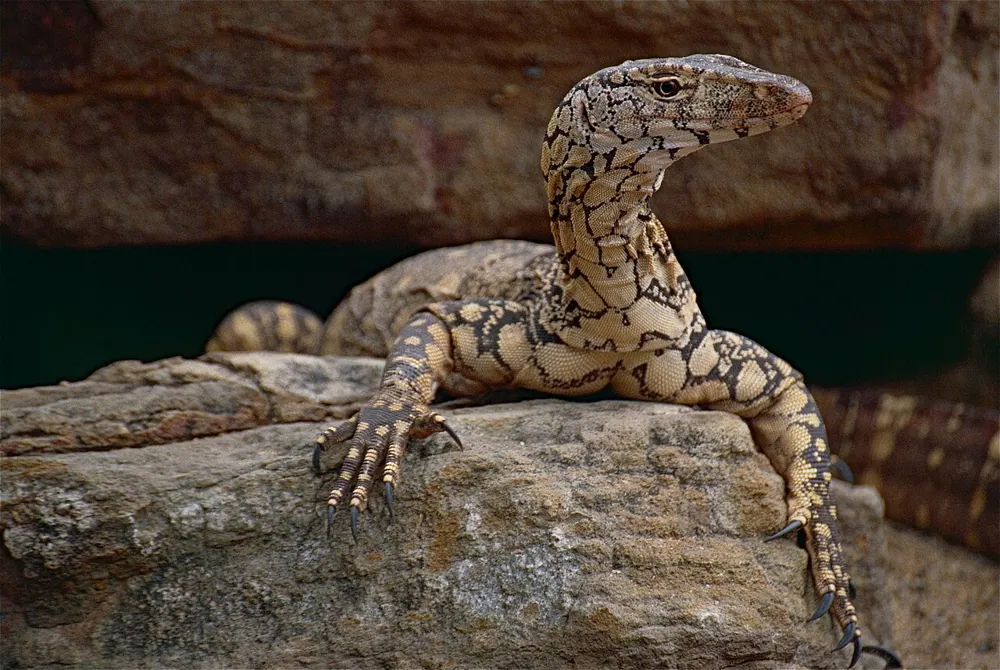
The perentie is one of the largest lizards alive, and the largest in Australia. It lives in the dry deserts of the west, centre and north of the country, where it is rarely seen. It is a powerful hunter that eats a wide range of animals, and it is important in many Aboriginal cultures.1



 No anndirte ngal
- Head and neck are creamy-white with a net-like (reticulated) pattern of black lines and flecks.1
- Body is yellow or cream, with brown rosette markings on the back.1
- Limbs are dark with white spots.1
- Very lean for a large monitor, so much less bulky than a rock monitor of similar length.1
Ina heewi waylondireede e: Rock monitors can reach a similar length, but they are much bulkier. Perenties are very lean for their size.1
Doole tooke
Tooke ngal ina yaltira ñiiƴe mum so ina ŋata.
Hol ko tooke ŋatgol mum waɗata?
Researchers at the University of Melbourne found in 2005 that monitors may be somewhat venomous, which means they inject mild venom with a bite. A perentie bite can cause swelling within minutes, localised disruption of blood clotting (the blood's ability to clot is affected in the area), and shooting pain up to the elbow that can last several hours.1
Hol no bone mum heewiri e yimɓe?
Bone e yimɓe: MuusɗoIna waawi muusde sanne, kono hertaani wonde huunde mawnde.The bite can do much damage, not only from the teeth but also from the oral secretions.1
Hol ko ngal waɗata so ina hula?
If threatened, a perentie will usually freeze flat on the ground or run away. If cornered, it stands its ground, inflates its throat, hisses, strikes with its tail, and may lunge with its mouth open.1
 So ina ŋata
- Loot gaañande nden, deƴƴin neɗɗo oo, heɓ ballal cafrol.
Adii fof noddu nimero urgence (112, 000, 911). Ɗum ko anndinal ballal adiingal, wonaa saaraangal doktoor. Ko adii e ballal adiingal
 Reen hoore maa
- Wota a meem, wota a nanngu, wota a ñiŋŋu kullal ladde haa abada, hay so ngal ina famɗi, hay so ina nanndi e ɗaaniingal walla maayngal.
- Accu ngal nokku. So a fotti e ngal, deƴƴu, ruttu ɓaawo seeɗa seeɗa, accu ngal yaha laawol mum.
- So gooto ŋatii ma: deƴƴu, wota a dillu, noddu nimero urgence (112, 000, 911) walla yahu opitaal law. Jogo e hakkille no ngal nanndi, natal ina walla.
Ngal faalaaka gaañde ma. Ina huutoroo tooke mum ngam nanngude ñaamdu walla reenaade, ina ɓuri yiɗde suuɗaade. Ɓeydu anndude no reentortoo
Hol to e aduna?
Hol no mawniri?
Hol no juutiri?
Hol no teddiri?

 juutde no dawaaɗi 2,5, hinere haa lawol
 juutde no banaanaaji 14 sammondiraaɗi
 ina waawi taƴde 100 meeteer e segonde 20 (neɗɗo ɓurɗo yaawde ina sokli 9,6)
Hol no Perentie mawniri, so fooɗondiraama e AN?
Limgal tan e navigatoor maa. Alaa ko danndetee walla ko neldetee.
Hol no yaawiri?

Humpito
Perenties eat other monitor lizards, including a 2 m perentie that was seen killing and eating a 1.5 m one.1
They often stand on their back legs and tail to get a better view, a behaviour called "tripoding".1
Perenties are among the largest living lizards, after the Komodo dragon, Asian water monitor and crocodile monitor.1
Perenties can dig a burrow for shelter in only minutes.1
The species was first named the "gigantic water lizard", even though it lives in dry desert country.1
The perentie has long been important to desert Aboriginal peoples, who ate it as food and used its fat for medicinal and ceremonial purposes.1
Feññinoowo fenaande
Fenaande: Monitor lizard bites were thought to cause problems only because of infection from bacteria in the animal's mouth.
Goonga: Researchers showed that the immediate effects of monitor bites, including swelling and pain, are caused by mild envenomation.1
Ɗo humpito iwri
- Perentie (Wikipedia (CC BY-SA 4.0))
- Varanus giganteus (iNaturalist): inɗe e ceergal.
- Venom Wiki: tolno bone, mawnude heewnde e miijo yaawde ko amen. Yiy no men keɓirta ɗum: No men tolnirta bone.
Kala humpito e ngoo hello ina jogii limoore hollirnde iwdi mum. So men juumii, yaafo, men ko yiɗɓe kulle, wonaa jaaynde ganndal. Wiy men e [email protected], men feewnita.
 Yaare nden ina weelaa! Venom Wiki ko golle neɗɗo gooto: yoɓetaake, alaa ko jeeyetee, alaa rewɓe. Ndokkal seeɗa ina walla ngam heddude e enternet.Ñaam yaare nden
Goɗɗe e nder fedde wootere: Lezaarji jogiiɗi tooke
 Lace monitorLezaarji jogiiɗi tookeIna muusi tan
 Spiny-tailed monitorLezaarji jogiiɗi tookeAlaa bone
 Yellow-spotted monitorLezaarji jogiiɗi tookeIna muusi tan
 Mitchell's water monitorLezaarji jogiiɗi tookeAlaa bone
 Komodo dragonLezaarji jogiiɗi tookeIna waawi warde
 Gila monsterLezaarji jogiiɗi tookeIna sokli doktoor
 Taipan daande geec
 Death adder heewndi
 Mboddi ooleeri fuɗnaange
 Taypan pellital
 Araañe funnel-web Sidnee
 Laddeewu Tiger
_(10244734736).jpg)