
 Afrik
Afrik Aazi
Aazi Orop
Orop Amerik Worgo
 Ostaraali e Oseyaani
 Antarktik
 Geec Pasifik
 Geec Atlantik
 Geec Enndo
 Geec Arktik
 Geec Mediteraane
 Geec Boɗeejo
 Geec Karayib
 Geec Korayl
 Geec Siin Worgo
 Geec Filipiin
 Geec Andaman
 Geec Rewo
 Geec Timor e Arafura
 Gulf Bengal
 Gulf Kaliforni
Komodo dragon
 Ŋatgol
The Komodo dragon is a very large lizard, and it is the biggest lizard alive today. It lives on a few small islands in Eastern Indonesia, where it hunts deer and pigs and sits at the top of its food chain. Adults occasionally attack people, so it is a dangerous animal to keep your distance from.1



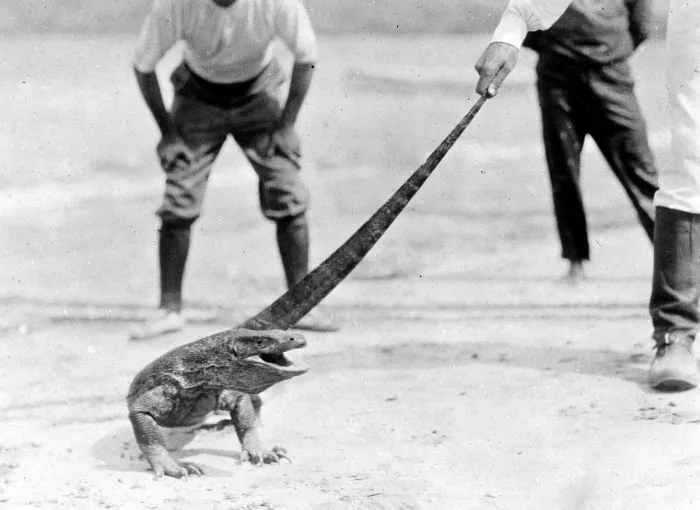
 No anndirte ngal
- A very large, heavy-bodied lizard. Males can reach 3 m in length.1
- A tail about as long as its body.1
- Armoured, bony scales that give the skin a rugged, chain-mail look.1
- Serrated, saw-like teeth, and saliva that is often tinged with blood.1
- A long, yellow, deeply forked tongue that it flicks like a snake.1
Doole tooke
Tooke ngal ina yaltira ñiiƴe mum so ina ŋata.
Hol no bone mum heewiri e yimɓe?
Bone e yimɓe: Bone sanneIna waawi warde neɗɗo mo safraaka.Adult Komodo dragons occasionally attack humans, so they should be treated as dangerous. Their size and strength make any attack serious.1
 So ina ŋata
- Loot gaañande nden, deƴƴin neɗɗo oo, heɓ ballal cafrol.
Adii fof noddu nimero urgence (112, 000, 911). Ɗum ko anndinal ballal adiingal, wonaa saaraangal doktoor. Ko adii e ballal adiingal
 Reen hoore maa
- Wota a meem, wota a nanngu, wota a ñiŋŋu kullal ladde haa abada, hay so ngal ina famɗi, hay so ina nanndi e ɗaaniingal walla maayngal.
- Accu ngal nokku. So a fotti e ngal, deƴƴu, ruttu ɓaawo seeɗa seeɗa, accu ngal yaha laawol mum.
- So gooto ŋatii ma: deƴƴu, wota a dillu, noddu nimero urgence (112, 000, 911) walla yahu opitaal law. Jogo e hakkille no ngal nanndi, natal ina walla.
Ngal faalaaka gaañde ma. Ina huutoroo tooke mum ngam nanngude ñaamdu walla reenaade, ina ɓuri yiɗde suuɗaade. Ɓeydu anndude no reentortoo
Hol to e aduna?
Hol no mawniri?
Hol no juutiri?
Hol no teddiri?
 juutde no dawaaɗi 3, hinere haa lawol
 juutde no banaanaaji 17 sammondiraaɗi
 ina waawi taƴde 100 meeteer e segonde 18 (neɗɗo ɓurɗo yaawde ina sokli 9,6)
Hol no Komodo dragon mawniri, so fooɗondiraama e AN?
Limgal tan e navigatoor maa. Alaa ko danndetee walla ko neldetee.
Hol no yaawiri?

Humpito
The Komodo dragon is the largest living lizard, and its size is unusual among reptiles.1
Its teeth are replaced about every 40 days, and it has up to five replacement teeth for each tooth position at any time.1
Fossils show that Komodo dragons once lived in Australia, where they existed alongside megalania, the largest land lizard ever.1
The 1926 expedition by W. Douglas Burden inspired the 1933 film King Kong.1
Feññinoowo fenaande
Fenaande: Komodo dragons are deaf.
Goonga: They were once thought to be deaf, but a London Zoo keeper trained one to come to her voice even when she was out of sight. They hear low-pitched sounds, roughly between 400 and 2,000 hertz.1
Ngam ganduɓe tooke
- Innde ganndal
- Varanus komodoensis
- Fedde
- Lezaarji jogiiɗi tooke
- Ɓesngu
- Varanidae2
- Ordre
- Squamata
- Leyɗe mawɗe
- Aazi
- Ɓiɓɓe tokooso
- Mating happens between May and August, and females lay up to 20 eggs in September, in an abandoned megapode nest or a hole they dig themselves. The eggs take seven to eight months to hatch, usually in April. Young Komodo dragons take 8 to 11 years to mature.1
- Juuteendi nguurndam
- hedde duuɓi 301
- Hol no ngal woniri e ladde
- Endangered1
- Bone e yimɓe
- 4 / 5: Bone sanne3
Ɗo humpito iwri
- Komodo dragon (Wikipedia (CC BY-SA 4.0))
- Varanus komodoensis (iNaturalist): inɗe e ceergal.
- Venom Wiki: tolno bone, mawnude heewnde e miijo yaawde ko amen. Yiy no men keɓirta ɗum: No men tolnirta bone.
Kala humpito e ngoo hello ina jogii limoore hollirnde iwdi mum. So men juumii, yaafo, men ko yiɗɓe kulle, wonaa jaaynde ganndal. Wiy men e [email protected], men feewnita.
 Yaare nden ina weelaa! Venom Wiki ko golle neɗɗo gooto: yoɓetaake, alaa ko jeeyetee, alaa rewɓe. Ndokkal seeɗa ina walla ngam heddude e enternet.Ñaam yaare nden
Goɗɗe e nder fedde wootere: Lezaarji jogiiɗi tooke
 Desert monitorLezaarji jogiiɗi tookeIna muusi tan
 Gila monsterLezaarji jogiiɗi tookeIna sokli doktoor
 Mexican beaded lizardLezaarji jogiiɗi tookeIna sokli doktoor
 Lace monitorLezaarji jogiiɗi tookeIna muusi tan
 PerentieLezaarji jogiiɗi tookeIna muusi tan
 Spiny-tailed monitorLezaarji jogiiɗi tookeAlaa bone
 Deathstalker
 Indian cobra
 Indian saw-scaled viper
 King cobra
 Mbaa-ndiyam (Puff adder)
 Ladde Russell