
 Afrik
Afrik Aazi
Aazi Orop
Orop Amerik Worgo
 Ostaraali e Oseyaani
 Antarktik
 Geec Pasifik
 Geec Atlantik
 Geec Enndo
 Geec Arktik
 Geec Mediteraane
 Geec Boɗeejo
 Geec Karayib
 Geec Korayl
 Geec Siin Worgo
 Geec Filipiin
 Geec Andaman
 Geec Rewo
 Geec Timor e Arafura
 Gulf Bengal
 Gulf Kaliforni
Spine-tailed sea snake
 Ŋatgol
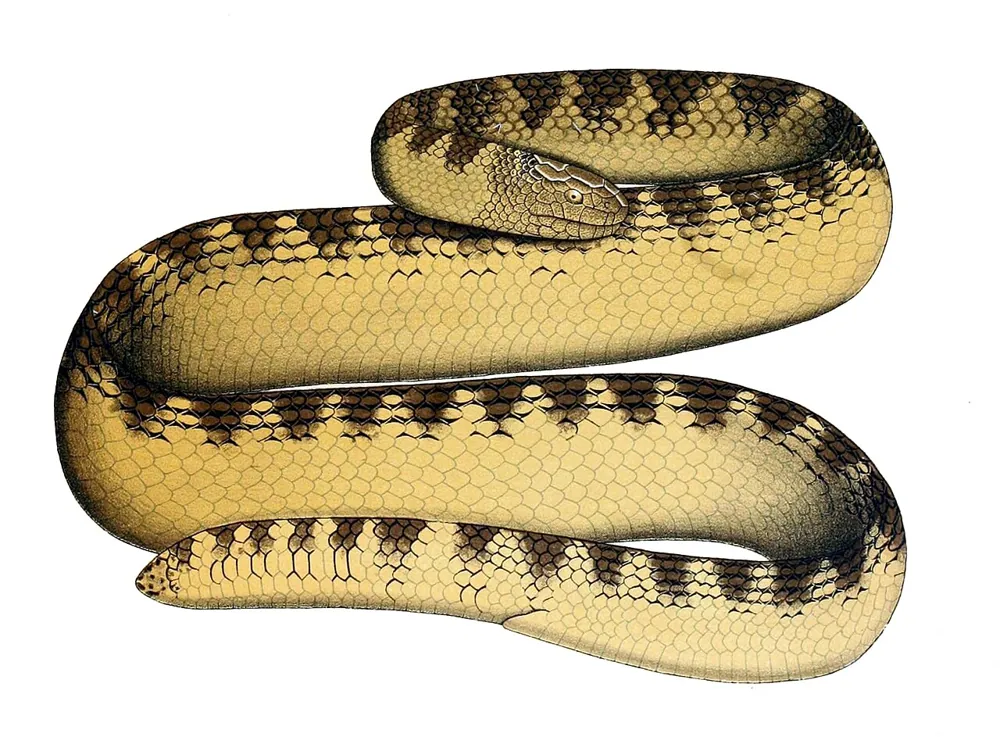
The spine-tailed sea snake is a sea snake that lives in shallow bays and estuaries in northern Australia, South-East Asia and New Guinea. It is unusual because it eats almost only fish eggs, and it has lost its fangs. It is one of the few sea snakes whose bite is unlikely to be dangerous to people.1


 No anndirte ngal
- Its head shields are regular and symmetrical.1
- Its smooth scales on the back are arranged in 17 rows around the middle of the body.1
- It has 141 to 149 distinct belly scales (ventrals) along its body and 27 to 30 scales under its tail (subcaudals).1
- Adults can reach a snout to vent length (the distance from the tip of the snout to the vent) of about 1 m.1
Doole tooke
Tooke ngal ina yaltira ñiiƴe mum so ina ŋata.
Hol ko tooke ŋatgol mum waɗata?
Unlike most sea snakes, it has lost its fangs, and its venom glands have shrunk and are almost entirely non-functional. Its venom is much weaker than that of related sea snakes, because a small change in one of its venom genes reduces the venom's toxicity.1
Hol no bone mum heewiri e yimɓe?
Bone e yimɓe: MuusɗoIna waawi muusde sanne, kono hertaani wonde huunde mawnde.Because it has no fangs and its venom is very weak, its bite is unlikely to be a serious threat to people.1
 So ina ŋata
- Habbugol ɗiwɗiingol (immobilisation): taarnu bando elastik tiiɗɗo e dow nokku ŋataaɗo, refti yawnu e dow terɗe ndee fof, haɓɓu attel, haɗ neɗɗo oo dillaade fey haa ballal hewta.
- Yaltin neɗɗo oo e ndiyam, yahra mo opitaal law.
Adii fof noddu nimero urgence (112, 000, 911). Ɗum ko anndinal ballal adiingal, wonaa saaraangal doktoor. Ko adii e ballal adiingal
 Reen hoore maa
- Wota a meem, wota a nanngu, wota a ñiŋŋu kullal ladde haa abada, hay so ngal ina famɗi, hay so ina nanndi e ɗaaniingal walla maayngal.
- Accu ngal nokku. So a fotti e ngal, deƴƴu, ruttu ɓaawo seeɗa seeɗa, accu ngal yaha laawol mum.
- So gooto ŋatii ma: deƴƴu, wota a dillu, noddu nimero urgence (112, 000, 911) walla yahu opitaal law. Jogo e hakkille no ngal nanndi, natal ina walla.
Ngal faalaaka gaañde ma. Ina huutoroo tooke mum ngam nanngude ñaamdu walla reenaade, ina ɓuri yiɗde suuɗaade. Ɓeydu anndude no reentortoo
Hol to e aduna?
Hol no mawniri?
Hol no juutiri?
 juutde no ulluuɗi galle 2, hinere haa lawol
 juutde no banaanaaji 6 sammondiraaɗi
 ina waawi yoowde juuteendi pisin mawɗo (50 m) e segonde 47
Hol no Spine-tailed sea snake mawniri, so fooɗondiraama e AN?
Limgal tan e navigatoor maa. Alaa ko danndetee walla ko neldetee.
Hol no yaawiri?
Humpito
It feeds almost exclusively on fish eggs, which is very unusual among sea snakes.1
Only one other species of sea snake, Emydocephalus annulatus, shares this egg-only diet.1
It has strong throat muscles, reduced teeth and a much smaller body than most other sea snakes, all linked to its special diet.1
It gives birth to live young, even though it is a snake that hatches its eggs inside the body.1
Ngam ganduɓe tooke
Ɗo humpito iwri
- Aipysurus eydouxii (Wikipedia (CC BY-SA 4.0))
- Aipysurus eydouxii (iNaturalist): inɗe e ceergal.
- Venom Wiki: tolno bone, mawnude heewnde e miijo yaawde ko amen. Yiy no men keɓirta ɗum: No men tolnirta bone.
Kala humpito e ngoo hello ina jogii limoore hollirnde iwdi mum. So men juumii, yaafo, men ko yiɗɓe kulle, wonaa jaaynde ganndal. Wiy men e [email protected], men feewnita.
 Yaare nden ina weelaa! Venom Wiki ko golle neɗɗo gooto: yoɓetaake, alaa ko jeeyetee, alaa rewɓe. Ndokkal seeɗa ina walla ngam heddude e enternet.Ñaam yaare nden
Goɗɗe e nder fedde wootere: Ɓoɗɗi geec
 Beaked sea snake
 Belcher's sea snake
 Black-banded sea krait
 Blue-lipped sea krait
 Dubois' sea snake
 Olive sea snake
Ina wuuri kadi e: Geec Enndo
 Meduus kaaɗe OstaraaliMeduusaaji e kulle geec jukkoojeBareejoWota a meem
 Kokiyaas kone jeografiKokiyaas kone e pulpuujiBareejo
 Pulp mawɗo koode bulaajeKokiyaas kone e pulpuujiBareejo
 Pulp koode bulaaje worgoKokiyaas kone e pulpuujiBareejo
 Hawksbill sea turtleKulle goɗɗe jogiiɗe tooke ɓannduIna waawi warde
 Irukandji jellyfishMeduusaaji e kulle geec jukkoojeIna waawi wardeWota a meem