
 Afrik
Afrik Aazi
Aazi Orop
Orop Amerik Worgo
 Ostaraali e Oseyaani
 Antarktik
 Geec Pasifik
 Geec Atlantik
 Geec Enndo
 Geec Arktik
 Geec Mediteraane
 Geec Boɗeejo
 Geec Karayib
 Geec Korayl
 Geec Siin Worgo
 Geec Filipiin
 Geec Andaman
 Geec Rewo
 Geec Timor e Arafura
 Gulf Bengal
 Gulf Kaliforni
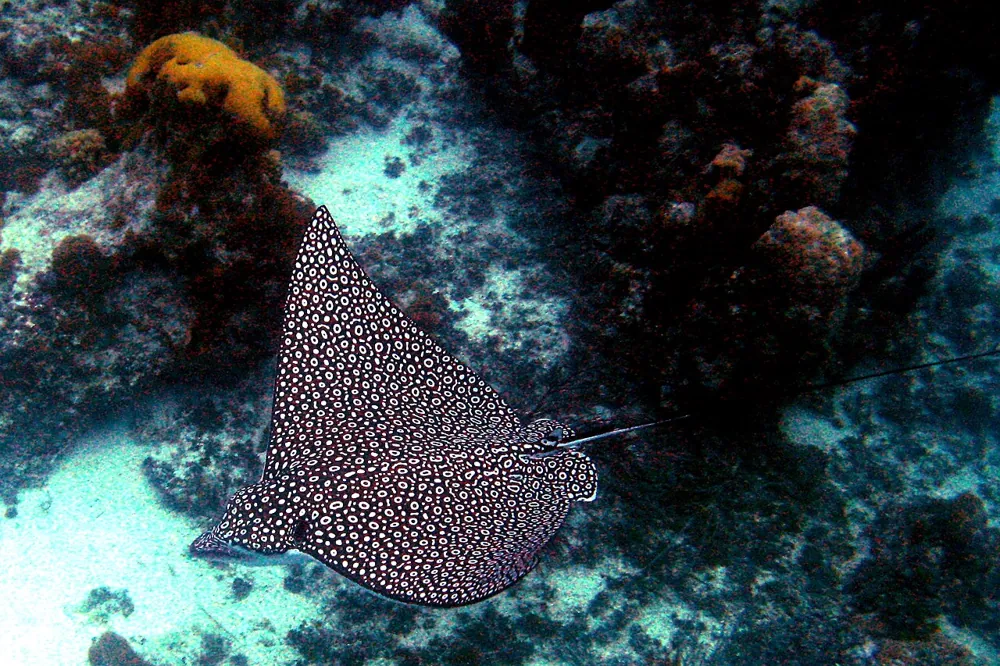
Spotted eagle ray
 Jukkugol
The spotted eagle ray is a flat, disc-shaped fish with dark blue or black skin covered in white spots and a snout shaped like a duck's bill. It lives in warm coastal waters, often near coral reefs and bays. It is known for leaping out of the water, sometimes onto boats.1



 No anndirte ngal
Doole tooke
Tooke ngal ina yaltira jukkirgal.
Hol no bone mum heewiri e yimɓe?
Bone e yimɓe: MuusɗoIna waawi muusde sanne, kono hertaani wonde huunde mawnde.Spotted eagle rays are shy and generally avoid human contact, so they do not pose a significant threat to people. There have been several reports of them leaping onto boats and landing on people. In one incident in the Florida Keys, a woman died.1
Hol ko ngal waɗata so ina hula?
When threatened, it can leap out of the water, and it avoids human contact.1
 So ina jukka
- Naatnu gaañande nden e ndiyam guleeɗam, guleeɗam no neɗɗo oo waawi muññude tawa sumaani (ƴeewr ɗum e jungo maa), hojomaaji 30 haa 90. Heɓ ballal cafrol, ɓuri noon ngam liƴƴi kaaƴe e liƴƴi raay.
Adii fof noddu nimero urgence (112, 000, 911). Ɗum ko anndinal ballal adiingal, wonaa saaraangal doktoor. Ko adii e ballal adiingal
 Reen hoore maa
- Wota a meem, wota a nanngu, wota a ñiŋŋu kullal ladde haa abada, hay so ngal ina famɗi, hay so ina nanndi e ɗaaniingal walla maayngal.
- Accu ngal nokku. So a fotti e ngal, deƴƴu, ruttu ɓaawo seeɗa seeɗa, accu ngal yaha laawol mum.
- So gooto jukkii ma: deƴƴu, wota a dillu, noddu nimero urgence (112, 000, 911) walla yahu opitaal law. Jogo e hakkille no ngal nanndi, natal ina walla.
Ngal faalaaka gaañde ma. Ina huutoroo tooke mum ngam nanngude ñaamdu walla reenaade, ina ɓuri yiɗde suuɗaade. Ɓeydu anndude no reentortoo
Hol to e aduna?
Hol no mawniri?
Hol no juutiri?
Hol no teddiri?
 juutde no dawaaɗi 5, hinere haa lawol
 juutde no banaanaaji 28 sammondiraaɗi
 ina waawi yoowde juuteendi pisin mawɗo (50 m) e segonde 6
Hol no Spotted eagle ray mawniri, so fooɗondiraama e AN?
Limgal tan e navigatoor maa. Alaa ko danndetee walla ko neldetee.
Hol no yaawiri?


Humpito
The largest spotted eagle rays have a wingspan of up to 3 metres and can weigh 230 kilograms.1
When digging for food, a cloud of sand surrounds the ray and sand is blown out through its gills.1
Sharks such as the tiger shark, bull shark and great hammerhead hunt spotted eagle rays. Sharks have also been seen following females during birth to eat the newborn pups.1
Spotted eagle rays are most often seen alone, but they sometimes swim in groups of 6 or more.1
The Great Barrier Reef protects this ray, and in Florida it is illegal to fish for, land, buy or trade it.1
Newborn pups have discs measuring 17 to 35 centimetres across, and they mature in 4 to 6 years.1
Feññinoowo fenaande
Fenaande: Spotted eagle rays are a major danger to people.
Goonga: They are shy and generally avoid human contact, so they do not pose a significant threat to humans. Leaping onto boats is rare but has caused harm.1
Ngam ganduɓe tooke
- Innde ganndal
- Aetobatus narinari
- Fedde
- Liƴƴi jogiiɗi tooke
- Ɓesngu
- Aetobatidae2
- Ordre
- Myliobatiformes
- Leyɗe mawɗe
- Geec Atlantik, Geec Pasifik, Geec Enndo, Geec Karayib, Gulf Meksik, Geec Boɗeejo, Geec Timor e Arafura, Gulf Bengal, Gulf Kaliforni, Geece mawɗe
- Ɓiɓɓe tokooso
- They give birth to live young. The eggs hatch inside the mother after a gestation period of one year, and she gives birth to a maximum of four pups.1
- Hol no ngal woniri e ladde
- Near Threatened1
- Bone e yimɓe
- 2 / 5: Muusɗo3
Ɗo humpito iwri
- Spotted eagle ray (Wikipedia (CC BY-SA 4.0))
- Aetobatus narinari (iNaturalist): inɗe e ceergal.
- Venom Wiki: tolno bone, mawnude heewnde e miijo yaawde ko amen. Yiy no men keɓirta ɗum: No men tolnirta bone.
Kala humpito e ngoo hello ina jogii limoore hollirnde iwdi mum. So men juumii, yaafo, men ko yiɗɓe kulle, wonaa jaaynde ganndal. Wiy men e [email protected], men feewnita.
 Yaare nden ina weelaa! Venom Wiki ko golle neɗɗo gooto: yoɓetaake, alaa ko jeeyetee, alaa rewɓe. Ndokkal seeɗa ina walla ngam heddude e enternet.Ñaam yaare nden
Goɗɗe e nder fedde wootere: Liƴƴi jogiiɗi tooke
 Reef stonefishLiƴƴi jogiiɗi tookeIna waawi wardeWota a meem
 Red lionfishLiƴƴi jogiiɗi tookeIna sokli doktoorWota a meem
 Estuarine stonefishLiƴƴi jogiiɗi tookeIna waawi wardeWota a meem
 Short-tail stingrayLiƴƴi jogiiɗi tookeIna waawi warde
 Striped eel catfishLiƴƴi jogiiɗi tookeIna waawi wardeWota a meem
 Bluespotted ribbontail rayLiƴƴi jogiiɗi tookeIna sokli doktoor
Ina wuuri kadi e: Geec Atlantik
 Hawksbill sea turtleKulle goɗɗe jogiiɗe tooke ɓannduIna waawi warde
 Portuguese man o' warMeduusaaji e kulle geec jukkoojeIna sokli doktoorWota a meem
 Blue sea dragonKokiyaas kone e pulpuujiIna muusi tan
 Greenland sharkKulle goɗɗe jogiiɗe tooke ɓannduIna muusi tan
 Lion's mane jellyfishMeduusaaji e kulle geec jukkoojeIna muusi tanWota a meem
 Common octopusKokiyaas kone e pulpuujiAlaa bone