
 Afrik
Afrik Aazi
Aazi Orop
Orop Amerik Worgo
 Ostaraali e Oseyaani
 Antarktik
 Geec Pasifik
 Geec Atlantik
 Geec Enndo
 Geec Arktik
 Geec Mediteraane
 Geec Boɗeejo
 Geec Karayib
 Geec Korayl
 Geec Siin Worgo
 Geec Filipiin
 Geec Andaman
 Geec Rewo
 Geec Timor e Arafura
 Gulf Bengal
 Gulf Kaliforni
West African banded cobra
 Ŋatgol
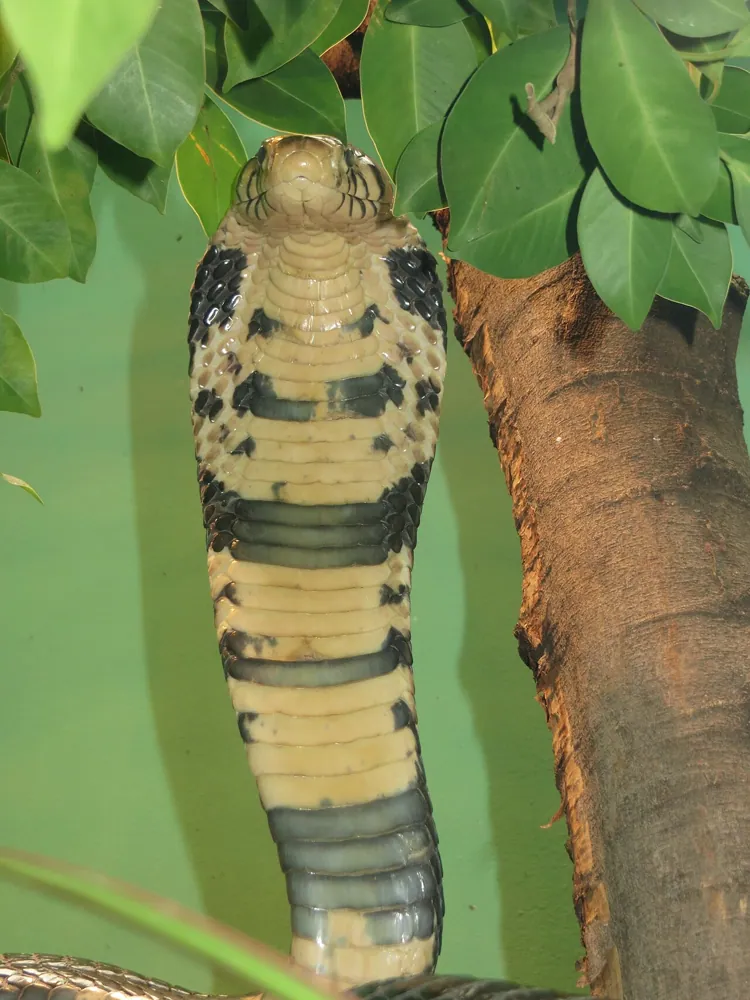
The West African banded cobra is a large, venomous snake that lives in the savannas and woodlands of West Africa. It is a member of the cobra genus Naja. Scientists only recently recognised it as its own species, separate from the forest cobra.1
 No anndirte ngal
- Brownish black or black on its upper body1
- Has 3 to 8 broad, cream-coloured crossbands across the body1
- Each cream band is partly divided by a narrow black crossband1
- Has 19 scale rows around the middle of the body1
- Has 211 to 226 ventral (belly) scales and 67 to 73 subcaudal (under-tail) scales1
Ina heewi waylondireede e: It was once thought to be the same animal as the forest cobra (Naja melanoleuca). The West African banded cobra differs in having 3 to 8 broad, semi-divided light bands across the front part of its body.1
Doole tooke
Tooke ngal ina yaltira ñiiƴe mum so ina ŋata.
Hol no bone mum heewiri e yimɓe?
Bone e yimɓe: Bone sanneIna waawi warde neɗɗo mo safraaka. So ina ŋata
- Haɗ neɗɗo oo dillaade, deƴƴin mo, ittu jabbe e kala ko tiiɗi, yahra mo opitaal law: sérum antivenimeux woni safaara.
Adii fof noddu nimero urgence (112, 000, 911). Ɗum ko anndinal ballal adiingal, wonaa saaraangal doktoor. Ko adii e ballal adiingal
 Reen hoore maa
- Wota a meem, wota a nanngu, wota a ñiŋŋu kullal ladde haa abada, hay so ngal ina famɗi, hay so ina nanndi e ɗaaniingal walla maayngal.
- Accu ngal nokku. So a fotti e ngal, deƴƴu, ruttu ɓaawo seeɗa seeɗa, accu ngal yaha laawol mum.
- So gooto ŋatii ma: deƴƴu, wota a dillu, noddu nimero urgence (112, 000, 911) walla yahu opitaal law. Jogo e hakkille no ngal nanndi, natal ina walla.
Ngal faalaaka gaañde ma. Ina huutoroo tooke mum ngam nanngude ñaamdu walla reenaade, ina ɓuri yiɗde suuɗaade. Ɓeydu anndude no reentortoo
Hol to e aduna?
Hol no mawniri?
Hol no juutiri?
 juutde no ulluuɗi galle 4, hinere haa lawol
 juutde no banaanaaji 12 sammondiraaɗi
 ina waawi taƴde 100 meeteer e segonde 44 (neɗɗo ɓurɗo yaawde ina sokli 9,6)
Hol no West African banded cobra mawniri, so fooɗondiraama e AN?
Limgal tan e navigatoor maa. Alaa ko danndetee walla ko neldetee.
Hol no yaawiri?


Humpito
The longest recorded West African banded cobra measured 223 cm.1
For a long time it was thought to be the same species as the forest cobra, until differences in its shape and genes showed it is a separate species.1
Its name reflects the broad, pale bands across its body, which set it apart from the forest cobra.1
Ɗo humpito iwri
- West African banded cobra (Wikipedia (CC BY-SA 4.0))
- Naja savannula (iNaturalist): inɗe e ceergal.
- Venom Wiki: tolno bone, mawnude heewnde e miijo yaawde ko amen. Yiy no men keɓirta ɗum: No men tolnirta bone.
Kala humpito e ngoo hello ina jogii limoore hollirnde iwdi mum. So men juumii, yaafo, men ko yiɗɓe kulle, wonaa jaaynde ganndal. Wiy men e [email protected], men feewnita.
 Yaare nden ina weelaa! Venom Wiki ko golle neɗɗo gooto: yoɓetaake, alaa ko jeeyetee, alaa rewɓe. Ndokkal seeɗa ina walla ngam heddude e enternet.Ñaam yaare nden
 Mamba ɓaleeri
 Kobra Misra
 Cape cobra
 Eastern green mamba
 Jameson's mamba
 Western green mamba
 Yaare oolnde maayde
 Mbaa-ndiyam (Puff adder)
 Boomslang
 Fat-tailed scorpion
 Gaboon viper
 Western honey bee