
 Afrik
Afrik Aazi
Aazi Orop
Orop Amerik Worgo
 Ostaraali e Oseyaani
 Antarktik
 Geec Pasifik
 Geec Atlantik
 Geec Enndo
 Geec Arktik
 Geec Mediteraane
 Geec Boɗeejo
 Geec Karayib
 Geec Korayl
 Geec Siin Worgo
 Geec Filipiin
 Geec Andaman
 Geec Rewo
 Geec Timor e Arafura
 Gulf Bengal
 Gulf Kaliforni
West African carpet viper
 Ŋatgol
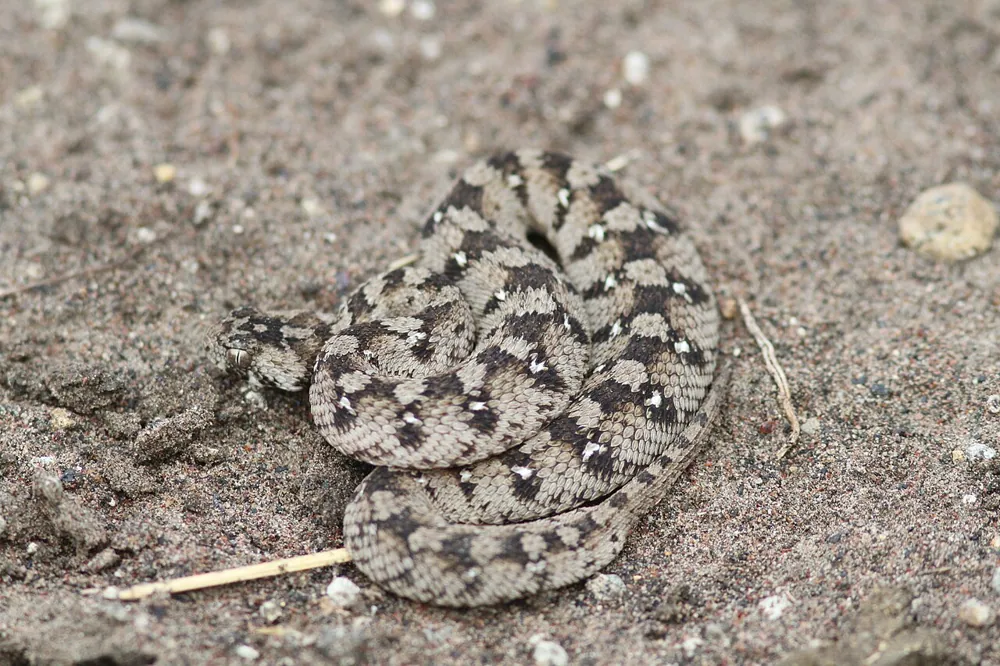
The West African carpet viper is a small, highly venomous snake that lives in the savanna of West Africa. Its bite is one of the most dangerous of any snake in Africa. It is known for its row of eye-spots and its aggressive, alarm-like behaviour when threatened.1



 No anndirte ngal
- It has bulging eyes and a short snout, typical of vipers in the genus Echis.1
- A distinctive series of eye-spots, called ocelli, runs the length of its body.1
- It is terrestrial, so it lives on the ground rather than in trees.1
- It is mostly active at night and at dusk (nocturnal and crepuscular).1
Ina heewi waylondireede e: Older records from Senegal, Guinea-Bissau and Guinea refer to Echis jogeri, and those from eastern Nigeria, Cameroon and southern Chad refer to Echis romani. These are now recognised as separate species. Echis leucogaster is more common north of the 15th parallel, where this snake is rarely found.1
Doole tooke
Tooke ngal ina yaltira ñiiƴe mum so ina ŋata.
Hol ko tooke ŋatgol mum waɗata?
Its venom is a mix of procoagulants, anticoagulants, haemorrhagins, nephrotoxins and necrotoxins. Procoagulants make blood clot, while anticoagulants stop it clotting, so bleeding can occur. Nephrotoxins damage the kidneys, and necrotoxins kill tissue around the bite. Local symptoms include pain, swelling, bleeding, tissue death (necrosis) and disfigurement, which may lead to amputation. Whole-body symptoms include coagulopathy (blood clotting problems), haemorrhages, shock, kidney failure and blindness.1
Hol no bone mum heewiri e yimɓe?
Bone e yimɓe: BareejoWootere e kulle ɓurɗe bone e aduna.The West African carpet viper causes more human deaths from snakebite than all other African snakes combined. The envenoming rate is 80%, and the lethality rate is 10–20%.1
 Kabaaru moƴƴo: doktooruuji ina njogii lekki (sérum antivenimeux) walla safaara ngam ɗum.1
Hol ko ngal waɗata so ina hula?
When threatened, it forms its body into an S shape and rubs its scales together to make an alert sound.1
 So ina ŋata
- Haɗ neɗɗo oo dillaade, deƴƴin mo, jogo terɗe ŋataaɗe ɗee e toownde ɓernde, ittu jabbe e kala ko tiiɗi, yahra mo opitaal law.
Adii fof noddu nimero urgence (112, 000, 911). Ɗum ko anndinal ballal adiingal, wonaa saaraangal doktoor. Ko adii e ballal adiingal
 Reen hoore maa
- Wota a meem, wota a nanngu, wota a ñiŋŋu kullal ladde haa abada, hay so ngal ina famɗi, hay so ina nanndi e ɗaaniingal walla maayngal.
- Accu ngal nokku. So a fotti e ngal, deƴƴu, ruttu ɓaawo seeɗa seeɗa, accu ngal yaha laawol mum.
- So gooto ŋatii ma: deƴƴu, wota a dillu, noddu nimero urgence (112, 000, 911) walla yahu opitaal law. Jogo e hakkille no ngal nanndi, natal ina walla.
Ngal faalaaka gaañde ma. Ina huutoroo tooke mum ngam nanngude ñaamdu walla reenaade, ina ɓuri yiɗde suuɗaade. Ɓeydu anndude no reentortoo
Hol to e aduna?
Hol no mawniri?
Hol no juutiri?
 juutde no banaanaaji 4 sammondiraaɗi
 ina waawi taƴde 100 meeteer e segonde 110 (neɗɗo ɓurɗo yaawde ina sokli 9,6)
Hol no West African carpet viper mawniri, so fooɗondiraama e AN?
Limgal tan e navigatoor maa. Alaa ko danndetee walla ko neldetee.
Hol no yaawiri?


Humpito
It makes an alert sound by rubbing its scales together while in an S-shaped posture.1
Hatchlings are already 10–12 cm long, which is a sizeable fraction of an adult's average length.1
Its scientific name, ocellatus, comes from the row of eye-spots, called ocelli, that runs along its body.1
Some individual snakes have been found far from its main range, including in the Central African Republic and central Sudan.1
Ɗo humpito iwri
- Echis ocellatus (Wikipedia (CC BY-SA 4.0))
- Echis ocellatus (iNaturalist): inɗe e ceergal.
- Venom Wiki: tolno bone, mawnude heewnde e miijo yaawde ko amen. Yiy no men keɓirta ɗum: No men tolnirta bone.
Kala humpito e ngoo hello ina jogii limoore hollirnde iwdi mum. So men juumii, yaafo, men ko yiɗɓe kulle, wonaa jaaynde ganndal. Wiy men e [email protected], men feewnita.
 Yaare nden ina weelaa! Venom Wiki ko golle neɗɗo gooto: yoɓetaake, alaa ko jeeyetee, alaa rewɓe. Ndokkal seeɗa ina walla ngam heddude e enternet.Ñaam yaare nden
 Mbaa-ndiyam (Puff adder)
 Gaboon viper
 Northeast African carpet viper
 Rhinoceros viper
 West African Gaboon viper
 Horned adder
 Mamba ɓaleeri
 Yaare oolnde maayde
 Kobra Misra
 Boomslang
 Fat-tailed scorpion
 Western honey bee