
 Afrik
Afrik Aazi
Aazi Orop
Orop Amerik Worgo
 Ostaraali e Oseyaani
 Antarktik
 Geec Pasifik
 Geec Atlantik
 Geec Enndo
 Geec Arktik
 Geec Mediteraane
 Geec Boɗeejo
 Geec Karayib
 Geec Korayl
 Geec Siin Worgo
 Geec Filipiin
 Geec Andaman
 Geec Rewo
 Geec Timor e Arafura
 Gulf Bengal
 Gulf Kaliforni
Yellow garden spider
 Ŋatgol
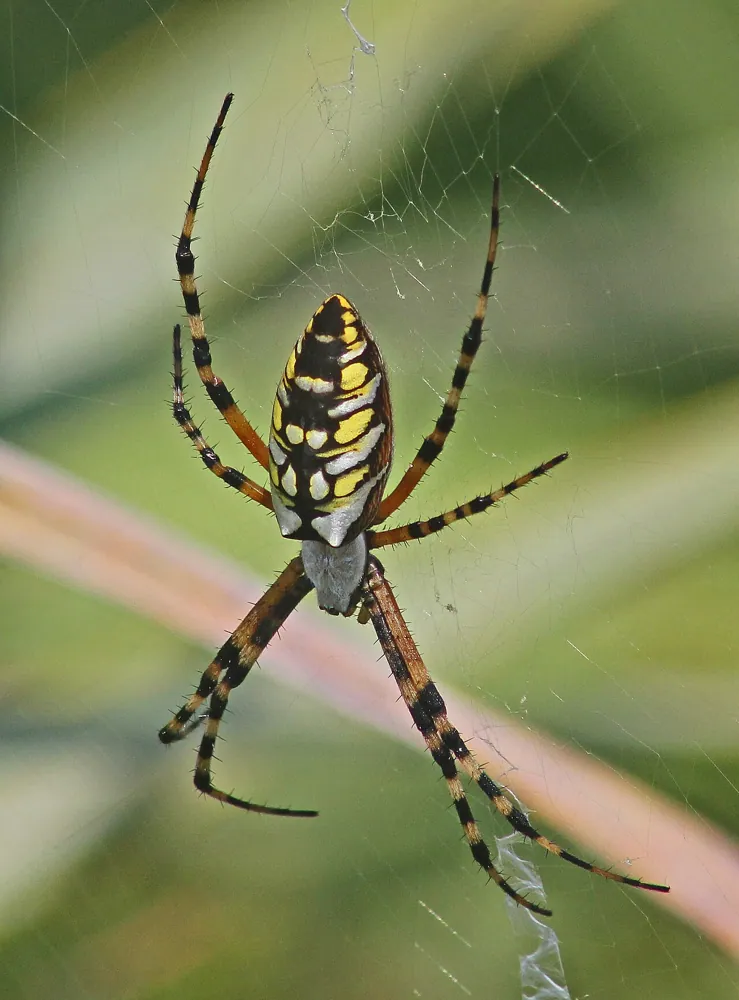
The yellow garden spider is a large, colourful spider with yellow and black markings on its abdomen. It builds big round webs in sunny fields, gardens and along the eaves of houses in North America, Mexico and Central America. It bites only if disturbed or handled, and its bite is comparable to a bee sting.1


 No anndirte ngal
- Yellow and black markings on the abdomen (the rear part of the body).1
- A mostly white front body section (cephalothorax).1
- A large, circular web up to 60 cm across, with a dense zigzag of silk in the centre.1
- The female sits in the centre of the web, usually facing straight down.1
- Females measure 19–28 mm in body length, while males are much smaller at 5–9 mm.1
Doole tooke
Tooke ngal ina yaltira ñiiƴe mum so ina ŋata.
Hol ko tooke ŋatgol mum waɗata?
The venom contains polyamine toxins, including one called argiotoxin ArgTX-636, which are being studied for possible medical uses. For most people the venom is harmless, and a bite causes redness and swelling, similar to a bee sting. It is harmless to people who are not allergic.1
Hol no bone mum heewiri e yimɓe?
Bone e yimɓe: HoyɗoNo jukkugol ñaaki walla ko ɓuri famɗude. Ko ɓuri heewde alaa bone e yimɓe.These spiders are not aggressive and only bite if grabbed or disturbed. For a healthy adult, a bite is not considered an issue. People who are very young, elderly, or have weakened immune systems should take the same care they would around a beehive or hornet nest.1
Hol ko ngal waɗata so ina hula?
If disturbed by a possible predator, the female may drop from her web and hide on the ground nearby, and she can shake the web vigorously while staying attached in the centre.1
 So ina ŋata
- Loot nokku ŋataaɗo oo, waɗ galaas e mum ngam muusu ngu. Heɓ ballal cafrol so muusu ngu ina tiiɗi, ina saakoo walla neɗɗo oo ina wiya wonaa e jam.
Adii fof noddu nimero urgence (112, 000, 911). Ɗum ko anndinal ballal adiingal, wonaa saaraangal doktoor. Ko adii e ballal adiingal
 Reen hoore maa
- Wota a meem, wota a nanngu, wota a ñiŋŋu kullal ladde haa abada, hay so ngal ina famɗi, hay so ina nanndi e ɗaaniingal walla maayngal.
- Accu ngal nokku. So a fotti e ngal, deƴƴu, ruttu ɓaawo seeɗa seeɗa, accu ngal yaha laawol mum.
- So gooto ŋatii ma: deƴƴu, wota a dillu, noddu nimero urgence (112, 000, 911) walla yahu opitaal law. Jogo e hakkille no ngal nanndi, natal ina walla.
Ngal faalaaka gaañde ma. Ina huutoroo tooke mum ngam nanngude ñaamdu walla reenaade, ina ɓuri yiɗde suuɗaade. Ɓeydu anndude no reentortoo
Hol to e aduna?
Hol no mawniri?
Hol no juutiri?
 hedde juutde no ñippirde kaayitaaje
 ina waawi taƴde 100 meeteer e segonde 280 (neɗɗo ɓurɗo yaawde ina sokli 9,6)
Hol no Yellow garden spider mawniri, so fooɗondiraama e AN?
Limgal tan e navigatoor maa. Alaa ko danndetee walla ko neldetee.
Hol no yaawiri?


Humpito
The female can shake her web vigorously to make it harder for wasps and birds to target her, and to fully tangle an insect before it cuts itself free.1
After mating, the male often dies and is sometimes eaten by the female, as he inserts his second palpal bulb.1
The zigzag silk in the web, called a stabilimentum, may camouflage the spider, attract prey, or warn birds away, but its purpose is still disputed.1
In a case observed in Georgia, a European hornet cut free prey caught in a yellow garden spider's web, and the spider did not fight it, probably because it dropped from the web and hid.1
Feññinoowo fenaande
Fenaande: Yellow garden spiders are dangerous and their bite can seriously harm a healthy adult.
Goonga: The venom is harmless to people who are not allergic. A bite is comparable to a bumblebee sting and is not considered an issue for healthy adults.1
Ngam ganduɓe tooke
- Innde ganndal
- Argiope aurantia
- Fedde
- Araañeeji
- Ɓesngu
- Araneidae2
- Ordre
- Araneae
- Leyɗe mawɗe
- Amerik Rewo
- Ɓiɓɓe tokooso
- Each female produces one to four egg sacs, each holding perhaps over a thousand eggs, and in spring the tiny spiderlings emerge and some are carried away on silk strands by the breeze.1
- Bone e yimɓe
- 1 / 5: Hoyɗo3
Ɗo humpito iwri
- Argiope aurantia (Wikipedia (CC BY-SA 4.0))
- Argiope aurantia (iNaturalist): inɗe e ceergal.
- Venom Wiki: tolno bone, mawnude heewnde e miijo yaawde ko amen. Yiy no men keɓirta ɗum: No men tolnirta bone.
Kala humpito e ngoo hello ina jogii limoore hollirnde iwdi mum. So men juumii, yaafo, men ko yiɗɓe kulle, wonaa jaaynde ganndal. Wiy men e [email protected], men feewnita.
 Yaare nden ina weelaa! Venom Wiki ko golle neɗɗo gooto: yoɓetaake, alaa ko jeeyetee, alaa rewɓe. Ndokkal seeɗa ina walla ngam heddude e enternet.Ñaam yaare nden
 Brown recluse
 Southern black widow
 Northern black widow
 Western black widow
 Bold jumping spider
 Golden silk orb-weaver
 Terciopelo
 Eastern coral snake
 Eastern diamondback rattlesnake
 Eyelash viper
 Timber rattlesnake
 Western diamondback rattlesnake