
 África
 Asia
Asia Europa
 América do Sur
 Australia e Oceanía
 Antártida
 Océano Pacífico
 Océano Atlántico
 Océano Índico
 Océano Glacial Ártico
 Mar Mediterráneo
 Mar Vermello
 Mar Caribe
 Mar do Coral
 Mar da China Meridional
 Mar de Filipinas
 Mar de Andamán
 Mar do Norte
 Mar de Timor e de Arafura
 Golfo de Bengala
 Golfo de California
Eastern white-tailed spider
 Morde
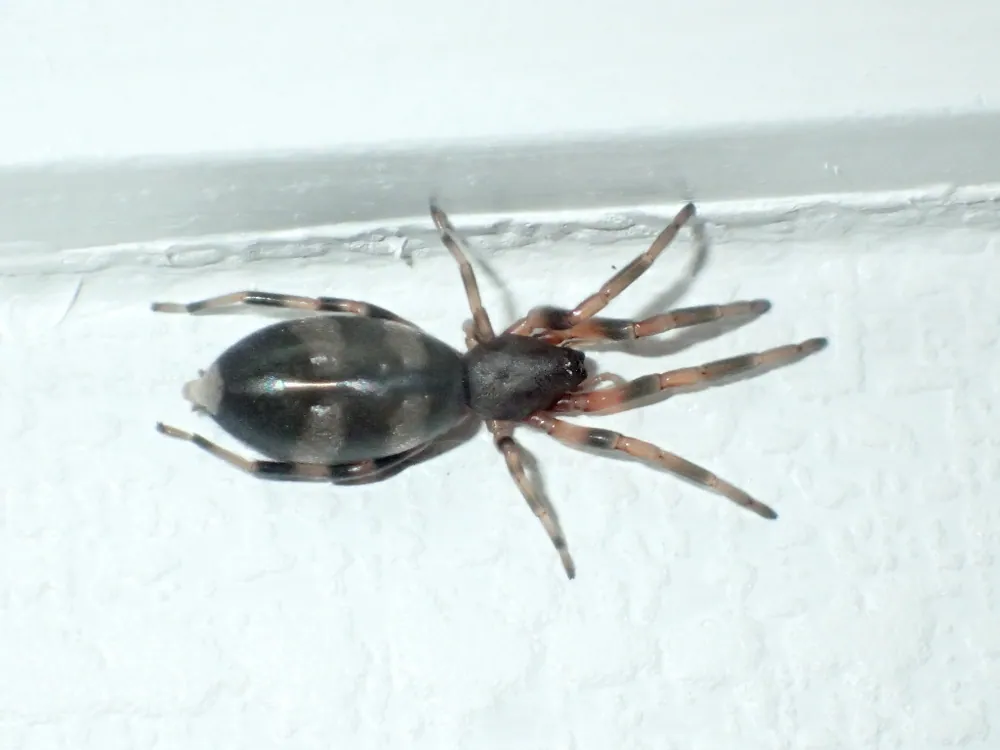
MordeThe Eastern white-tailed spider is a slender hunting spider from southern and eastern Australia. It has also spread to New Zealand. It does not spin a web. Instead, it roams, mostly at night, hunting other spiders.1

 Como recoñecelo
- Slender, cigar-shaped body that is dark reddish to grey.1
- Dark orange-brown legs with bands.1
- Grey abdomen with two pairs of faint white spots.1
- Usually, but not always, a distinct white spot at the tip of the abdomen, just above the spinnerets.1
- Body length up to 18 mm, with a leg span of about 28 mm.1
Adoita confundirse con: Two common species, Lampona cylindrata and Lampona murina, look very similar and are not easily told apart without a microscope. The name 'white-tail' is also applied to several other spider species that have a white mark at the end of the abdomen.1
Poder da pezoña
A pezoña sae polos seus cairos ou dentes cando morde.
Que fai a súa pezoña?
Their venom is used to subdue prey. In people, a bite usually causes a small red or discoloured bump, with pain, local swelling and itchiness. Rarely, it causes nausea, vomiting, malaise (a general feeling of being unwell) or headache. These symptoms are generally mild and resolve over time.1
Que perigoso é para as persoas?
Perigo para as persoas: DolorosoPode doer moito, pero case nunca é grave.Bites are reported in people, but studies found the effects are usually local and mild. A study of 130 confirmed bites found no necrotic ulcers (tissue death) and no confirmed infections. No deaths are mentioned.1
 Se morde
- Lava a mordedura e ponlle unha bolsa de xeo para a dor. Busca axuda médica se a dor é forte, se se estende ou se a persoa se sente mal.
Chama sempre primeiro ao teu número de emerxencias (112, 000, 911). Isto son consellos xerais de primeiros auxilios, non consello médico. Primeiros auxilios básicos
 Mantente a salvo
- Nunca toques, collas nin molestes un animal salvaxe, aínda que sexa pequeno e aínda que pareza durmido ou morto.
- Déixalle espazo. Se atopas un, mantén a calma, recúa amodo e déixao ir polo seu camiño.
- Se un te morde: mantén a calma, non te movas, chama ao teu número de emerxencias (112, 000, 911) ou vai rápido a un hospital. Lembra como era, unha foto axuda.
Non vai a por ti. Usa a súa pezoña para cazar comida ou para defenderse, e prefire con moito agocharse. Máis sobre como estar a salvo
En que lugar do mundo?
Que tamaño ten?
Canto mide?
 máis curto ca o teu dedo meniño
Que tamaño ten Eastern white-tailed spider comparado CONTIGO?
Só son contas no teu navegador. Non se garda nin se envía nada a ningures.
Que rápido é?


Datos
The necrotic ulcers once blamed on these spiders were not confirmed. A scientific study found other causes, mostly infections.1
White-tailed spiders do not build webs. They hunt actively, often at night.1
The white tail marking remains into adulthood, while other markings fade with each moult.1
Many people think there is only one white-tailed spider species, but the two common species look so alike that more species may still be unidentified.1
Both common species have been introduced to New Zealand, where Lampona cylindrata has spread across the South Island since 1980.1
Desmontamitos
Mito: White-tailed spider bites cause flesh-eating ulcers (necrosis).
Verdade: A study of 130 confirmed bites found no necrotic ulcers or confirmed infections. Symptoms are usually mild, with a red mark, pain, swelling and itchiness.1
De onde veñen os datos
- White-tailed spider (Wikipedia (CC BY-SA 4.0))
- Lampona murina (iNaturalist): nomes e clasificación.
- Venom Wiki: o nivel de perigo, o tamaño típico e a velocidade estimada son nosos. Mira como os calculamos: Como valoramos o perigo.
Cada dato desta páxina ten un número que leva á súa fonte. Se nos equivocamos nalgo, sentímolo, somos fans dos animais, non unha revista científica. Dínolo en [email protected] e arranxarémolo.
 O escorpión ten fame! Venom Wiki é un proxecto dunha soa persoa: gratis, sen anuncios e sen rastrexadores. Unha pequena propina axuda a mantelo en liña.Dálle de comer ao escorpión
 Redback spider
 Katipo
 White-tailed spider
 Peacock spider
 Badge huntsman spider
 Black house spider
 Coastal taipan
 Common death adder
 Eastern brown snake
 Inland taipan
 Sydney funnel-web spider
 Tiger snake