
 Afirka
 Asiya
Asiya Turai
Turai Kudancin Amurka
 Ostareliya da Oceania
 Antatika
 Tekun Pasifik
 Tekun Atlantika
 Tekun Indiya
 Tekun Arctic
 Bahar Rum
 Bahar Maliya
 Tekun Caribbean
 Tekun Coral
 Tekun Kudancin China
 Tekun Philippines
 Tekun Andaman
 Tekun Arewa
 Tekun Timor da Arafura
 Gaɓar Tekun Bengal
 Gaɓar Tekun California
New Guinea small-eyed snake
 Cizo
CizoThe New Guinea small-eyed snake, Micropechis ikaheka, is a highly venomous snake that lives on New Guinea and nearby islands. It is the only species in its genus, and it is known for causing many deadly bites, especially on Karkar Island in Papua New Guinea. Its bites are a serious medical concern in the places where it lives.1



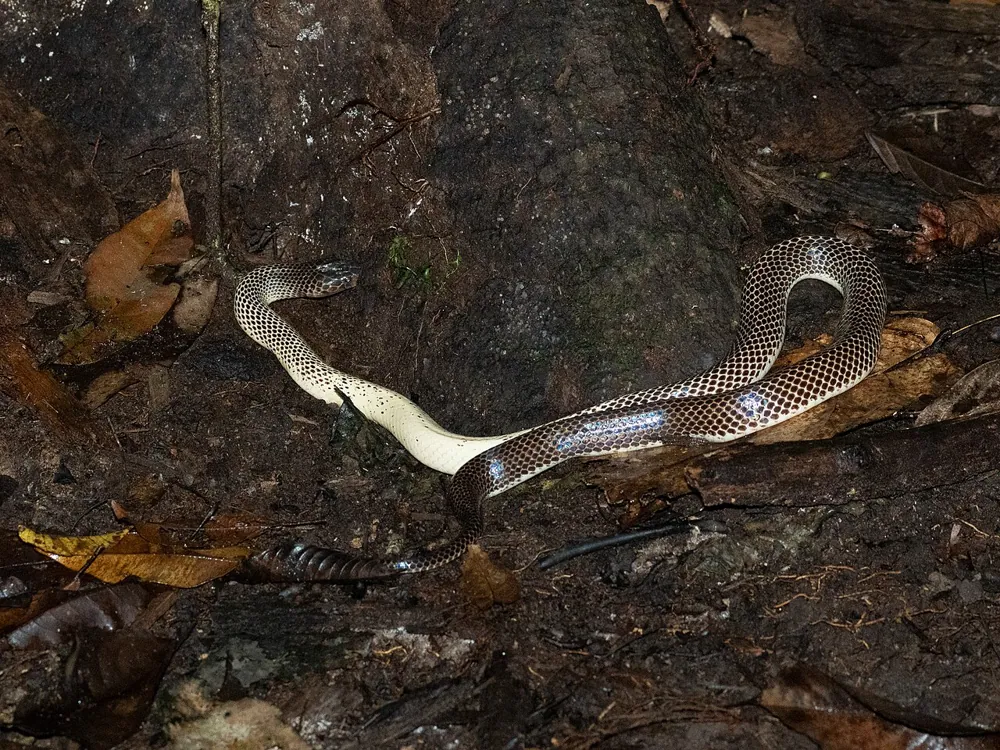
 Yadda za ka gane shi
Ƙarfin dafi
Dafi yana fitowa ta haƙoransa na dafi ko haƙoransa idan ya ciza.
Me dafinsa yake yi?
Its venom is strong enough that it is considered a dangerous snake. Common symptoms include local muscle pain and tenderness, fever, abdominal pain, vomiting, dizziness, headache, low blood pressure and spontaneous bleeding. In severe cases, the venom also affects the nerves and muscles, causing drooping eyelids, slurred speech and jaw locking, and death can result from respiratory paralysis (when the muscles used for breathing stop working).1
Yaya haɗarinsa yake ga mutane?
Haɗari ga mutane: Mai haɗari sosaiYana iya kashe mutumin da bai samu magani ba.This snake has been linked to many fatal bites. The first proven human death occurred in 1958 in Wau, Papua New Guinea, where a young man died 36 hours after being bitten on the base of the thumb while handling the snake. It causes about 40% of snake envenomations on Karkar Island, but less than 10% on the mainland, where death adders cause most snakebites. Plantation workers are most at risk, especially when moving husk piles, cutting grass, walking on plantation tracks or harvesting cocoa beans.1
 Labari mai daɗi: likitoci suna da magani (antivenom) ko jinya don wannan.1
Me yake yi idan ya ji tsoro?
Although it is normally shy, it becomes highly aggressive when disturbed, for example if it is handled or stepped on, and then it strikes quickly and readily. Its bite is tenacious and chewing, and it is not easily released.1
 Idan ya ciji
- Ɗaurin matsi don hana motsi: ka naɗe bandeji mai roba (elastic) da ƙarfi a kan wurin cizon sannan ka ci gaba da naɗewa har dukan gaɓar, ka ɗaure ta da katako (splint), kuma ka sa mutumin ya zauna ba motsi kwata-kwata har taimako ya iso.
- Kada ka wanke wurin cizon: asibitoci za su iya gwada dafin da ya rage a fata don zaɓar maganin dafi (antivenom) da ya dace.
Kullum ka fara kiran lambar gaggawa (112, 000, 911). Wannan jagorar agajin gaggawa ce ta gaba ɗaya, ba shawarar likita ba. Muhimman abubuwan agajin gaggawa
 Kiyaye lafiya
- Kada ka taɓa, kada ka kama, kada ka tsokani dabbar daji, ko da ƙarama ce, kuma ko da tana kama da tana barci ko ta mutu.
- Ka ba shi sarari. Idan ka haɗu da ɗaya, ka natsu, ka koma baya a hankali kuma ka bar shi ya bi hanyarsa.
- Idan ɗaya ya ciji ka: ka natsu, ka zauna ba motsi, ka kira lambar gaggawarka (112, 000, 911) ko ka je asibiti da sauri. Ka tuna yadda yake, hoto yana taimakawa.
Ba ya neman cutar da kai. Yana amfani da dafinsa don kama abinci ko don kare kansa, kuma ya fi son ya ɓuya. Ƙarin bayani game da kiyaye lafiya
Yaya girmansa yake?
Yaya tsawonsa yake?
 tsawon kyanwoyin gida 4 daga hanci zuwa wutsiya
 tsawon ayaba 12 a jere
 zai iya gudun mita 100 cikin daƙiƙa 46 (mutum mafi sauri yana buƙatar 9,6)
Yaya girman New Guinea small-eyed snake yake idan aka kwatanta da KAI?
Lissafi ne kawai a cikin burauzarka. Ba a adana komai ko a aika ko'ina.
Yaya saurinsa yake?


Bayanai
A bite from this snake was linked to a human death in 1958, when a young man died 36 hours after being bitten on the thumb while handling it.1
It is cannibalistic, and it also hunts rodents, lizards and other snakes.1
On Karkar Island, where it is common, it is called the "white snake" because of its pale colouring.1
Its name, ikaheca, means "land eel" in a local West Papuan language.1
Mai karya tatsuniya
Tatsuniya: A dead snake is harmless and cannot bite.
Gaskiya: A villager was bitten on the thumb by a snake he had reportedly killed, possibly because of a reflex action after death. Dead snakes can still bite, so they should be handled with care.1
Inda bayanan suka fito
- Micropechis (Wikipedia (CC BY-SA 4.0))
- Micropechis ikaheka (iNaturalist): sunaye da rarrabuwa.
- Venom Wiki: matakin haɗari, girman al'ada da ƙiyasin sauri namu ne. Ga yadda muke lissafa su: Yadda muke auna haɗari.
Kowane bayani a wannan shafi yana da lamba da ke nuna tushensa. Idan mun yi kuskure, ka yi haƙuri, mu masoya dabbobi ne, ba mujallar kimiyya ba. Ka gaya mana a [email protected] kuma za mu gyara.
 Kunama tana jin yunwa! Venom Wiki aikin mutum ɗaya ne: kyauta, ba talla kuma ba masu bin diddigi. Ɗan ƙaramin kyauta yana taimakawa wajen ci gaba da kasancewarsa a intanet.Ciyar da kunama
Ƙari daga rukuni ɗaya: Macizan Ostareliya
 Coastal taipan
 Common death adder
 Eastern brown snake
 Tafan na cikin ƙasa
 Macijin damisa
 Collett's snake
Yana kuma zaune a: Ostareliya da Oceania
 Sydney funnel-web spiderTarantulas da funnel-websMai kisa
 Redback spiderGizo-gizoYana buƙatar likita
 Brown tree snakeMacizai masu haƙoran bayaCiwo kawai
 Hooded pitohuiSauran dabbobi masu gubaCiwo kawaiKada ka taɓa
 PlatypusDabbobi masu shayarwa masu dafiCiwo kawai
 Northern tree-dwelling funnel-web spiderTarantulas da funnel-websMai kisa