
 Afrịka
 Eshia
Eshia Yurop
Yurop Ndịda Amerika
 Ọstrelia na Oshenia
 Antaktika
 Oké Osimiri Pasifik
 Oké Osimiri Atlantik
 Oké Osimiri India
 Oké Osimiri Arktik
 Osimiri Mediterenian
 Osimiri Uhie
 Osimiri Karibịan
 Osimiri Coral
 Osimiri Ndịda China
 Osimiri Filipin
 Osimiri Andaman
 Osimiri Ugwu (North Sea)
 Osimiri Timor na Arafura
 Ọwara Bengal
 Ọwara California
Armadillo wasp
 Ịgba
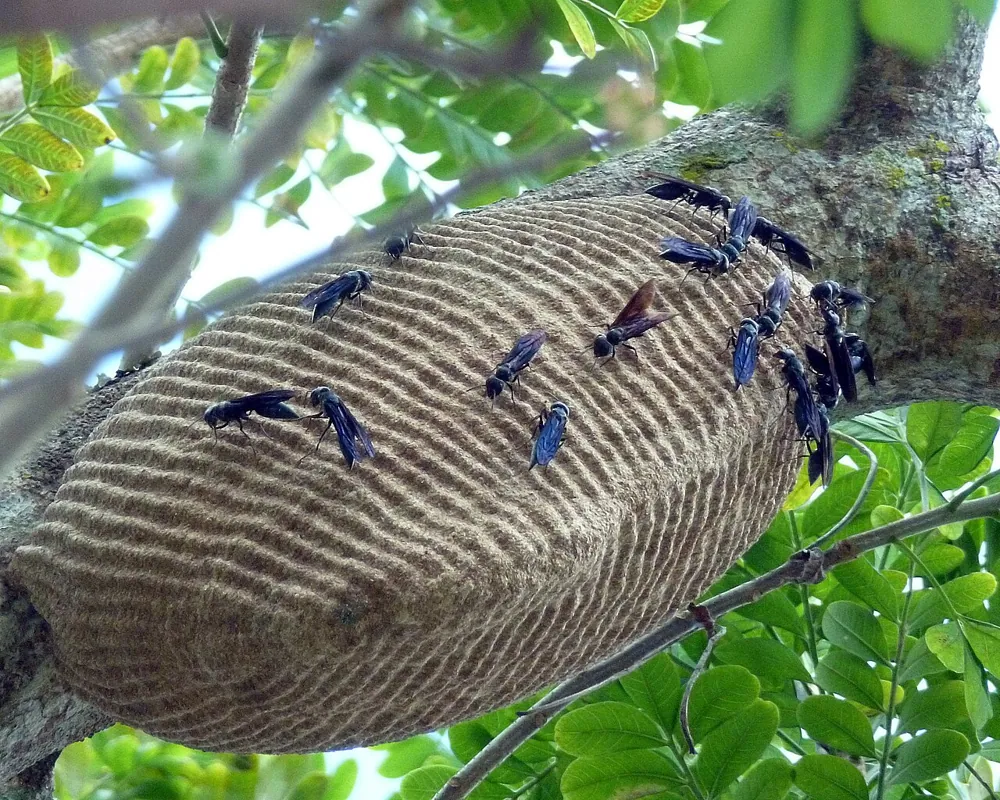
ỊgbaThe armadillo wasp is a social wasp with a metallic blue-black body. It builds its nests on tree trunks in tropical South America. It is known for its painful sting, and it also visits flowers and helps pollinate plants.1


 Otú ị ga-esi mata ya
- Medium-sized wasp with a blueish-black body1
- Body can look metallic in certain light1
- Dark, almost black wings1
- Head has a projecting vertex (a raised ridge on the top of the head)1
- Less dense small markings (punctation) on the first abdominal segment than S. chalibea and S. virginea1
A na-agwakọkarị ya na: Other Synoeca wasps, especially its sister species S. cyanea and S. septentrionalis, which also have less punctation on the first abdominal segment. S. chalibea and S. virginea have denser punctation on that segment, so this is one way to tell them apart.1
Ike nsị
Nsị na-esi na ndụdụ ya apụta.
Gịnị ka nsị ọ na-agba na-eme?
Its sting injects serotonin, a chemical also known as a neurotransmitter. Serotonin is a vasoconstrictor, meaning it narrows blood vessels, which could potentially be lethal to small animals. In people, it causes severe pain.1
Kedu otú o si dị egwu nye mmadụ?
Ihe ize ndụ nye mmadụ: Ọ dị njọỊgba ya chọrọ dọkịta. Ọnwụ anaghị adịkarị ma ọlị.Its sting is painful. The wasp only stings in defence, not to attack. Stings can leave the wasp's barbed stinger in the skin, and the wasp dies afterwards.1
Gịnị ka ọ na-eme mgbe ụjọ tụrụ ya?
When a colony is threatened, workers perform buzzing runs, shaking from side to side and contacting other members, which warns the colony to swarm. Individual wasps may also sting, and the stinger stays in the victim.1
 Ọ bụrụ na ọ gbaa
- Kọpụta ndụdụ aṅụ ahụ hapụrụ, mee ka ebe ahụ jụọ oyi.
- Ọ bụrụ na o siri onye ahụ ike iku ume, ihu ya ma ọ bụ akpịrị ya na-aza, ma ọ bụ na ọ dị ya ka ọ ga-ada mbà, ọ bụ mberede allergy: kpọọ nọmba mberede gị, jirikwa adrenaline pen ya (adrenaline auto-injector) ma ọ bụrụ na o nwere otu.
Na-ebu ụzọ kpọọ nọmba mberede gị mgbe niile (112, 000, 911). Nke a bụ ndụmọdụ enyemaka mbụ n'ozuzu, ọ bụghị ndụmọdụ ọgwụ. Isi ihe enyemaka mbụ
 Nọrọ na nchekwa
- Emetụla anụ ọhịa aka, ejidela ya, emekwala ya ihe ọjọọ, ọbụna obere, ọbụna ma ọ dị ka ọ na-ehi ụra ma ọ bụ nwụọ anwụ.
- Nye ya ohere. Ọ bụrụ na ị zutere otu, dị jụụ, laghachi azụ nwayọ, hapụ ya ka ọ gaa ụzọ ya.
- Ọ bụrụ na otu gbaa gị: dị jụụ, emegharịla ahụ, kpọọ nọmba mberede gị (112, 000, 911) ma ọ bụ gaa ụlọ ọgwụ ngwa ngwa. Cheta ka o si dị, foto na-enye aka.
Ọ naghị achụ gị. Ọ na-eji nsị ya ejide nri ma ọ bụ chebe onwe ya, ọ ga-akakwa mma n'anya ya ịzo onwe ya. Ihe ndị ọzọ gbasara ịnọ na nchekwa
Ọ hà aṅaa?
Kedu otú o si dị ogologo?
 ọ dị ogologo ihe dị ka pepa klip
 nwere ike ife gafee ọdụ egwuregwu bọọlụ dum n'ime sekọnd 14
Kedu otú Armadillo wasp si hà ma e jiri ya tụnyere GỊ?
Naanị mgbakọ na mwepụ n'ime browser gị. Ọ dịghị ihe echekwara ma ọ bụ ezigara ebe ọ bụla.
Kedu otú o si agba ọsọ?


Eziokwu
When the wasp stings, its barbed stinger stays in the victim, and the wasp dies. This is called sting autotomy.1
The sting also releases alarm pheromones, which mark the target as a threat for the colony to deal with if it returns.1
Some older workers, over 21 days old, may eat large larvae and pupae before leaving the nest. This is called brood cannibalism.1
Queens are chosen through ritual dominance displays, in which potential queens face off, sometimes bending their abdomens.1
Colonies swarm together as a group. Scouts lay down scent trails so the other wasps can follow them to a new nest site.1
Scouts release scent from a special gland called the Richards' gland while they drag their body along the trail.1
Ebe eziokwu ndị a si
- Synoeca surinama (Wikipedia (CC BY-SA 4.0))
- Synoeca surinama (iNaturalist): aha na nhazi ọkwa.
- Venom Wiki: ọkwa ihe ize ndụ, nha nkịtị na nchepụta ọsọ bụ nke anyị. Lee otú anyị si achọpụta ha: Otú anyị si atụ ihe ize ndụ.
Eziokwu ọ bụla dị na peeji a nwere nọmba na-egosi ebe o si. Ọ bụrụ na anyị mehiere ihe, ndo, anyị bụ ndị hụrụ anụmanụ n'anya, ọ bụghị akwụkwọ akụkọ sayensị. Gwa anyị na [email protected], anyị ga-edozi ya.
 Akpị agụụ na-agụ! Venom Wiki bụ ọrụ otu onye: n'efu, na-enweghị mgbasa ozi na ndị na-esochi gị. Obere onyinye na-enyere aka idebe ya n'ịntanetị.Nye akpị nri
Ndị ọzọ si n'otu ahụ: Aṅụ, ebu na ebu ukwu
 Tarantula hawkAṅụ, ebu na ebu ukwuNaanị na-afụ ụfụ
 Executioner waspAṅụ, ebu na ebu ukwuỌ chọrọ dọkịta
 Warrior waspAṅụ, ebu na ebu ukwuỌ chọrọ dọkịta
 Giant tarantula hawkAṅụ, ebu na ebu ukwuNaanị na-afụ ụfụ
 Paulista waspAṅụ, ebu na ebu ukwuNaanị na-afụ ụfụ
 Red paper waspAṅụ, ebu na ebu ukwuNaanị na-afụ ụfụ
 Golden poison frog
 Terciopelo
 Brazilian wandering spider
 Eyelash viper
 Golden lancehead
 South American bushmaster