
 Afrịka
 Eshia
Eshia Yurop
Yurop Ndịda Amerika
 Ọstrelia na Oshenia
 Antaktika
 Oké Osimiri Pasifik
 Oké Osimiri Atlantik
 Oké Osimiri India
 Oké Osimiri Arktik
 Osimiri Mediterenian
 Osimiri Uhie
 Osimiri Karibịan
 Osimiri Coral
 Osimiri Ndịda China
 Osimiri Filipin
 Osimiri Andaman
 Osimiri Ugwu (North Sea)
 Osimiri Timor na Arafura
 Ọwara Bengal
 Ọwara California
Common European adder
 Ịta
ỊtaThe common European adder is a venomous snake that lives across much of Europe and as far east as East Asia. In several European countries it is the only native venomous snake. It is not aggressive and usually bites only when it is cornered, stepped on or picked up.1



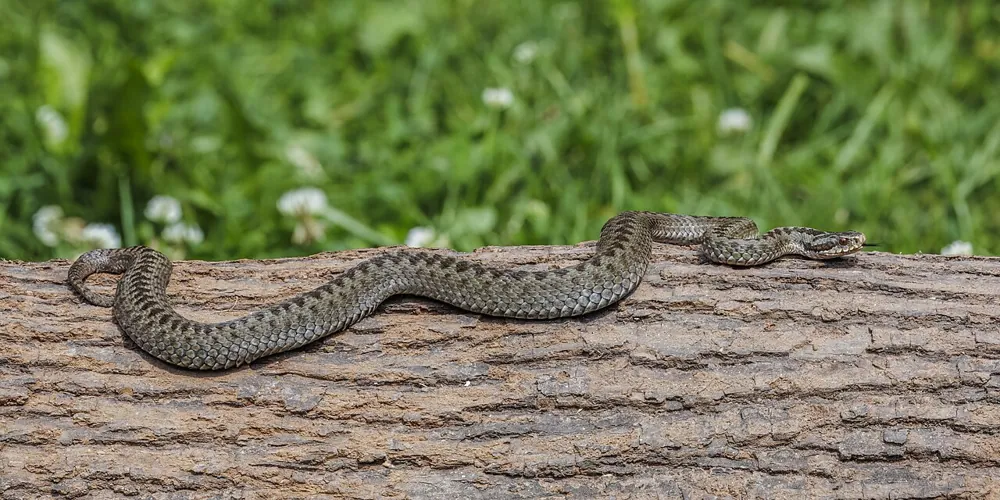
 Otú ị ga-esi mata ya
- Relatively thick body. Adults are usually about 60 cm long, including the tail.1
- Most have a dark zigzag pattern running along the back and tail.1
- A dark V or X marking is usually present on top of the head.1
- A dark streak runs from the eye to the neck, then continues as spots along the sides.1
- Females are usually brown with dark brown markings. Males are a uniform grey with black markings.1
Ike nsị
Nsị na-esi n'eze nsị ya ma ọ bụ eze ya apụta mgbe ọ na-ata.
Gịnị ka nsị ọ na-agba na-eme?
Bites can be very painful, but they are rarely fatal.1
Kedu otú o si dị egwu nye mmadụ?
Ihe ize ndụ nye mmadụ: Ọ dị njọỊta ya chọrọ dọkịta. Ọnwụ anaghị adịkarị ma ọlị.The adder is not regarded as especially dangerous. It is not aggressive and usually bites only when really provoked, stepped on or picked up. Bites are rarely fatal.1
Gịnị ka ọ na-eme mgbe ụjọ tụrụ ya?
When it feels threatened, it usually slips away into the undergrowth. Some snakes, often pregnant females, hiss loudly to warn off danger, and the front of the body is drawn into an S-shape before a strike.1
 Ọ bụrụ na ọ tara
- Mee ka onye ahụ ghara imegharị ahụ, dịkwa jụụ, debe aka ma ọ bụ ụkwụ ahụ ọ tara n'ogo obi, wepụ mgbanaka na ihe ndị kekọrọ ahụ ike, kpọga ya ụlọ ọgwụ ngwa ngwa.
Na-ebu ụzọ kpọọ nọmba mberede gị mgbe niile (112, 000, 911). Nke a bụ ndụmọdụ enyemaka mbụ n'ozuzu, ọ bụghị ndụmọdụ ọgwụ. Isi ihe enyemaka mbụ
 Nọrọ na nchekwa
- Emetụla anụ ọhịa aka, ejidela ya, emekwala ya ihe ọjọọ, ọbụna obere, ọbụna ma ọ dị ka ọ na-ehi ụra ma ọ bụ nwụọ anwụ.
- Nye ya ohere. Ọ bụrụ na ị zutere otu, dị jụụ, laghachi azụ nwayọ, hapụ ya ka ọ gaa ụzọ ya.
- Ọ bụrụ na otu tara gị: dị jụụ, emegharịla ahụ, kpọọ nọmba mberede gị (112, 000, 911) ma ọ bụ gaa ụlọ ọgwụ ngwa ngwa. Cheta ka o si dị, foto na-enye aka.
Ọ naghị achụ gị. Ọ na-eji nsị ya ejide nri ma ọ bụ chebe onwe ya, ọ ga-akakwa mma n'anya ya ịzo onwe ya. Ihe ndị ọzọ gbasara ịnọ na nchekwa
Ọ hà aṅaa?
Kedu otú o si dị ogologo?
Kedu otú o si dị arọ?
 dị ogologo dị ka nwamba ụlọ 2 site n'imi ruo n'ọdụ
 dị ogologo dị ka unere 5 a tọgbọrọ n'ahịrị
 nwere ike ịgba ọsọ mita 100 n'ime sekọnd 110 (mmadụ kacha ọsọ chọrọ 9,6)
Kedu otú Common European adder si hà ma e jiri ya tụnyere GỊ?
Naanị mgbakọ na mwepụ n'ime browser gị. Ọ dịghị ihe echekwara ma ọ bụ ezigara ebe ọ bụla.
Kedu otú o si agba ọsọ?


Eziokwu
It hibernates in winter. In northern Sweden, hibernation lasts 8 to 9 months, and it may come out to bask on mild days, sometimes crossing snow to do so.1
Around 15% of adults and 30 to 40% of juveniles die during hibernation.1
Males and females can often be told apart by colour, which is unusual for snakes.1
In several European countries it is the only native venomous snake.1
It is found farther north than any other snake species.1
Onye na-ekpughe akụkọ ụgha
Akụkọ ụgha: Adders are aggressive snakes that attack people.
Eziokwu: Adders are timid. They usually disappear at the slightest hint of danger and bite only when cornered, alarmed, stepped on or picked up.1
Maka ndị ọkachamara nsị
- Aha sayensị
- Vipera berus
- Otu
- Viper na adder
- Ezinụlọ
- Viperidae2
- Usoro
- Squamata
- Kọntinent dị iche iche
- Yurop, Eshia
- Ụmụ ọhụrụ
- It gives birth to live young rather than laying eggs. Females breed once every two or three years, and litters range from three to 20 young.1
- Otú ọ na-eme n'ọhịa
- Least concern (IUCN Red List), although its population is decreasing. It is protected in many countries, and it is listed as endangered in Switzerland.1
- Ihe ize ndụ nye mmadụ
- 3 / 5: Ọ dị njọ3
Ebe eziokwu ndị a si
- Adder (Wikipedia (CC BY-SA 4.0))
- Vipera berus (iNaturalist): aha na nhazi ọkwa.
- Venom Wiki: ọkwa ihe ize ndụ, nha nkịtị na nchepụta ọsọ bụ nke anyị. Lee otú anyị si achọpụta ha: Otú anyị si atụ ihe ize ndụ.
Eziokwu ọ bụla dị na peeji a nwere nọmba na-egosi ebe o si. Ọ bụrụ na anyị mehiere ihe, ndo, anyị bụ ndị hụrụ anụmanụ n'anya, ọ bụghị akwụkwọ akụkọ sayensị. Gwa anyị na [email protected], anyị ga-edozi ya.
 Akpị agụụ na-agụ! Venom Wiki bụ ọrụ otu onye: n'efu, na-enweghị mgbasa ozi na ndị na-esochi gị. Obere onyinye na-enyere aka idebe ya n'ịntanetị.Nye akpị nri
Ndị ọzọ si n'otu ahụ: Viper na adder
 Indian saw-scaled viper
 Puff adder
 Agwọ Russell
 Eastern Russell's viper
 Northeast African carpet viper
 Armenian viper
_female_Pieniny.jpg)
Ọ na-ebikwa na: Yurop
 Spanish flyAnụmanụ ndị ọzọ nwere nsị n'ahụỌ chọrọ dọkịtaEmetụla ya aka
 Common waspAṅụ, ebu na ebu ukwuNaanị na-afụ ụfụ
 European hornetAṅụ, ebu na ebu ukwuNaanị na-afụ ụfụ
 Fire salamanderAwọ nsị, awọ ala na newtNaanị na-afụ ụfụEmetụla ya aka
 Western honey beeAṅụ, ebu na ebu ukwuNaanị na-afụ ụfụ
 Mediterranean black widowUdudoỌ chọrọ dọkịta