
 Afrịka
 Eshia
Eshia Yurop
Yurop Ndịda Amerika
 Ọstrelia na Oshenia
 Antaktika
 Oké Osimiri Pasifik
 Oké Osimiri Atlantik
 Oké Osimiri India
 Oké Osimiri Arktik
 Osimiri Mediterenian
 Osimiri Uhie
 Osimiri Karibịan
 Osimiri Coral
 Osimiri Ndịda China
 Osimiri Filipin
 Osimiri Andaman
 Osimiri Ugwu (North Sea)
 Osimiri Timor na Arafura
 Ọwara Bengal
 Ọwara California
Indian saw-scaled viper
 Ịta
ỊtaThe saw-scaled viper is a small, venomous snake of the Middle East, Central Asia and the Indian subcontinent. It is the smallest of the 'big four' Indian snakes that cause the most snakebite cases and deaths. It is easy to miss, which is one reason it causes so many bites.1



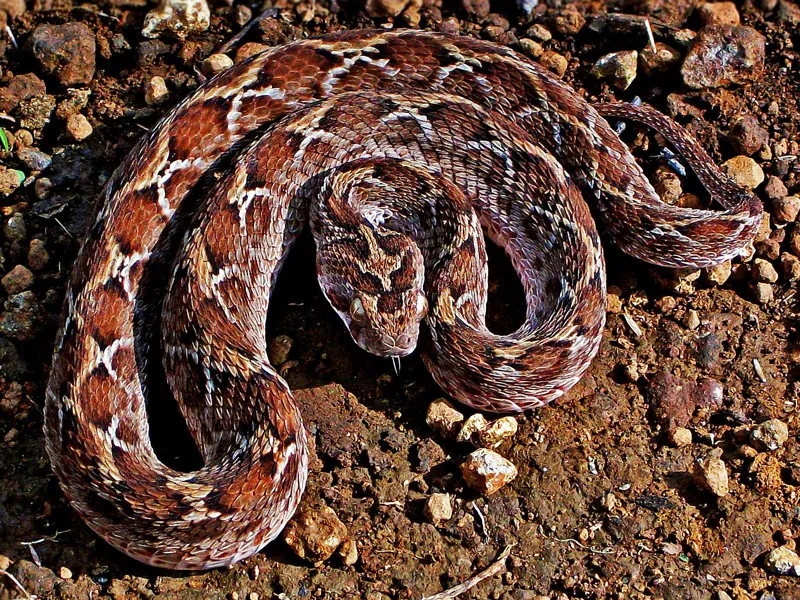
 Otú ị ga-esi mata ya
- Small, usually no more than 60 cm long in total1
- Pale buff, grey, reddish, olive or pale brown body with whitish spots edged in dark brown1
- A whitish cross or trident pattern on the top of the head1
- A faint stripe running from the eye to the angle of the jaw1
- Whitish to pinkish belly, sometimes with brown dots1
Ike nsị
Nsị na-esi n'eze nsị ya ma ọ bụ eze ya apụta mgbe ọ na-ata.
Gịnị ka nsị ọ na-agba na-eme?
Its venom causes swelling and pain within minutes of a bite, and the swelling can spread up the whole limb within 12 to 24 hours, with blisters forming on the skin. The more dangerous effects are whole-body: bleeding and clotting problems, bleeding from the stomach, lungs, nose or urine, and possible shock. Most patients produce little or no urine within a few hours to six days after the bite.1
Kedu otú o si dị egwu nye mmadụ?
Ihe ize ndụ nye mmadụ: Na-egbu egbuOtu n'ime anụmanụ kacha dị egwu n'ụwa.About 20% of its bites used to be fatal, but deaths are now quite rare because antivenom is available. It is one of the species responsible for the most snakebite cases because it is inconspicuous and extremely aggressive.1
 Ozi ọma: ndị dọkịta nwere ọgwụ (antivenom) ma ọ bụ ọgwụgwọ maka nke a.1
Gịnị ka ọ na-eme mgbe ụjọ tụrụ ya?
When threatened it forms a double coil in a figure of eight, with its head in the centre, so it can lash out like a released spring.1
 Ọ bụrụ na ọ tara
- Antivenin therapy and intravenous hydration within hours of the bite are vital for survival.1
- Mee ka onye ahụ ghara imegharị ahụ, dịkwa jụụ, debe aka ma ọ bụ ụkwụ ahụ ọ tara n'ogo obi, wepụ mgbanaka na ihe ndị kekọrọ ahụ ike, kpọga ya ụlọ ọgwụ ngwa ngwa.
Na-ebu ụzọ kpọọ nọmba mberede gị mgbe niile (112, 000, 911). Nke a bụ ndụmọdụ enyemaka mbụ n'ozuzu, ọ bụghị ndụmọdụ ọgwụ. Isi ihe enyemaka mbụ
 Nọrọ na nchekwa
- Emetụla anụ ọhịa aka, ejidela ya, emekwala ya ihe ọjọọ, ọbụna obere, ọbụna ma ọ dị ka ọ na-ehi ụra ma ọ bụ nwụọ anwụ.
- Nye ya ohere. Ọ bụrụ na ị zutere otu, dị jụụ, laghachi azụ nwayọ, hapụ ya ka ọ gaa ụzọ ya.
- Ọ bụrụ na otu tara gị: dị jụụ, emegharịla ahụ, kpọọ nọmba mberede gị (112, 000, 911) ma ọ bụ gaa ụlọ ọgwụ ngwa ngwa. Cheta ka o si dị, foto na-enye aka.
Ọ naghị achụ gị. Ọ na-eji nsị ya ejide nri ma ọ bụ chebe onwe ya, ọ ga-akakwa mma n'anya ya ịzo onwe ya. Ihe ndị ọzọ gbasara ịnọ na nchekwa
Ọ hà aṅaa?
Kedu otú o si dị ogologo?
 dị ogologo dị ka nwamba ụlọ 1.5 site n'imi ruo n'ọdụ
 dị ogologo dị ka unere 4 a tọgbọrọ n'ahịrị
 nwere ike ịgba ọsọ mita 100 n'ime sekọnd 110 (mmadụ kacha ọsọ chọrọ 9,6)
Kedu otú Indian saw-scaled viper si hà ma e jiri ya tụnyere GỊ?
Naanị mgbakọ na mwepụ n'ime browser gị. Ọ dịghị ihe echekwara ma ọ bụ ezigara ebe ọ bụla.
Kedu otú o si agba ọsọ?


Eziokwu
On average it produces about 18 mg of dry venom, with a recorded maximum of 72 mg. The lethal dose for an adult is estimated at only 5 mg.1
When it rains, up to 80% of the adult population may climb into bushes and trees. Once, about 20 individuals were seen massed on one cactus or small shrub.1
It moves mainly by sidewinding, a method it is very skilled at and surprisingly quick with. Only two points of its body touch the hot ground, which may help it avoid overheating.1
Its venom is used to make several drugs, including echistatin, an anticoagulant that can be made by chemical synthesis, and ecarin, used in a clotting test.1
In the northern parts of its range, it hibernates in winter.1
Ebe eziokwu ndị a si
- Echis carinatus (Wikipedia (CC BY-SA 4.0))
- Echis carinatus (iNaturalist): aha na nhazi ọkwa.
- Venom Wiki: ọkwa ihe ize ndụ, nha nkịtị na nchepụta ọsọ bụ nke anyị. Lee otú anyị si achọpụta ha: Otú anyị si atụ ihe ize ndụ.
Eziokwu ọ bụla dị na peeji a nwere nọmba na-egosi ebe o si. Ọ bụrụ na anyị mehiere ihe, ndo, anyị bụ ndị hụrụ anụmanụ n'anya, ọ bụghị akwụkwọ akụkọ sayensị. Gwa anyị na [email protected], anyị ga-edozi ya.
 Akpị agụụ na-agụ! Venom Wiki bụ ọrụ otu onye: n'efu, na-enweghị mgbasa ozi na ndị na-esochi gị. Obere onyinye na-enyere aka idebe ya n'ịntanetị.Nye akpị nri
 Puff adder
 Agwọ Russell
 Common European adder
 Eastern Russell's viper
 Northeast African carpet viper
 Armenian viper
 Deathstalker
 Indian cobra
 King cobra
 Asian giant hornet
 Komodo dragon
 Spanish fly
_Photographed_By_Shantanu_Kuveskar.jpg)