
 Afrịka
 Eshia
Eshia Yurop
Yurop Ndịda Amerika
 Ọstrelia na Oshenia
 Antaktika
 Oké Osimiri Pasifik
 Oké Osimiri Atlantik
 Oké Osimiri India
 Oké Osimiri Arktik
 Osimiri Mediterenian
 Osimiri Uhie
 Osimiri Karibịan
 Osimiri Coral
 Osimiri Ndịda China
 Osimiri Filipin
 Osimiri Andaman
 Osimiri Ugwu (North Sea)
 Osimiri Timor na Arafura
 Ọwara Bengal
 Ọwara California
Garden tiger moth
 Ajị na-agba agba
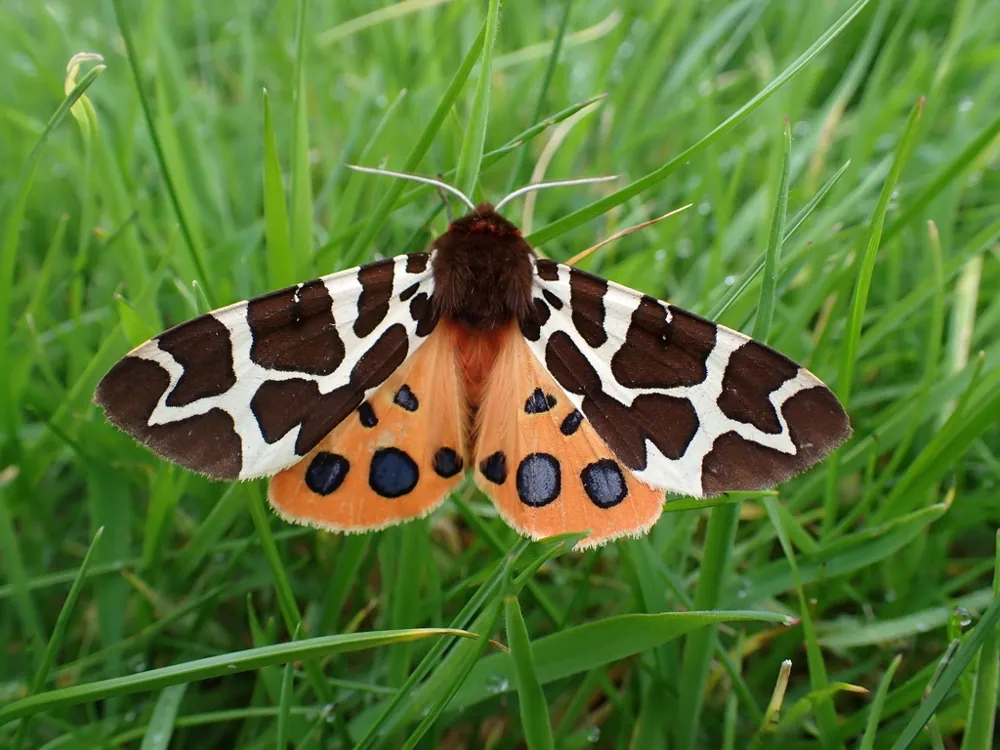
The garden tiger moth is a moth with bold patterned wings that warn predators it is unsafe to eat. It lives in cool, temperate parts of the northern United States, Canada, Europe and Asia. Its caterpillars are known as 'woolly bears' because of their fuzzy look.1

 Otú ị ga-esi mata ya
- Adults have a wingspan of 4.5 to 6.5 cm.1
- The front wings are brown with a white pattern, which is sometimes missing.1
- The back wings are orange with dark blue dots that have black outlines.1
- The moth often hides its orange hindwings under its brown forewings when resting.1
- Caterpillars are fuzzy and can grow up to 6 cm long.1
Ike nsị
Obere ajị ma ọ bụ mkpu na-agbaji n'akpụkpọ ahụ, na-agbakwa agba.
Gịnị ka nsị ọ na-agba na-eme?
This moth does not inject venom. Its body fluids are poisonous and contain neurotoxic choline esters, which are nerve-affecting chemicals that interfere with the acetylcholine receptor. The full effects of these toxins are not yet known. Caterpillars have hollow hairs that often contain irritating compounds.1
Kedu otú o si dị egwu nye mmadụ?
Ihe ize ndụ nye mmadụ: ObereDị ka ịgba aṅụ ma ọ bụ nke na-erughị ya. Ọ fọrọ nke nta ka ọ ghara ịdị njọ nye mmadụ.Gịnị ka ọ na-eme mgbe ụjọ tụrụ ya?
When threatened, adults can spray an irritating compound from glands that are exposed at that moment, and their bright wing patterns warn predators.1
 Ọ bụrụ na i metụ ajị ya aka
- Maka ajị ikpuru na-agba agba: jiri teepu na-arapara arapara wepụ ha, wee saa akpụkpọ ahụ. Ehichala ya.
- Maka ịta: saa ya, mee ka ọ jụọ oyi. Chọọ enyemaka ọgwụ ma ọ bụrụ na ahụ adịghị onye ahụ mma ma ọ bụ na ọbara na-agba ya ngwa ngwa.
Na-ebu ụzọ kpọọ nọmba mberede gị mgbe niile (112, 000, 911). Nke a bụ ndụmọdụ enyemaka mbụ n'ozuzu, ọ bụghị ndụmọdụ ọgwụ. Isi ihe enyemaka mbụ
 Nọrọ na nchekwa
- Emetụla anụ ọhịa aka, ejidela ya, emekwala ya ihe ọjọọ, ọbụna obere, ọbụna ma ọ dị ka ọ na-ehi ụra ma ọ bụ nwụọ anwụ.
- Nye ya ohere. Ọ bụrụ na ị zutere otu, dị jụụ, laghachi azụ nwayọ, hapụ ya ka ọ gaa ụzọ ya.
- Ọ bụrụ na i metụ ajị ya aka: dị jụụ, emegharịla ahụ, kpọọ nọmba mberede gị (112, 000, 911) ma ọ bụ gaa ụlọ ọgwụ ngwa ngwa. Cheta ka o si dị, foto na-enye aka.
Ọ naghị achụ gị. Ọ na-eji nsị ya ejide nri ma ọ bụ chebe onwe ya, ọ ga-akakwa mma n'anya ya ịzo onwe ya. Ihe ndị ọzọ gbasara ịnọ na nchekwa
Ọ hà aṅaa?
Kedu otú o si dị ogologo?
 dị ogologo dị ka blọk egwuregwu 2 n'ahịrị
 nwayọ karịa ejula ubi
Kedu otú Garden tiger moth si hà ma e jiri ya tụnyere GỊ?
Naanị mgbakọ na mwepụ n'ime browser gị. Ọ dịghị ihe echekwara ma ọ bụ ezigara ebe ọ bụla.
Kedu otú o si agba ọsọ?

Eziokwu
Adults can make rasping sounds with their wings and high-pitched squeaks that people can hear, and bats tend to avoid them.1
Caterpillars can break down the toxins in their host plants and reuse them in altered form for their own protection.1
The French entomologist Oberthür described about 500 different wing pattern and colour variants.1
Adults are mostly active at night, from June to September.1
Maka ndị ọkachamara nsị
- Aha sayensị
- Arctia caja
- Otu
- Ikpuru ajị na ụmụ ahụhụ
- Ezinụlọ
- Erebidae2
- Usoro
- Lepidoptera
- Kọntinent dị iche iche
- Yurop, Eshia, Ugwu Amerika
- Ụmụ ọhụrụ
- Eggs are laid on the surfaces of leaves, and the caterpillars hatch and begin feeding soon after.1
- Otú ọ na-eme n'ọhịa
- Protected in the UK under the Biodiversity Action Plan, after its UK numbers fell by 89% over 30 years1
- Ihe ize ndụ nye mmadụ
- 1 / 5: Obere3
Ebe eziokwu ndị a si
- Garden tiger moth (Wikipedia (CC BY-SA 4.0))
- Arctia caja (iNaturalist): aha na nhazi ọkwa.
- Venom Wiki: ọkwa ihe ize ndụ, nha nkịtị na nchepụta ọsọ bụ nke anyị. Lee otú anyị si achọpụta ha: Otú anyị si atụ ihe ize ndụ.
Eziokwu ọ bụla dị na peeji a nwere nọmba na-egosi ebe o si. Ọ bụrụ na anyị mehiere ihe, ndo, anyị bụ ndị hụrụ anụmanụ n'anya, ọ bụghị akwụkwọ akụkọ sayensị. Gwa anyị na [email protected], anyị ga-edozi ya.
 Akpị agụụ na-agụ! Venom Wiki bụ ọrụ otu onye: n'efu, na-enweghị mgbasa ozi na ndị na-esochi gị. Obere onyinye na-enyere aka idebe ya n'ịntanetị.Nye akpị nri
Ndị ọzọ si n'otu ahụ: Ikpuru ajị na ụmụ ahụhụ
 Giant water bugIkpuru ajị na ụmụ ahụhụNaanị na-afụ ụfụ
 Oak processionaryIkpuru ajị na ụmụ ahụhụNaanị na-afụ ụfụEmetụla ya aka
 Pine processionaryIkpuru ajị na ụmụ ahụhụNaanị na-afụ ụfụEmetụla ya aka
 Puss caterpillarIkpuru ajị na ụmụ ahụhụNaanị na-afụ ụfụEmetụla ya aka
 Saddleback caterpillarIkpuru ajị na ụmụ ahụhụNaanị na-afụ ụfụEmetụla ya aka
 Wheel bugIkpuru ajị na ụmụ ahụhụNaanị na-afụ ụfụ
Ọ na-ebikwa na: Yurop
 Common European adderViper na adderỌ chọrọ dọkịta
 Spanish flyAnụmanụ ndị ọzọ nwere nsị n'ahụỌ chọrọ dọkịtaEmetụla ya aka
 Common waspAṅụ, ebu na ebu ukwuNaanị na-afụ ụfụ
 European hornetAṅụ, ebu na ebu ukwuNaanị na-afụ ụfụ
 Fire salamanderAwọ nsị, awọ ala na newtNaanị na-afụ ụfụEmetụla ya aka
 Western honey beeAṅụ, ebu na ebu ukwuNaanị na-afụ ụfụ