
 Afrịka
 Eshia
Eshia Yurop
Yurop Ndịda Amerika
 Ọstrelia na Oshenia
 Antaktika
 Oké Osimiri Pasifik
 Oké Osimiri Atlantik
 Oké Osimiri India
 Oké Osimiri Arktik
 Osimiri Mediterenian
 Osimiri Uhie
 Osimiri Karibịan
 Osimiri Coral
 Osimiri Ndịda China
 Osimiri Filipin
 Osimiri Andaman
 Osimiri Ugwu (North Sea)
 Osimiri Timor na Arafura
 Ọwara Bengal
 Ọwara California
Green cat snake
 Ịta
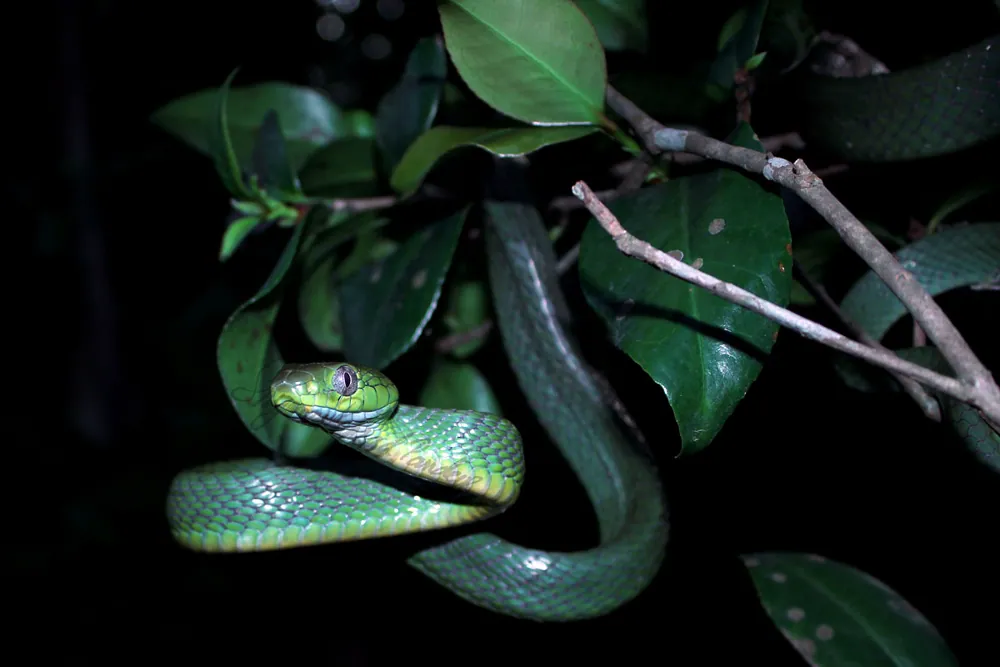
ỊtaThe green cat snake is a slim, bright green snake that lives mostly in trees. It is found in South Asia, China and South-east Asia, mainly in forests. It is a rear-fanged snake that is only mildly venomous to people.1



 Otú ị ga-esi mata ya
- Uniform green back, or green mixed with grey or blue1
- Greenish or yellowish white belly1
- Large eyes with vertical, cat-like pupils, and golden brown irises1
- Yellowish upper lip, with most head scales edged in black1
- Hatchlings are reddish brown with a green head, and begin to turn green at about 8 to 9 months old1
Ike nsị
Nsị na-esi n'eze nsị ya ma ọ bụ eze ya apụta mgbe ọ na-ata.
Gịnị ka nsị ọ na-agba na-eme?
This is a rear-fanged snake, meaning its fangs are at the back of the mouth, and it is described as mildly venomous. Its venom can paralyse small prey. Bites are expected to cause only mild to moderate local swelling and pain, with occasional bruising, numbness, redness or bleeding, but no tissue death (necrosis) and no whole-body (systemic) effects.1
Kedu otú o si dị egwu nye mmadụ?
Ihe ize ndụ nye mmadụ: Na-afụ ụfụỌ nwere ike ịfụ ụfụ nke ukwuu, mana ọ naghị adịkarị njọ.Bites are not expected to cause medically significant effects. Most cases are minor, but some are more severe and need hospital admission and treatment.1
Gịnị ka ọ na-eme mgbe ụjọ tụrụ ya?
Usually sluggish and hard to provoke into striking, it may become hostile when threatened and display with its mouth wide open.1
 Ọ bụrụ na ọ tara
- Bites usually need no treatment beyond checking for infection and making sure tetanus protection is up to date. Anyone who develops local symptoms, such as signs of infection, should return for medical review. Some bites are more severe and need hospital care, so a careful assessment is needed before discharge.1
- Saa ebe ọ tara, mee ka onye ahụ dị jụụ, chọọkwa enyemaka ọgwụ. Ụfọdụ ụdị (dịka boomslang) nwere ike igbu mmadụ ọtụtụ awa ka e mesịrị.
Na-ebu ụzọ kpọọ nọmba mberede gị mgbe niile (112, 000, 911). Nke a bụ ndụmọdụ enyemaka mbụ n'ozuzu, ọ bụghị ndụmọdụ ọgwụ. Isi ihe enyemaka mbụ
 Nọrọ na nchekwa
- Emetụla anụ ọhịa aka, ejidela ya, emekwala ya ihe ọjọọ, ọbụna obere, ọbụna ma ọ dị ka ọ na-ehi ụra ma ọ bụ nwụọ anwụ.
- Nye ya ohere. Ọ bụrụ na ị zutere otu, dị jụụ, laghachi azụ nwayọ, hapụ ya ka ọ gaa ụzọ ya.
- Ọ bụrụ na otu tara gị: dị jụụ, emegharịla ahụ, kpọọ nọmba mberede gị (112, 000, 911) ma ọ bụ gaa ụlọ ọgwụ ngwa ngwa. Cheta ka o si dị, foto na-enye aka.
Ọ naghị achụ gị. Ọ na-eji nsị ya ejide nri ma ọ bụ chebe onwe ya, ọ ga-akakwa mma n'anya ya ịzo onwe ya. Ihe ndị ọzọ gbasara ịnọ na nchekwa
Ọ hà aṅaa?
Kedu otú o si dị ogologo?
 dị ogologo dị ka nwamba ụlọ 4 site n'imi ruo n'ọdụ
 dị ogologo dị ka unere 11 a tọgbọrọ n'ahịrị
 nwere ike ịgba ọsọ mita 100 n'ime sekọnd 60 (mmadụ kacha ọsọ chọrọ 9,6)
Kedu otú Green cat snake si hà ma e jiri ya tụnyere GỊ?
Naanị mgbakọ na mwepụ n'ime browser gị. Ọ dịghị ihe echekwara ma ọ bụ ezigara ebe ọ bụla.
Kedu otú o si agba ọsọ?


Eziokwu
It is one of the rear-fanged snakes, and its venom is used to paralyse small prey.1
Its long, grasping tail lets it live entirely in trees, so it is described as purely arboreal.1
Despite its size, it is sluggish and makes no attempt to escape when handled.1
Hatchlings look very different from adults, being reddish brown with a green head.1
It hunts at night and rests during the day, coiled among the branches.1
A female lays between 7 and 14 eggs, which take about 85 days to hatch.1
Maka ndị ọkachamara nsị
Ebe eziokwu ndị a si
- Boiga cyanea (Wikipedia (CC BY-SA 4.0))
- Boiga cyanea (iNaturalist): aha na nhazi ọkwa.
- Venom Wiki: ọkwa ihe ize ndụ, nha nkịtị na nchepụta ọsọ bụ nke anyị. Lee otú anyị si achọpụta ha: Otú anyị si atụ ihe ize ndụ.
Eziokwu ọ bụla dị na peeji a nwere nọmba na-egosi ebe o si. Ọ bụrụ na anyị mehiere ihe, ndo, anyị bụ ndị hụrụ anụmanụ n'anya, ọ bụghị akwụkwọ akụkọ sayensị. Gwa anyị na [email protected], anyị ga-edozi ya.
 Akpị agụụ na-agụ! Venom Wiki bụ ọrụ otu onye: n'efu, na-enweghị mgbasa ozi na ndị na-esochi gị. Obere onyinye na-enyere aka idebe ya n'ịntanetị.Nye akpị nri
Ndị ọzọ si n'otu ahụ: Agwọ nwere eze nsị n'azụ ọnụ
 Brown tree snakeAgwọ nwere eze nsị n'azụ ọnụNaanị na-afụ ụfụ
 Tiger keelbackAgwọ nwere eze nsị n'azụ ọnụNwere ike igbu mmadụ
 Red-necked keelbackAgwọ nwere eze nsị n'azụ ọnụỌ chọrọ dọkịta
 Mangrove snakeAgwọ nwere eze nsị n'azụ ọnụNaanị na-afụ ụfụ
 Asian vine snakeAgwọ nwere eze nsị n'azụ ọnụAdịghị njọ
 Golden tree snakeAgwọ nwere eze nsị n'azụ ọnụAdịghị njọ
 Deathstalker
 Indian cobra
 Indian saw-scaled viper
 King cobra
 Puff adder
 Agwọ Russell