
 Afrịka
 Eshia
Eshia Yurop
Yurop Ndịda Amerika
 Ọstrelia na Oshenia
 Antaktika
 Oké Osimiri Pasifik
 Oké Osimiri Atlantik
 Oké Osimiri India
 Oké Osimiri Arktik
 Osimiri Mediterenian
 Osimiri Uhie
 Osimiri Karibịan
 Osimiri Coral
 Osimiri Ndịda China
 Osimiri Filipin
 Osimiri Andaman
 Osimiri Ugwu (North Sea)
 Osimiri Timor na Arafura
 Ọwara Bengal
 Ọwara California
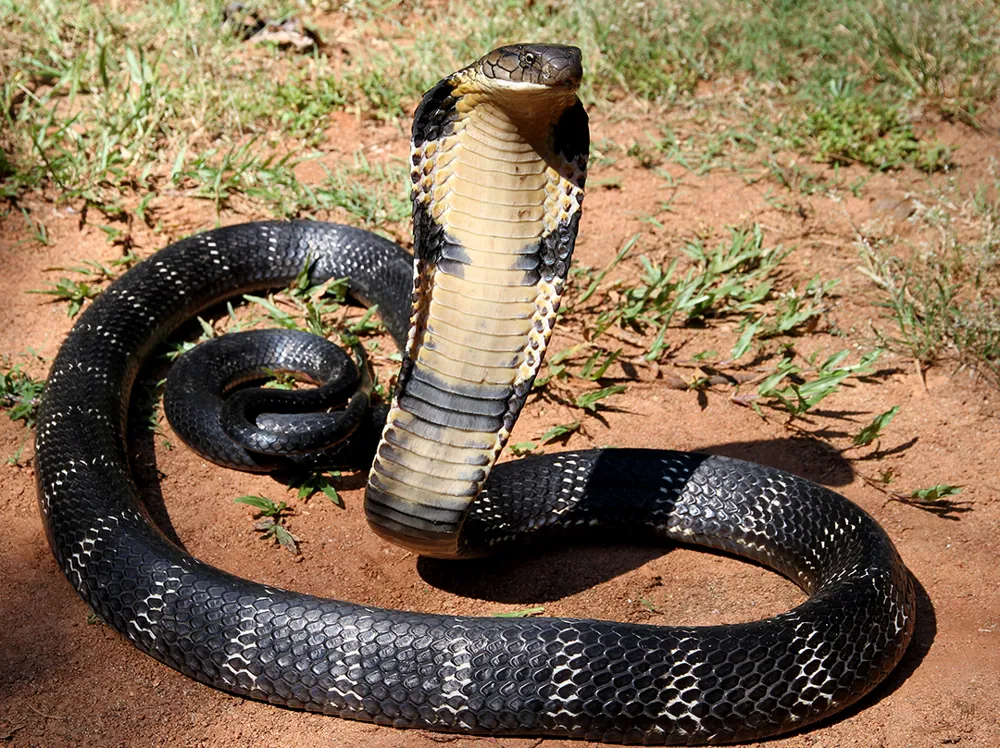
King cobra
 Ịta
ỊtaThe king cobra is a large venomous snake of tropical Asia. It is the world's longest venomous snake, and it mostly eats other snakes. It is widely spread across its range, but people do not often see it.1



 Otú ị ga-esi mata ya
- Adults are olive green with black and white bands across the trunk that run towards the head.1
- The head has 15 drab-coloured shields that are edged in black.1
- The hood is oval, with two black spots between the two lowest scales.1
- Juveniles are black with chevron-shaped white, yellow or buff bars that point towards the head.1
- The tail is yellowish green and marked with black.1
A na-agwakọkarị ya na: Despite its common name and some resemblance, it is not a true cobra: it belongs to its own genus.1
Ike nsị
Nsị na-esi n'eze nsị ya ma ọ bụ eze ya apụta mgbe ọ na-ata.
Gịnị ka nsị ọ na-agba na-eme?
The venom is neurotoxic, which means it attacks the nerves, and cytotoxic, which means it damages cells. Symptoms can start rapidly after a bite. The cobra can strike at a considerable range and height, and it has an immense venom yield.1
Kedu otú o si dị egwu nye mmadụ?
Ihe ize ndụ nye mmadụ: Na-egbu egbuOtu n'ime anụmanụ kacha dị egwu n'ụwa.The king cobra is not considered aggressive and usually avoids humans. Attacks usually happen when an individual is cornered or accidentally exposes itself, or when people come close by chance.1
 Ozi ọma: ndị dọkịta nwere ọgwụ (antivenom) ma ọ bụ ọgwụgwọ maka nke a.1
Gịnị ka ọ na-eme mgbe ụjọ tụrụ ya?
When threatened, it spreads its neck flap, raises its head, hisses or growls loudly, and sometimes charges.1
 Ọ bụrụ na ọ tara
- After a bite, prompt antivenom is needed, so get to medical care as fast as possible.1
- Mee ka onye ahụ ghara imegharị ahụ, dịkwa jụụ, wepụ mgbanaka na ihe ndị kekọrọ ahụ ike, kpọga ya ụlọ ọgwụ ngwa ngwa: ọgwụ mgbochi nsị (antivenom) bụ ọgwụgwọ ya.
Na-ebu ụzọ kpọọ nọmba mberede gị mgbe niile (112, 000, 911). Nke a bụ ndụmọdụ enyemaka mbụ n'ozuzu, ọ bụghị ndụmọdụ ọgwụ. Isi ihe enyemaka mbụ
 Nọrọ na nchekwa
- Emetụla anụ ọhịa aka, ejidela ya, emekwala ya ihe ọjọọ, ọbụna obere, ọbụna ma ọ dị ka ọ na-ehi ụra ma ọ bụ nwụọ anwụ.
- Nye ya ohere. Ọ bụrụ na ị zutere otu, dị jụụ, laghachi azụ nwayọ, hapụ ya ka ọ gaa ụzọ ya.
- Ọ bụrụ na otu tara gị: dị jụụ, emegharịla ahụ, kpọọ nọmba mberede gị (112, 000, 911) ma ọ bụ gaa ụlọ ọgwụ ngwa ngwa. Cheta ka o si dị, foto na-enye aka.
Ọ naghị achụ gị. Ọ na-eji nsị ya ejide nri ma ọ bụ chebe onwe ya, ọ ga-akakwa mma n'anya ya ịzo onwe ya. Ihe ndị ọzọ gbasara ịnọ na nchekwa
Ọ hà aṅaa?
Kedu otú o si dị ogologo?
Kedu otú o si dị arọ?

 dị ogologo dị ka nkịta 6 site n'imi ruo n'ọdụ
 dị ogologo dị ka unere 32 a tọgbọrọ n'ahịrị
 nwere ike ịgba ọsọ mita 100 n'ime sekọnd 36 (mmadụ kacha ọsọ chọrọ 9,6)
Kedu otú King cobra si hà ma e jiri ya tụnyere GỊ?
Naanị mgbakọ na mwepụ n'ime browser gị. Ọ dịghị ihe echekwara ma ọ bụ ezigara ebe ọ bụla.
Kedu otú o si agba ọsọ?


Eziokwu
Its growl is much lower than most snakes' hisses, with a dominant frequency near 600 Hz, which is closer to a human voice.1
It is dominant over all other snakes except large pythons.1
It can swallow prey much larger than its head because of its flexible jaws.1
It can go many months without another meal after a large meal because its metabolism is slow.1
It is considered the national reptile of India and has an important place in the mythology and folk traditions of India, Bangladesh, Sri Lanka and Myanmar.1
Its common name 'hamadryad' is still used in older books.1
Onye na-ekpughe akụkọ ụgha
Akụkọ ụgha: King cobras are aggressive and attack people on sight.
Eziokwu: The king cobra is not considered aggressive and usually avoids humans. It defends its eggs fiercely and may strike if it is cornered or accidentally exposed.1
Maka ndị ọkachamara nsị
- Aha sayensị
- Ophiophagus hannah
- Otu
- Kobra, mamba na krait
- Ezinụlọ
- Elapidae2
- Usoro
- Squamata
- Kọntinent dị iche iche
- Eshia
- Ụmụ ọhụrụ
- It lays eggs. The female builds a nest of dry leaf litter and guards the eggs through the incubation period.1
- Otú ọ na-eme n'ọhịa
- Vulnerable (IUCN Red List, since 2010)1
- Ihe ize ndụ nye mmadụ
- 5 / 5: Na-egbu egbu3
Ebe eziokwu ndị a si
- King cobra (Wikipedia (CC BY-SA 4.0))
- Ophiophagus hannah (iNaturalist): aha na nhazi ọkwa.
- Venom Wiki: ọkwa ihe ize ndụ, nha nkịtị na nchepụta ọsọ bụ nke anyị. Lee otú anyị si achọpụta ha: Otú anyị si atụ ihe ize ndụ.
Eziokwu ọ bụla dị na peeji a nwere nọmba na-egosi ebe o si. Ọ bụrụ na anyị mehiere ihe, ndo, anyị bụ ndị hụrụ anụmanụ n'anya, ọ bụghị akwụkwọ akụkọ sayensị. Gwa anyị na [email protected], anyị ga-edozi ya.
 Akpị agụụ na-agụ! Venom Wiki bụ ọrụ otu onye: n'efu, na-enweghị mgbasa ozi na ndị na-esochi gị. Obere onyinye na-enyere aka idebe ya n'ịntanetị.Nye akpị nri
 Indian cobra
 Caspian cobra
 Common krait
 Malayan krait
 Many-banded krait
 Monocled cobra
 Deathstalker
 Indian saw-scaled viper
 Puff adder
 Agwọ Russell
 Asian giant hornet
 Komodo dragon