
 Afrịka
 Eshia
Eshia Yurop
Yurop Ndịda Amerika
 Ọstrelia na Oshenia
 Antaktika
 Oké Osimiri Pasifik
 Oké Osimiri Atlantik
 Oké Osimiri India
 Oké Osimiri Arktik
 Osimiri Mediterenian
 Osimiri Uhie
 Osimiri Karibịan
 Osimiri Coral
 Osimiri Ndịda China
 Osimiri Filipin
 Osimiri Andaman
 Osimiri Ugwu (North Sea)
 Osimiri Timor na Arafura
 Ọwara Bengal
 Ọwara California
Red spitting cobra
 Ọ na-agbapụ ma ọ bụ na-asụpụ
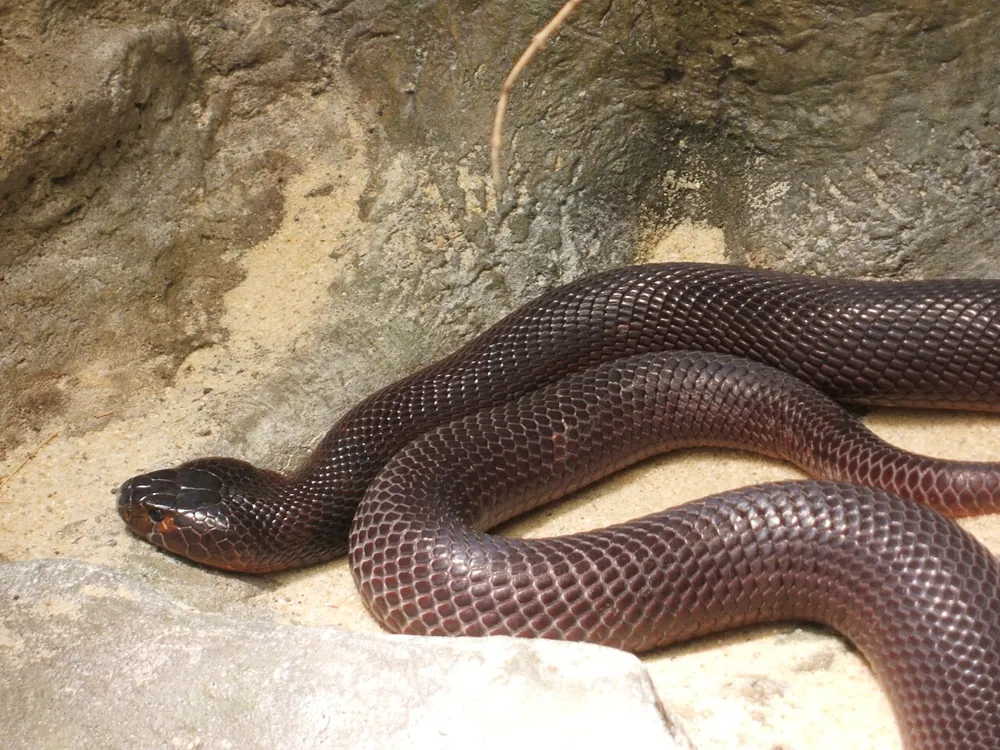
The red spitting cobra is a medium-sized cobra found in East Africa. When threatened, it can spray venom into an attacker's face, which can cause burning pain and blindness. It is often considered an attractive snake, usually bright salmon-red with a black throat band.1



 Otú ị ga-esi mata ya
- Usually bright salmon-red, with a broad black throat band and teardrop markings below the eyes1
- Colour varies by region: specimens from southern Kenya and northern Tanzania are orange-red with a dark blue or black throat band1
- The throat band often fades or disappears in larger adults, and true red specimens turn reddish-brown with age1
- Adults typically measure 0.7 to 1.2 metres1
- When threatened, it rears up, shows a cobra hood and hisses loudly1
Ike nsị
Ọ na-agbapụ ma ọ bụ na-asụpụ mmiri na-ere ọkụ n'ahụ ndị na-awakpo ya.
Gịnị ka nsị ọ na-agba na-eme?
Its venom contains a mixture of neurotoxins, which attack the nerves, and cytotoxins, which damage cells. A bite causes slight pain around the wound and numbness of the lips, fingers and tongue. Venom sprayed into the eyes causes burning pain and can cause blindness.1
Kedu otú o si dị egwu nye mmadụ?
Ihe ize ndụ nye mmadụ: Ọ dị egwu nke ukwuuỌ nwere ike igbu onye na-enwetaghị ọgwụgwọ.It seldom causes human deaths, but survivors of its bites are usually left disfigured. In September 2011, a snake keeper from South Africa died shortly after venom was sprayed into his face while he was photographing the snake. The venom is thought to have entered his nasal passages and caused anaphylactic shock, a severe allergic reaction, and his asthma may have contributed.1
Gịnị ka ọ na-eme mgbe ụjọ tụrụ ya?
When threatened, it rears up, displays its hood and hisses loudly, and if the intruder does not retreat, it may spray venom at the face. In very rare cases it sprays without first rearing up.1
 Ọ bụrụ na ọ tara ma ọ bụ sụọ nsị
- Mee ka onye ahụ ghara imegharị ahụ, dịkwa jụụ, wepụ mgbanaka na ihe ndị kekọrọ ahụ ike, kpọga ya ụlọ ọgwụ ngwa ngwa: ọgwụ mgbochi nsị (antivenom) bụ ọgwụgwọ ya.
- Ọ bụrụ na asụpụrụ nsị n'anya, jiri ọtụtụ mmiri dị ọcha saa anya ahụ ozugbo.
Na-ebu ụzọ kpọọ nọmba mberede gị mgbe niile (112, 000, 911). Nke a bụ ndụmọdụ enyemaka mbụ n'ozuzu, ọ bụghị ndụmọdụ ọgwụ. Isi ihe enyemaka mbụ
 Nọrọ na nchekwa
- Emetụla anụ ọhịa aka, ejidela ya, emekwala ya ihe ọjọọ, ọbụna obere, ọbụna ma ọ dị ka ọ na-ehi ụra ma ọ bụ nwụọ anwụ.
- Nye ya ohere. Ọ bụrụ na ị zutere otu, dị jụụ, laghachi azụ nwayọ, hapụ ya ka ọ gaa ụzọ ya.
- Ọ bụrụ na otu tara gị ma ọ bụ sụọ nsị n'anya gị: dị jụụ, emegharịla ahụ, kpọọ nọmba mberede gị (112, 000, 911) ma ọ bụ gaa ụlọ ọgwụ ngwa ngwa. Cheta ka o si dị, foto na-enye aka.
Ọ naghị achụ gị. Ọ na-eji nsị ya ejide nri ma ọ bụ chebe onwe ya, ọ ga-akakwa mma n'anya ya ịzo onwe ya. Ihe ndị ọzọ gbasara ịnọ na nchekwa
Ọ hà aṅaa?
Kedu otú o si dị ogologo?
 dị ogologo dị ka nwamba ụlọ 2.5 site n'imi ruo n'ọdụ
 dị ogologo dị ka unere 7 a tọgbọrọ n'ahịrị
 nwere ike ịgba ọsọ mita 100 n'ime sekọnd 53 (mmadụ kacha ọsọ chọrọ 9,6)
Kedu otú Red spitting cobra si hà ma e jiri ya tụnyere GỊ?
Naanị mgbakọ na mwepụ n'ime browser gị. Ọ dịghị ihe echekwara ma ọ bụ ezigara ebe ọ bụla.
Kedu otú o si agba ọsọ?


Eziokwu
Ebe eziokwu ndị a si
- Red spitting cobra (Wikipedia (CC BY-SA 4.0))
- Naja pallida (iNaturalist): aha na nhazi ọkwa.
- Venom Wiki: ọkwa ihe ize ndụ, nha nkịtị na nchepụta ọsọ bụ nke anyị. Lee otú anyị si achọpụta ha: Otú anyị si atụ ihe ize ndụ.
Eziokwu ọ bụla dị na peeji a nwere nọmba na-egosi ebe o si. Ọ bụrụ na anyị mehiere ihe, ndo, anyị bụ ndị hụrụ anụmanụ n'anya, ọ bụghị akwụkwọ akụkọ sayensị. Gwa anyị na [email protected], anyị ga-edozi ya.
 Akpị agụụ na-agụ! Venom Wiki bụ ọrụ otu onye: n'efu, na-enweghị mgbasa ozi na ndị na-esochi gị. Obere onyinye na-enyere aka idebe ya n'ịntanetị.Nye akpị nri
 Black mamba
 Egyptian cobra
 Cape cobra
 Eastern green mamba
 Jameson's mamba
 Western green mamba
 Deathstalker
 Puff adder
 Boomslang
 Fat-tailed scorpion
 Gaboon viper
 Western honey bee