
 Afrịka
 Eshia
Eshia Yurop
Yurop Ndịda Amerika
 Ọstrelia na Oshenia
 Antaktika
 Oké Osimiri Pasifik
 Oké Osimiri Atlantik
 Oké Osimiri India
 Oké Osimiri Arktik
 Osimiri Mediterenian
 Osimiri Uhie
 Osimiri Karibịan
 Osimiri Coral
 Osimiri Ndịda China
 Osimiri Filipin
 Osimiri Andaman
 Osimiri Ugwu (North Sea)
 Osimiri Timor na Arafura
 Ọwara Bengal
 Ọwara California
Tube web spider
 Ịta
ỊtaThe tube web spider is a dark spider that builds a tube-shaped web in cracks in walls and buildings. It began in the Mediterranean region but has spread to many towns in southern Britain and other parts of the world. Its bite is reported to be very painful, so it is worth knowing what it looks like.1


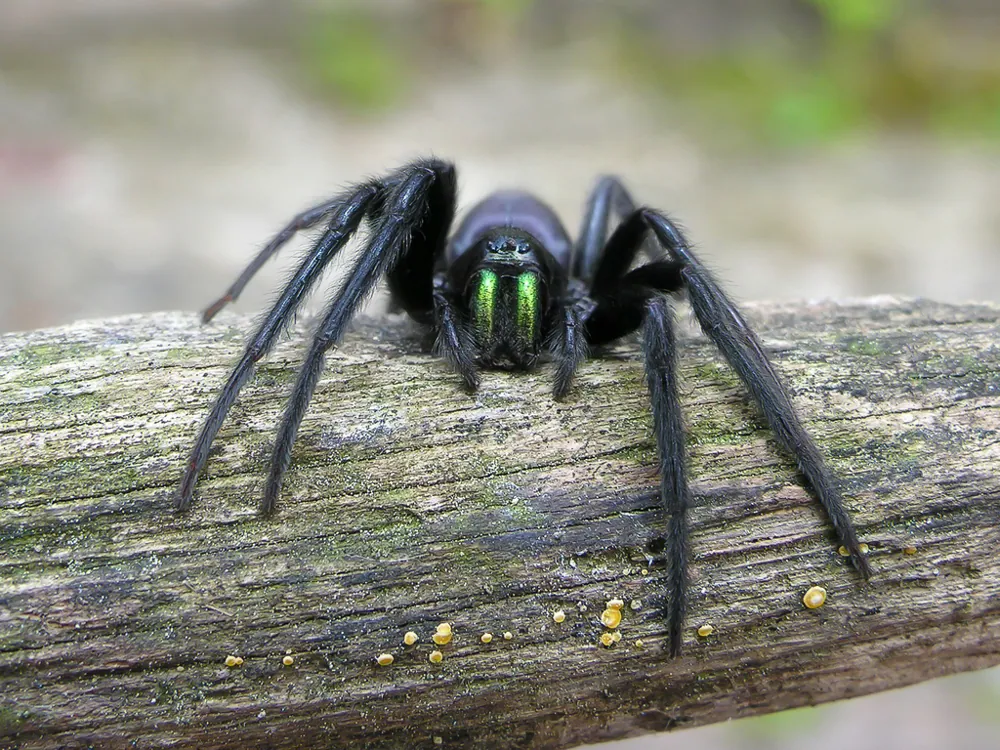
 Otú ị ga-esi mata ya
- Adults are a uniform black, sometimes with a green shine, especially on the fangs.1
- Young spiders (subadults) have a greyish abdomen with a marking.1
- It makes a tubular web with six or more silk lines radiating out from the entrance.1
- Adults are seen from June to November.1
- Females can reach a body length of 22 mm, and males up to 15 mm.1
Ike nsị
Nsị na-esi n'eze nsị ya ma ọ bụ eze ya apụta mgbe ọ na-ata.
Gịnị ka nsị ọ na-agba na-eme?
The venom contains two neurotoxins, which attack the nerves, and one insecticide. The venom reduces the rate and amount of sodium inactivation, a process in nerve cells. The bite is reported to feel like a deep injection, and the pain can last for several hours.1
Kedu otú o si dị egwu nye mmadụ?
Ihe ize ndụ nye mmadụ: Na-afụ ụfụỌ nwere ike ịfụ ụfụ nke ukwuu, mana ọ naghị adịkarị njọ.The bite is reported to be extremely painful, but it is also said to feel like a bee sting, which places it at 2 on the Schmidt sting pain index. The bite has no lasting effects.1
Gịnị ka ọ na-eme mgbe ụjọ tụrụ ya?
When disturbed while feeding, it retreats further into its tube.1
 Ọ bụrụ na ọ tara
- Saa ebe ọ tara, tinye akpa ice n'elu ya maka mgbu ahụ. Chọọ enyemaka ọgwụ ma ọ bụrụ na mgbu ahụ siri ike, gbasaa, ma ọ bụ na ahụ adịghị onye ahụ mma.
Na-ebu ụzọ kpọọ nọmba mberede gị mgbe niile (112, 000, 911). Nke a bụ ndụmọdụ enyemaka mbụ n'ozuzu, ọ bụghị ndụmọdụ ọgwụ. Isi ihe enyemaka mbụ
 Nọrọ na nchekwa
- Emetụla anụ ọhịa aka, ejidela ya, emekwala ya ihe ọjọọ, ọbụna obere, ọbụna ma ọ dị ka ọ na-ehi ụra ma ọ bụ nwụọ anwụ.
- Nye ya ohere. Ọ bụrụ na ị zutere otu, dị jụụ, laghachi azụ nwayọ, hapụ ya ka ọ gaa ụzọ ya.
- Ọ bụrụ na otu tara gị: dị jụụ, emegharịla ahụ, kpọọ nọmba mberede gị (112, 000, 911) ma ọ bụ gaa ụlọ ọgwụ ngwa ngwa. Cheta ka o si dị, foto na-enye aka.
Ọ naghị achụ gị. Ọ na-eji nsị ya ejide nri ma ọ bụ chebe onwe ya, ọ ga-akakwa mma n'anya ya ịzo onwe ya. Ihe ndị ọzọ gbasara ịnọ na nchekwa
Ọ hà aṅaa?
Kedu otú o si dị ogologo?
 ọ dị ogologo ihe dị ka pepa klip
 nwere ike ịgba ọsọ mita 100 n'ime sekọnd 360 (mmadụ kacha ọsọ chọrọ 9,6)
Kedu otú Tube web spider si hà ma e jiri ya tụnyere GỊ?
Naanị mgbakọ na mwepụ n'ime browser gị. Ọ dịghị ihe echekwara ma ọ bụ ezigara ebe ọ bụla.
Kedu otú o si agba ọsọ?


Eziokwu
A population in Westminster Abbey has been proposed as a new subspecies, because its fangs are a brighter green and its members are significantly smaller than other European populations.1
Specimens have been found in Exeter Cathedral as far back as 1890.1
Females lay eggs in the bricks of south-facing structures during winter, so a female seen in September or October may already have laid eggs for the next spring.1
It is the largest European segestriid spider.1
In Britain it was probably introduced via seaports, with records going back at least to 1845.1
Ebe eziokwu ndị a si
- Segestria florentina (Wikipedia (CC BY-SA 4.0))
- Segestria florentina (iNaturalist): aha na nhazi ọkwa.
- Venom Wiki: ọkwa ihe ize ndụ, nha nkịtị na nchepụta ọsọ bụ nke anyị. Lee otú anyị si achọpụta ha: Otú anyị si atụ ihe ize ndụ.
Eziokwu ọ bụla dị na peeji a nwere nọmba na-egosi ebe o si. Ọ bụrụ na anyị mehiere ihe, ndo, anyị bụ ndị hụrụ anụmanụ n'anya, ọ bụghị akwụkwọ akụkọ sayensị. Gwa anyị na [email protected], anyị ga-edozi ya.
 Akpị agụụ na-agụ! Venom Wiki bụ ọrụ otu onye: n'efu, na-enweghị mgbasa ozi na ndị na-esochi gị. Obere onyinye na-enyere aka idebe ya n'ịntanetị.Nye akpị nri
Ndị ọzọ si n'otu ahụ: Ududo
 Mediterranean black widow
 Diving bell spider
 European yellow sac spider
 Noble false widow
 Tarantula wolf spider
 Daddy long-legs spider
Ọ na-ebikwa na: Yurop
 Common European adderViper na adderỌ chọrọ dọkịta
 Spanish flyAnụmanụ ndị ọzọ nwere nsị n'ahụỌ chọrọ dọkịtaEmetụla ya aka
 Common waspAṅụ, ebu na ebu ukwuNaanị na-afụ ụfụ
 European hornetAṅụ, ebu na ebu ukwuNaanị na-afụ ụfụ
 Fire salamanderAwọ nsị, awọ ala na newtNaanị na-afụ ụfụEmetụla ya aka
 Western honey beeAṅụ, ebu na ebu ukwuNaanị na-afụ ụfụ