
 Africa
 Asia
Asia Europa
 Sud America
 Australia e Oceania
 Antartide
 Oceano Pacifico
 Oceano Atlantico
 Oceano Indiano
 Oceano Artico
 Mar Mediterraneo
 Mar Rosso
 Mar dei Caraibi
 Mar dei Coralli
 Mar Cinese Meridionale
 Mar delle Filippine
 Mare delle Andamane
 Mare del Nord
 Mar di Timor e Mar degli Arafura
 Golfo del Bengala
 Golfo di California
Brazilian brown spider
 Morsi
MorsiThe Brazilian brown recluse spider is a small spider that is highly venomous. It lives in parts of Brazil and Argentina, and it is one of the species linked to deaths from spider bites in South America. Its bite can seem mild at first, so it matters to know what it looks like.1


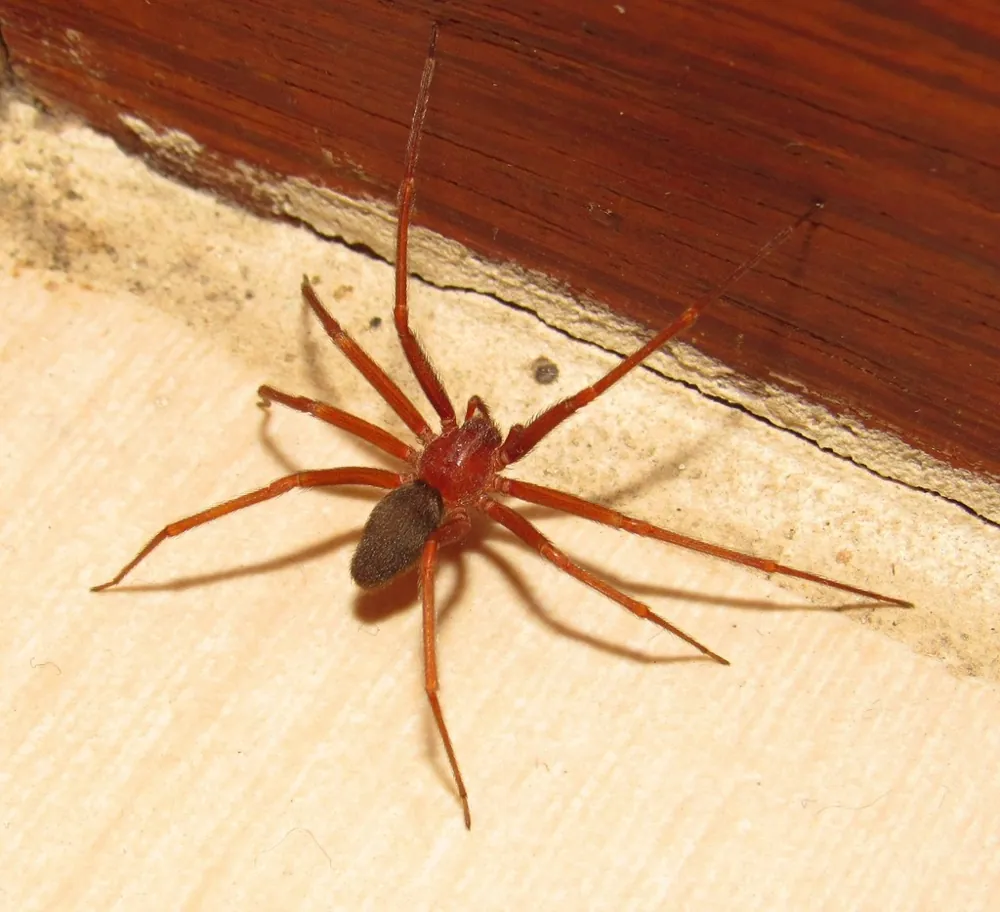
 Come riconoscerlo
- Carapace (the front body shield) is dull yellow to orange-brown, with a dark, U-shaped marking on the head area that contrasts with the yellowish thorax.1
- Legs are orange-brown to reddish-brown.1
- Abdomen is grey or blackened, and darker on top than underneath.1
- Small spider: the female is about 8.5 mm long, and the male is smaller.1
- Active at night and very shy, usually found in dark places.1
Potere del veleno
Il veleno esce dalle zanne o dai denti quando morde.
Cosa fa il suo veleno?
Its venom contains a high concentration of the enzyme sphingomyelinase D, which causes both local and whole-body effects. Symptoms usually take hours to appear. The bite starts with severe pain, redness, swelling and blisters, and in more severe cases the skin tissue can die. Whole-body effects can include damage to red blood cells, heart problems, low blood pressure, kidney failure and severe bleeding.1
Quanto è pericoloso per le persone?
Pericolo per le persone: GraveUn morso richiede un medico. Le morti sono molto rare.It is one of the main species linked to deaths from spider bites in South America. Whole-body effects occur frequently after its bite. Because symptoms are delayed, a victim may think the bite was mild.1
Cosa fa quando ha paura?
It is a very shy spider that keeps to dark places, so it is rarely seen.1
 Se morde
- Lava il morso e mettici una borsa del ghiaccio per il dolore. Cerca aiuto medico se il dolore è forte, si diffonde o la persona si sente male.
Chiama sempre prima il numero di emergenza (112, 000, 911). Queste sono indicazioni generali di primo soccorso, non consigli medici. Primo soccorso di base
 Stai al sicuro
- Non toccare, catturare o stuzzicare mai un animale selvatico, anche se è piccolo e anche se sembra addormentato o morto.
- Lasciagli spazio. Se ne incontri uno, resta calmo, indietreggia piano e lascialo andare per la sua strada.
- Se uno ti morde: resta calmo, stai fermo, chiama il numero di emergenza (112, 000, 911) o vai subito in ospedale. Ricorda com'era, una foto aiuta.
Non ce l'ha con te. Usa il veleno per procurarsi il cibo o per difendersi, e preferisce di gran lunga nascondersi. Altro su come stare al sicuro
Dove nel mondo?
Quanto è grande?
Quanto è lungo?
 così piccolo che starebbe sulla tua unghia
Quanto è grande Brazilian brown spider rispetto a TE?
Solo calcoli nel tuo browser. Niente viene salvato o inviato da nessuna parte.
Quanto è veloce?


Informazioni
The minimum dose that causes skin tissue death is 2.4 μg per kg of body weight.1
An average bite injects about 40 μg of venom proteins.1
It produces about 5.6 mg of venom, and the male produces less, around 2.43 mg.1
Males have much longer legs than females, although the female has the larger body.1
Its webs are irregular and built under fallen tree trunks and debris, usually in dark places.1
Per gli esperti di veleni
Da dove vengono le informazioni
- Loxosceles intermedia (Wikipedia (CC BY-SA 4.0))
- Loxosceles intermedia (iNaturalist): nomi e classificazione.
- Venom Wiki: il livello di pericolo, la taglia tipica e la stima della velocità sono nostri. Guarda come li calcoliamo: Come valutiamo il pericolo.
Ogni informazione in questa pagina ha un numero che rimanda alla sua fonte. Se abbiamo sbagliato qualcosa, scusa, siamo appassionati di animali, non una rivista scientifica. Scrivici a [email protected] e lo correggeremo.
 Lo scorpione ha fame! Venom Wiki è un progetto di una sola persona: gratis, senza pubblicità e senza tracker. Una piccola mancia aiuta a tenerlo online.Dai da mangiare allo scorpione
 Brazilian wandering spider
 Amazon wandering spider
 Chilean recluse
 Golden silk orb-weaver
 Keyserling's wandering spider
 Argentine black widow
 Rana dardo dorata
 Terciopelo
 Eyelash viper
 Golden lancehead
 South American bushmaster
 Cane toad