
 Afirika
 Asiya
Asiya Bulaaya
 Amerika ey'Obukiikaddyo
 Awusitureeliya ne Oseyaniya
 Antakitika
 Oseyani ya Pasifiki
 Oseyani ya Atlantiki
 Oseyani y'e Buyindi
 Oseyani ya Arakitiki
 Ennyanja ya Mediterenia
 Ennyanja Emmyufu
 Ennyanja ya Karibiyani
 Ennyanja ya Korali
 Ennyanja ya China ey'Obukiikaddyo
 Ennyanja ya Bufilipino
 Ennyanja ya Andaman
 Ennyanja ey'Obukiikakkono (North Sea)
 Ennyanja ya Timor ne Arafura
 Ekikono kya Bengal
 Ekikono kya Kalifoniya
Asian common toad
 Obutwa mu lususu lwakyoKirya: EnnyamaKya butwa, si kya busagwa
The Asian common toad is a large toad found across much of South and Southeast Asia. It grows to about 20 cm long and is often seen at night under street lamps. It matters because it has spread to places where it does not belong, and experts worry it could harm local wildlife.1

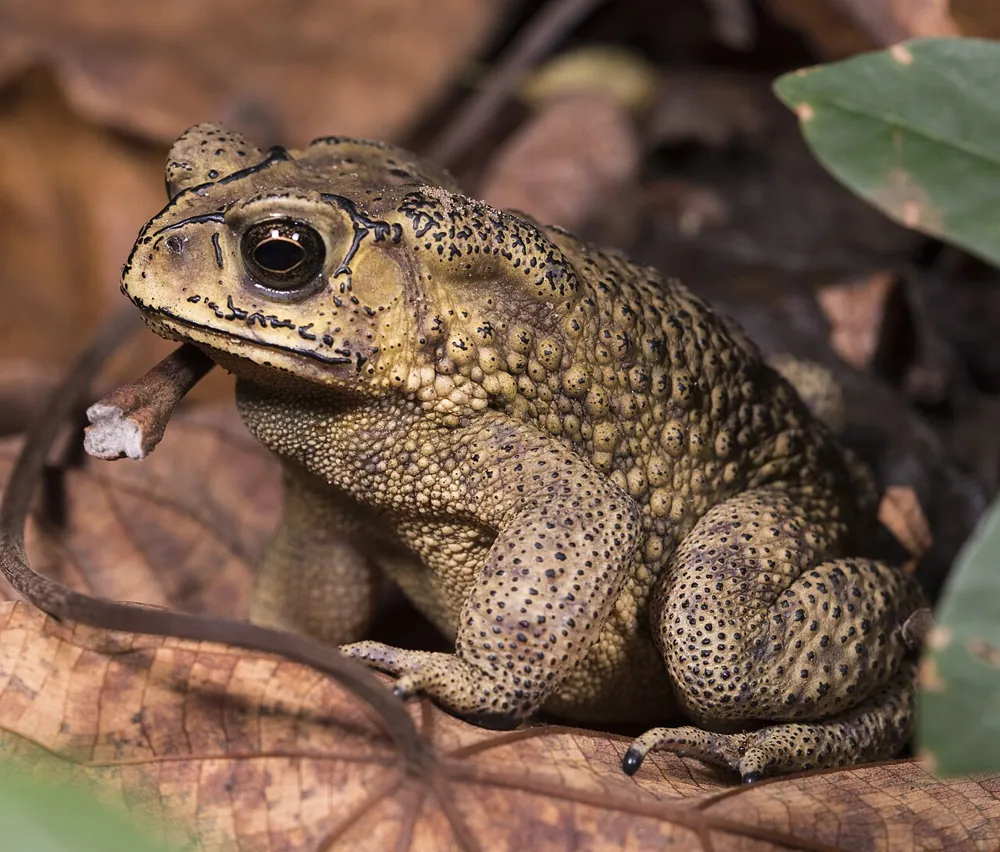
 Engeri y'okukitegeera
- Grows to about 20 cm long1
- Back is yellowish or brownish, with black spines and ridges1
- Large, kidney-shaped or elongated parotoid glands behind the eyes, which are prominent1
- Ear drum (tympanum) is very distinct, at least two-thirds the width of the eye1
- Short, blunt snout and several bony ridges on top of the head1
Amaanyi g'obutwa
Olususu lwakyo lwa butwa. Kya kabi okukwatako, okukomba oba okulya.
Obutwa bwakyo bukola ki?
Its parotoid glands secrete milky white bufotoxin, a toxin, from its back. It uses this to deter predators. The toxin would beyond reasonable doubt severely affect native predators such as snakes, goannas and quolls.1
Kirina akabi kenkana wa eri abantu?
Akabi eri abantu: Kya maanyiOmuntu bw'akikwatako oba bw'akirya, genda eri omusawo. Okufa kubaawo kitono nnyo.Kikola ki nga kitidde?
Its glands in the back release toxin to deter predators.1
 Omuntu bw'aba nga akikutteko oba akiridde
- Omuntu bw'aba nga akutteko emu: naaza bulungi engalo era tokwata ku maaso wadde akamwa. Omwana oba ensolo y'awaka bw'aba ng'agikombye oba agiridde: kuba ekifo ekikola ku butwa (poison centre) oba ennamba y'ebigwa bitalaze.
Bulijjo sooka kuba ennamba y'ebigwa bitalaze (112, 000, 911). Buno bulagirizi bwa bujjanjabi obusooka obwa bulijjo, si kuwabula kwa musawo. Obujjanjabi obusooka obw'omusingi
 Weekuume
- Tokwatako, tokwata wadde okusoomooza ensolo ey'omu nsiko, ne bw'eba ntono, era ne bw'eba erabika nga yeebase oba nga efudde.
- Gireke n'ebbanga. Bw'osisinkana emu, beera mukkakkamu, dda emabega mpola era gireke egende mu kkubo lyayo.
- Bw'oba okikutteko oba okiridde: tokolokota maaso go wadde akamwa, naaza engalo zo era funa obuyambi bw'abasawo.
Tekikunoonya. Obutwa bwakyo buliwo bwokka tewabaawo kikirya. Ebirala ku kwekuuma
Wa mu nsi?
Kinene kyenkana wa?
Kiwanvu kyenkana wa?
 kiwanvu nga bbulooka 6 ez'okuzannyisa mu lunyiriri
 kyandisobodde okudduka mita 100 mu sikonda 180 (omuntu asinga embiro yeetaaga 9,6)
Asian common toad kinene kyenkana wa bw'ogeraageranya ne GGWE?
Kubala bwokka mu browser yo. Tewali kitterekebwa wadde okusindikibwa wonna.
Kidduka kyenkana wa?


Ebituufu
It has been described as one of Australia's '10 most unwanted' species, and as potentially more damaging than the cane toad.1
Madagascar's native predators lack resistance to its toxins, which could affect local wildlife there.1
Tadpoles have been shown to be able to recognise their kin.1
Tadpoles grown in sibling groups metamorphosed faster than those kept in mixed groups.1
Ku bakugu mu busagwa
- Erinnya erya ssaayansi
- Duttaphrynus melanostictus
- Ekibinja
- Ebikere eby'obutwa, ebikere ebinene (toads) ne newts
- Amaka
- Bufonidae2
- Ensengeka
- Anura
- Ssemazinga
- Asiya
- Abaana abawere
- Breeds during the monsoon. Tadpoles are black, and young toads may be seen in large numbers after monsoon rains finish.1
- Akabi eri abantu
- 3 / 5: Kya maanyi3
Ebituufu we biva
- Duttaphrynus melanostictus (Wikipedia (CC BY-SA 4.0))
- Duttaphrynus melanostictus (iNaturalist): amannya n'ensengeka y'ebika.
- Venom Wiki: omutendera gw'akabi, obunene obwa bulijjo n'okuteebereza kw'embiro bibyaffe. Laba engeri gye tubibalamu: Engeri gye tupimamu akabi.
Buli kituufu ku lupapula luno kirina ennamba eraga we kyava. Bwe tuba tukoze ensobi, tusonyiwe, tuli bayagazi ba nsolo, so si magazini ya ssaayansi. Tubuulire ku [email protected] tujja kugitereeza.
 Enjaba erumwa enjala! Venom Wiki pulojekiti ya muntu omu: ya bwereere, tewali birango era tewali bikulondoola. Akasiimo akatono kayamba okugikuuma ku yintaneti.Liisa enjaba
Ebirala okuva mu kibinja kye kimu: Ebikere eby'obutwa, ebikere ebinene (toads) ne newts
 Japanese fire-bellied newtEbikere eby'obutwa, ebikere ebinene (toads) ne newtsKyetaaga omusawoTokwatako
 Common toadEbikere eby'obutwa, ebikere ebinene (toads) ne newtsKiruma bwokkaTokwatako
 Oriental fire-bellied toadEbikere eby'obutwa, ebikere ebinene (toads) ne newtsTekirina kabi
 Asiatic toadEbikere eby'obutwa, ebikere ebinene (toads) ne newtsKiruma bwokkaTokwatako
 Emperor newtEbikere eby'obutwa, ebikere ebinene (toads) ne newtsKiruma bwokkaTokwatako
 Himalayan newtEbikere eby'obutwa, ebikere ebinene (toads) ne newtsKiruma bwokkaTokwatako
 Deathstalker
 Indian cobra
 Indian saw-scaled viper
 King cobra
 Puff adder
 Essalambwa lya Russell
.jpg)