
 Afirika
 Asiya
Asiya Bulaaya
 Amerika ey'Obukiikaddyo
 Awusitureeliya ne Oseyaniya
 Antakitika
 Oseyani ya Pasifiki
 Oseyani ya Atlantiki
 Oseyani y'e Buyindi
 Oseyani ya Arakitiki
 Ennyanja ya Mediterenia
 Ennyanja Emmyufu
 Ennyanja ya Karibiyani
 Ennyanja ya Korali
 Ennyanja ya China ey'Obukiikaddyo
 Ennyanja ya Bufilipino
 Ennyanja ya Andaman
 Ennyanja ey'Obukiikakkono (North Sea)
 Ennyanja ya Timor ne Arafura
 Ekikono kya Bengal
 Ekikono kya Kalifoniya
Six-spot burnet
 Kya butwa okulya
The six-spot burnet is a day-flying moth with dark green wings marked by six bright red spots. It lives in meadows and grassy places across much of Europe and parts of Asia. Its bright colours warn birds and lizards that it is toxic.1



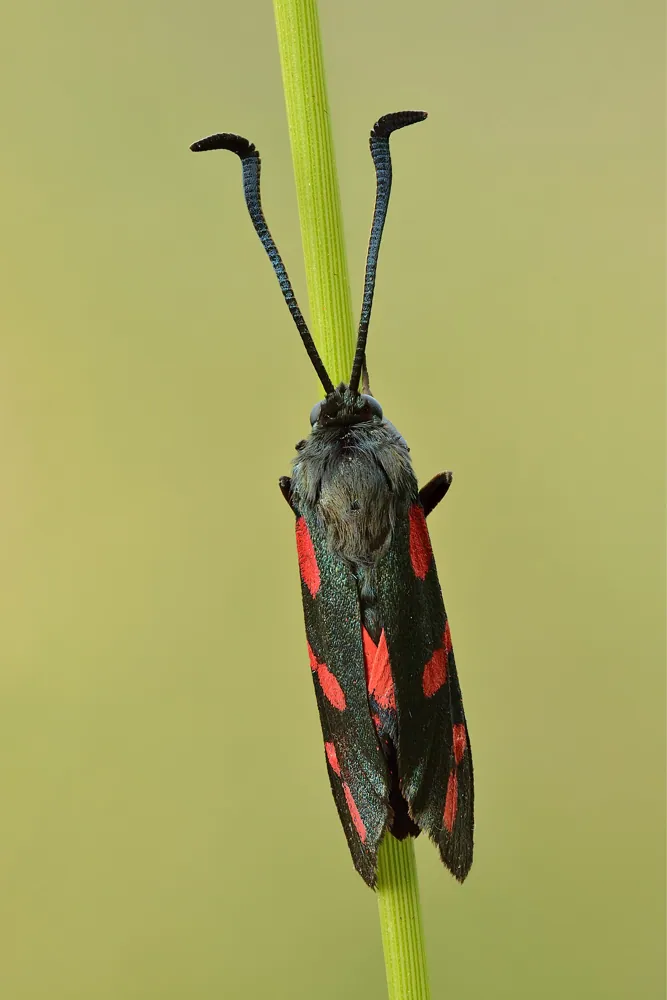
 Engeri y'okukitegeera
- Forewings are dark metallic green with six vivid red spots1
- Sometimes the spots are merged together, or they are yellow or black1
- Hindwings are red with a blackish fringe1
- Wingspan is 30 to 40 mm, and the sexes look similar1
- Adults fly on hot, sunny days from June to August1
- Larva is plump and hairy, usually pale green with rows of black spots1
Kitera okutabulwa ne: It can be confused with the five-spot burnet, especially when the spots on its forewings have merged together.1
Amaanyi g'obutwa
Kya kabi bwokka singa ekintu kikirya.
Kirina akabi kenkana wa eri abantu?
Akabi eri abantu: KitonoNga okubojja kw'enjuki oba okutono okusingawo. Kumpi tekirina kabi eri abantu.Kikola ki nga kitidde?
When attacked, it releases a liquid containing cyanide, and its bright colours warn predators such as birds and lizards that it is toxic.1
 Omuntu bw'aba nga akikutteko oba akiridde
- Omuntu bw'aba nga akiridde oba alina obubonero oluvannyuma lw'okukirya: kuba amangu ddala ennamba y'ebigwa bitalaze oba ekifo ekikola ku butwa (poison centre).
Bulijjo sooka kuba ennamba y'ebigwa bitalaze (112, 000, 911). Buno bulagirizi bwa bujjanjabi obusooka obwa bulijjo, si kuwabula kwa musawo. Obujjanjabi obusooka obw'omusingi
 Weekuume
- Tokwatako, tokwata wadde okusoomooza ensolo ey'omu nsiko, ne bw'eba ntono, era ne bw'eba erabika nga yeebase oba nga efudde.
- Gireke n'ebbanga. Bw'osisinkana emu, beera mukkakkamu, dda emabega mpola era gireke egende mu kkubo lyayo.
- Bw'oba okikutteko oba okiridde: tokolokota maaso go wadde akamwa, naaza engalo zo era funa obuyambi bw'abasawo.
Tekikunoonya. Obutwa bwakyo buliwo bwokka tewabaawo kikirya. Ebirala ku kwekuuma
Wa mu nsi?
Kinene kyenkana wa?
Kiwanvu kyenkana wa?
 kiwanvu nga pepa kiripu
Six-spot burnet kinene kyenkana wa bw'ogeraageranya ne GGWE?
Kubala bwokka mu browser yo. Tewali kitterekebwa wadde okusindikibwa wonna.
Kidduka kyenkana wa?


_-_Kulna.jpg)
Ebituufu
Ku bakugu mu busagwa
Ebituufu we biva
- Six-spot burnet (Wikipedia (CC BY-SA 4.0))
- Zygaena filipendulae (iNaturalist): amannya n'ensengeka y'ebika.
- Venom Wiki: omutendera gw'akabi, obunene obwa bulijjo n'okuteebereza kw'embiro bibyaffe. Laba engeri gye tubibalamu: Engeri gye tupimamu akabi.
Buli kituufu ku lupapula luno kirina ennamba eraga we kyava. Bwe tuba tukoze ensobi, tusonyiwe, tuli bayagazi ba nsolo, so si magazini ya ssaayansi. Tubuulire ku [email protected] tujja kugitereeza.
 Enjaba erumwa enjala! Venom Wiki pulojekiti ya muntu omu: ya bwereere, tewali birango era tewali bikulondoola. Akasiimo akatono kayamba okugikuuma ku yintaneti.Liisa enjaba
Ebirala okuva mu kibinja kye kimu: Ensolo endala ez'obutwa
 Spanish flyEnsolo endala ez'obutwaKyetaaga omusawoTokwatako
 Common quailEnsolo endala ez'obutwaKiruma bwokka
 Cinnabar mothEnsolo endala ez'obutwaTekirina kabi
 Black oil beetleEnsolo endala ez'obutwaKiruma bwokkaTokwatako
 Red-striped oil beetleEnsolo endala ez'obutwaKiruma bwokkaTokwatako
 Japanese pufferfishEnsolo endala ez'obutwaKitta
Era kibeera mu: Bulaaya
 Common European adderVipers n'essalambwaKyetaaga omusawo
 Common waspEnjuki, ennumba n'ennumba enneneKiruma bwokka
 European hornetEnjuki, ennumba n'ennumba enneneKiruma bwokka
 Fire salamanderEbikere eby'obutwa, ebikere ebinene (toads) ne newtsKiruma bwokkaTokwatako
 Western honey beeEnjuki, ennumba n'ennumba enneneKiruma bwokka
 Blunt-nosed viperVipers n'essalambwaKisobola okutta